
Dermatoglyphics and Human Abilities: A Systematic Review
Abstract
Abstract
Background and Problem. Fingerprints are the gold standard for biometric identification and indisputable legal evidence. However, research exploring their connection to human abilities, giftedness, and psychological traits remains marginalized, often dismissed as pseudoscience. This paradox—forensic acceptance versus psychological skepticism—underscores a significant gap in scientific inquiry. Furthermore, despite decades of research, a universally accepted theory explaining the formation of papillary patterns is lacking. Objective. This review aims to systematically examine whether dermatoglyphics can serve as an auxiliary method for studying human abilities and giftedness. The author synthesizes existing scientific evidence, evaluates theoretical approaches to pattern formation, and explores the underexamined phenomenon of rare skin patterns. Methods. A systematic literature search was conducted in eLIBRARY.RU, Google Scholar, and PubMed for peer-reviewed articles published between 2000 and 2025. Search terms included “dermatoglyphics and abilities,” “dermatoglyphics and physical abilities,” “dermatoglyphics and mental abilities,” and “dermatoglyphics and creative abilities.” From 54 initially retrieved articles, 18 met inclusion criteria. Additionally, books located in Indian libraries were analyzed. Results. Significant correlations exist between dermatoglyphic patterns and physical, mental, and creative abilities. Elite athletes exhibit distinct dermatoglyphic profiles characterized by high delta indices and total ridge counts. Whorl patterns dominate in high-intelligence groups (p < .05), while fingerprint asymmetry correlates with lower academic performance. Vocalists demonstrate delta indices nearly double those of controls (11.2% vs. 6.2%, p < .05). Rare skin patterns resembling objects of material reality (fish, lotus, spear, conch) are documented in historical sources and appear in individuals associated with exceptional consciousness. Contemporary models demonstrate fingerprint uniqueness at probabilities as low as 1.33 × 10⁻⁷⁷ to 8.52 × 10⁻¹⁹⁰. Conclusion. Dermatoglyphics shows substantial, albeit nascent, potential for advancing the psychology of abilities. However, the field confronts significant limitations: small samples, insufficient replication, and institutional skepticism. Rare skin patterns transcend statistical quantification, entering the realm of meaning and demanding interpretive approaches. Future research requires rigorous methodological standards and interdisciplinary collaboration across genetics, developmental biology, and psychology.
Дерматоглифика и способности человека: систематический обзор
И.И. Титова
Южный федеральный университет, Ростов-на-Дону, Россия
Резюме. Актуальность и проблема. Отпечатки пальцев являются золотым стандартом биометрической идентификации и неоспоримым доказательством в суде. Однако исследования их связи со способностями человека, одаренностью и психологическими особенностями остаются маргинализированными и часто отвергаются как псевдонаучные. Этот парадокс — признание в криминалистике и скептицизм в психологии — подчеркивает существенный пробел в научном познании. Несмотря на десятилетия исследований, общепринятая теория, объясняющая формирование папиллярных узоров, отсутствует. Цель. Данный обзор направлен на систематическое изучение вопроса о том, может ли дерматоглифика служить вспомогательным методом для исследования способностей и одаренности человека на основе синтеза существующих научных данных и теоретических подходов к формированию узоров. Методы. Проведен систематический поиск литературы в базах данных eLIBRARY.RU, Google Scholar и PubMed по рецензируемым статьям, опубликованным с 2000 по 2025 год. Поисковые запросы включали: «дерматоглифика и способности», «дерматоглифика и физические способности», «дерматоглифика и умственные способности», «дерматоглифика и творческие способности». Из первоначально найденных 54 статей критериям включения соответствовали 18. Дополнительно были проанализированы книги по соответствующей проблематике в библиотеках Индии. Результаты. Выявлены значимые корреляции между дерматоглифическими узорами и физическими, умственными и творческими способностями. Элитные спортсмены отличаются специфическими дерматоглифическими профилями, характеризующимися высокими значениями дельтового индекса и гребневого счета. Узоры типа «завиток» доминируют в группах с высоким интеллектом (p < 0.05), в то время как асимметрия отпечатков пальцев коррелирует с более низкой академической успеваемостью. У вокалистов дельтовый индекс почти вдвое выше, чем в контрольной группе (11.2% против 6.2%, p < 0.05). Редкие кожные узоры, напоминающие объекты материального мира (рыба, лотос, копье, раковина), задокументированы в исторических источниках и встречаются у лиц, которым приписывают исключительные способности. Современные модели демонстрируют уникальность отпечатков пальцев с вероятностями от 1.33 × 10⁻⁷⁷ до 8.52 × 10⁻¹⁹⁰. Заключение. Дерматоглифика может обладать потенциалом выступать в качестве вспомогательного метода в изучении способностей человека. Однако существующие исследования имеют значительные ограничения: малые выборки и недостаточная воспроизводимость результатов. Редкие кожные узоры выходят за рамки статистического количественного анализа, входя в сферу смысла и значения и требуя интерпретативных подходов. Будущие исследования нуждаются в строгих методологических стандартах и междисциплинарном взаимодействии генетики, биологии развития и психологии.
Ключевые слова: дерматоглифика, способности человека, папиллярные узоры, одаренность, редкие кожные узоры, биометрические маркеры
Introduction
The study of fingerprints is of undeniable relevance, given the increasing prevalence of biometric technologies. A significant portion of contemporary scientific research focuses on the analysis of fingerprints (as distinct from palm prints) in conjunction with information technology (Ametefe et al., 2022; Bhimrao et al., 2023; Cimtay et al., 2021; Guo et al., 2024; Saeed et al., 2022). However, despite a centuries-long history of observation, the fundamental nature of the individuality of skin patterns remains insufficiently understood.
Human interest in the patterns on palms and soles predates their scientific study by millennia. As Gladkova (1966, p. 6) notes, “It is assumed that the ancient Chinese, Babylonians, Assyrians, Egyptians, as well as Indians used fingerprints as signatures”. Bastrykin (2004, p. 17) further emphasizes this point, observing, “Apparently, from the dawn of civilization until the 19th century, no one paid any attention to fingerprints anywhere, except in the countries of the East. Why? This is another question that future science will have to answer”.
The scientific literature employs a diverse terminology to describe skin patterns, reflecting varied conceptual frameworks. They are referred to as potential markers (Dodia et al., 2022), biomarkers (Ahmed-Popova et al., 2014; Wijerathne et al., 2016), markers of genetic predisposition (Polzik et al., 2015), screening indicators (Sridevi et al., 2010), prognostic tools (Dimitrova, 2021), individual architectonics (Baitinger et al., 2010), and morphogenetic markers (Guseva, 2010). In a more metaphorical vein, Padmanaban, A.M. (n.d.), a fingerprint expert for the Chennai (India) police, employs the term “religious text and temple of God in the human body”. While poetic, this designation underscores a core scientific premise: the genetically determined papillary pattern is a form of encoded information, a biological “text” or genetic message awaiting decipherment.
The embryological development of fingers and toes begins on the 47th-49th day post-fertilization (Savel’ev, 2002). The precise timing of critical events for ridge formation, however, is variable. Researchers have estimated this period to span from 10.5 to 16 weeks of estimated gestational age (Wertheim & Maceo, 2002), and more broadly, from 10-13 to 22-24 weeks of intrauterine development (Guseva, 2010; Negasheva, 2008).
Currently, several theoretical approaches coexist to explain the formation of papillary patterns.
Genetic Approach: Developing since the early 20th century, this approach seeks the genetic mechanisms governing pattern formation. Although specific genes responsible for ridge formation have yet to be identified, research in this direction continues (Ho et al., 2016; Machado et al., 2010; Nousbeck et al., 2011).
Biochemical Approach: This model posits that fingerprint ridges result from self-organization driven by the uneven distribution of chemical morphogens in the embryonic skin. These models, often based on reaction-diffusion equations with parameters informed by Turing’s work, postulate an active biochemical system (e.g., activator-inhibitor) on the skin surface (Garzón-Alvarado & Ramírez Martinez, 2011). The Turing model is widely used to explain pattern formation in nature, such as leopard spots, zebra stripes, and mollusc shells.
Biomechanical Approach: This perspective attributes pattern formation to mechanical instability within the epidermis during fetal development. Several models have emerged from this framework: the Kücken-Newell model, which attributes patterns to compressive mechanical stress from epidermal growth and volar pad shrinkage (Kücken & Newell, 2005); the Kücken-Champod model, which involves the mechanosensory role of Merkel cells (Kücken & Champod, 2013); and the anisotropic interaction model (Düring et al., 2019).
Evolutionary-Mechanical Approach: This classical view suggests that patterns evolved from transverse folds to enhance grip (Cummins & Midlo, 1943).
Despite these sophisticated models, a universally accepted theory explaining the mechanism of papillary pattern formation is currently lacking. Within scientific inquiry, the study of fingerprints has been far more extensive than that of palms and soles (Khit et al., 2013). The primary disciplines involved in fingerprint research are dactyloscopy, anthropology, medicine, and biometrics. However, research exploring the connection between skin patterns and human abilities remains limited. This scarcity is largely due to a prevailing bias within the scientific community, which often associates such investigations with pseudoscience. This creates a paradoxical situation: fingerprints are simultaneously the gold standard for biometric identification and indisputable legal evidence, yet inquiries into their potential link to the human psyche, talents, and inclinations are met with scientific skepticism. This paper addresses the central question: Can dermatoglyphics be used to study the nature of human abilities and giftedness? The author’s objective is to conduct a comprehensive literature review to identify scientific facts that may serve as a foundation for resolving this question.
Method
A systematic search for peer-reviewed journal articles on dermatoglyphics and human abilities was conducted. The following electronic scientific databases were searched: eLIBRARY.RU, Google Scholar, and PubMed. Both review and empirical articles on the topic were included in the analysis. Articles focusing on psychophysiology, forensic science, forensic fingerprinting, and medicine were excluded.
The search, covering the period from 2000 to 2025, employed the terms “dermatoglyphics and abilities,” “dermatoglyphics and physical abilities,” “dermatoglyphics and mental abilities,” and “dermatoglyphics and creative abilities.” The initial search yielded 54 articles. After applying the inclusion and exclusion criteria, 18 articles were retained for analysis. Additionally, books located in Indian libraries were analyzed.
The findings were synthesized into two main thematic areas: (1) studies investigating palm and sole prints in relation to abilities, and (2) studies examining fingerprints in connection with physical, mental, and creative abilities.
Results
3.1. Study of palm and sole prints
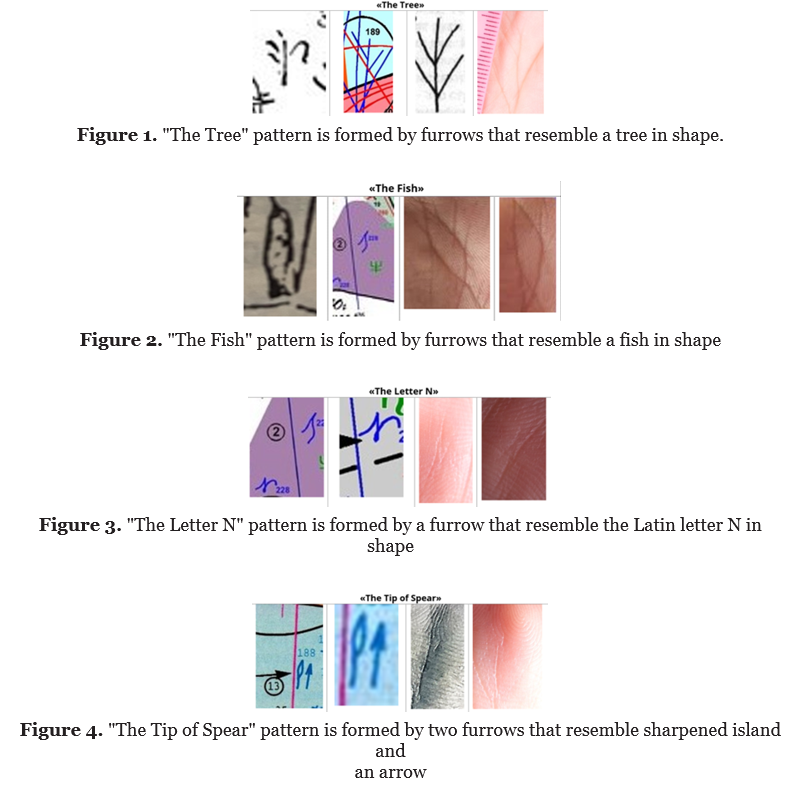
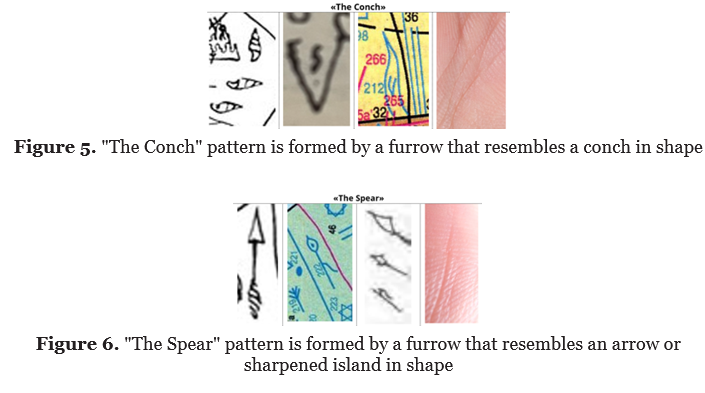
In the pre-scientific era, observations regarding unusual markings on the palms and soles, so-called “ancient Indian signs,” were accumulated as markers of human giftedness. Historically established names, likely assigned based on resemblance to objects in the material world, are used to describe these rare skin patterns.
The first documented mentions of such patterns in printed sources appear around the turn of the 19th and 20th centuries. Dale’s (1895) “Indian Palmistry” described rare signs on the palms and soles. A Russian edition, edited by A. Cheburov, was published in 1907. The chapter “Signs of flowers, plants, and various marks found on the hand” notes that these signs are formed by smaller lines created by skin pores, listing figures such as a fish, lotus flower, serpent, conch, flag, trident, spear, bow and arrow, wheel, elephant, earring, and pitcher.
In 1947, a book commenting on an old manuscript titled “Kara-Lakkhanam” was published in India. Written “in almost pure Maharashtri Prakrit language” and of unknown authorship and date, the manuscript, associated with the “Samudrika Sastra” tradition, describes similar markings, including “whirl marks and conch marks… the marks of fish, lotus, cross, etc.” (Modi, 1947).
To visualize the subject of this study, illustrations from a book edited by V.K. Sorokin, the atlas by V.V. Finogeev, and photographs collected during this research are presented in Figures 1-6.
Based on available data, including Dale’s (1895) account of the soles of Buddha and information regarding the soles of Swaminarayan Bhagwan (Akshardham Temple, Delhi, India), it appears that such rare patterns may manifest in individuals considered to possess the highest levels of human consciousness and transcendental abilities
3.2. Study of fingerprints
3.2.1. Study of physical abilities
A substantial body of research in this domain is dedicated to identifying dermatoglyphic markers for selecting promising children for sports.
De Jesus et al. (2019) investigated the presence of a dermatoglyphic signature associated with motor speed in children and adolescents. They concluded that a significant relationship exists between the frequency of radial loops in fingerprints and superior performance in a 20-meter sprint test, suggesting a prenatal predisposition to varying levels of speed.
Tambovtseva et al. (2018), examining body types and fingerprints in gymnasts and acrobats to explore predisposition to complex coordination sports, emphasized the importance of considering not only fingerprint types but also quantitative indicators such as total and individual finger ridge counts.
Kalaev et al. (2017) presented an analysis of dermatoglyphic characteristics (dermatoglyphic phenotype, delta index, total ridge count) in athletes from various specializations, including football, volleyball, basketball, rowing, sprinting, and gymnastics.
Valkovich and Oleinik (2014) examined digital dermatoglyphics and somatic status in female fencers. Their findings revealed that athletes were characterized by specific patterns: a high delta index, high total ridge count, a prevalence of complex patterns, and a minimal number of simple ones.
Martirosova et al. (2013) demonstrated that tennis players of different qualifications exhibit distinct finger phenotypes in their study on dermatoglyphics and sensorimotor and speed-strength capabilities.
Over several years, Abramova (2000, 2003) investigated the relationship between finger dermatoglyphic patterns and various manifestations of physical abilities in athletes. However, in 2016, the Russian Academy of Sciences Commission for Combating Pseudoscience and Falsification of Scientific Research issued critical remarks on Abramova’s doctoral dissertation “Finger Dermatoglyphics and Physical Abilities” (2003). These critiques specifically addressed issues related to sample control and the incorrect application of statistical analysis (Alexandrov et al., 2016, Appendix 2).
3.2.2. Study of mental abilities
Most studies in this field are devoted to investigating academic achievement and intelligence through dermatoglyphics.
In a study by Van Hung et al. (2020), 4500 students from three high schools were tested for intellectual abilities using Raven’s intelligence test, and their thumb and index finger patterns were examined. The authors conclude that there is a correlation between the patterns and the students’ IQ. Among male students, those with whorls on the thumbs of their right hands, loops on the index fingers of their left hands, and whorls on the index fingers of their right hands have higher IQs than those with other fingerprint patterns. Female students with whorls on the thumbs of their left and right hands and loops on the index fingers of their left and right hands have higher IQs than those with other fingerprint patterns.
A study by Thute et al. (2024) examined the relationship between dermatoglyphic patterns and academic performance in medical students. It was found that fingerprint asymmetry and the “atd” angle (≥ 51) correlated with lower academic performance among students.
A study by Siddapur (2017) assessed intellectual performance and type of fingerprint patterns (arches, loops, whorls, and composite patterns) in college students. The author confirmed a significant correlation (p < .05) between the presence of an “arch” fingerprint pattern on the left thumbs of study participants and their intelligence.
In the study by Shatavika and Shastri (2016), the relationship between dermatoglyphics and IQ was examined in a sample of 200 medical students; IQ was assessed using Raven’s Intelligence Test. A significant relationship was found between the types of patterns on the fingerprints of the right index, right and left ring fingers and IQ. In group A (IQ classes I and II), more whorl-like patterns were observed on the index finger of the right hand compared to group B (IQ classes III, IV, and V), where more arch-like patterns were observed (p = .01); more whorl-like patterns were observed on the ring fingers of the right and left hands in group A compared to group B, where more arches and loops were observed (p = .008 and p = .02, respectively). No significant relationship was observed between IQ and other fingerprint parameters such as the number of “ab” ridges, the “atd” angle, and the total finger ridge count.
A study by Offei et al. (2014) examined the relationship between the academic performance of high school students and their fingerprints and palm prints. The study found that students with symmetrical palm prints performed better academically than those with asymmetrical ones.
In a study by Purevdorzh et al. (2002), the characteristics of dermatoglyphic indicators were studied in individuals with high levels of intelligence (chess grandmasters, winners of national and international olympiads in mathematics, physics, computer science, and chemistry) in a Mongolian sample of subjects. The results showed that the high-intelligence group had a higher frequency of the W-pattern (Figure 7), ridge count, and delta index than the other study groups.
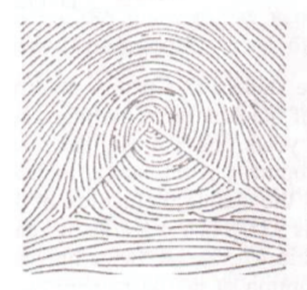
Figure 7. W-pattern (whorl) according to F. Galton’s classification
A study by Kimura and Carson (2001) presents the results of a study of cognitive patterns and dermatoglyphic asymmetry. The results showed a relationship between the direction of asymmetry in the number of ridges on the tips of the left and right fingers and the results of thinking tasks. Since fingerprints are formed by the fourth month of fetal development, significant components of our cognitive patterns are programmed very early in life.
In a study by Sanders and Kadam (2001), a relationship between dermatoglyphic asymmetry and performance on sexually dimorphic tasks was observed in children, similar to that observed in adults. Ridge counting on the fingers is asymmetrical: the majority have more ridges on the fingertips of the right hand (R>), while a minority have more ridges on the left (L>). In adults, the R> condition is associated with task performance typical of males, and the L> condition is associated with task performance typical of females. In the 60 pubertal children studied, the same relationship between ridge counting and task performance was observed as in adults: children with L> are better at performing female-oriented tasks, while children with R> are better at performing male-oriented tasks. This means that gender-related differences in task performance are not dependent on the activation of adult gonadal steroids.
3.2.3. Study of creative abilities
The question of the connection between dermatoglyphic features and creative abilities remains poorly studied, but the literature contains individual works that lay the foundation for its further research.
The study by Santana et al. (2023) characterizes dermatoglyphic profiles and their relationship with acoustic parameters in voice specialists. A weak and negative correlation was found between the total ridge score and the parameters of intensity, fundamental frequency, and cepstral peak prominence of the vocal function.
In the study by Sadretdinova et al. (2009), the following finger pattern indices were examined in a group of vocalists and a control group to predict vocal abilities: frequency of occurrence of the most common pattern types (arches, loops, whorls), prevalence of patterns on the fingers of both hands, Volotsky delta index (the number of triradiuses on all fingers), and total ridge count (the number of ridges located between the triradius and the center of the pattern). A comparative analysis of finger pattern frequencies on the right and left hands was performed in the vocalist and control groups. The Volotsky delta index was 11.2% ± 0.3% in vocalists and 6.2% ± 0.2% in the control group (p < .05). The total ridge count was 46.5 ± 0.3 in vocalists and 58.8 ± 0.2 in the control group (p < .05).
Discussion
This review demonstrates that the predominant trajectory of scientific inquiry positions papillary patterns as potential prognostic markers of innate abilities. While the research focus is situated within the domain of differential psychology, it is imperative to resist reductionist tendencies that seek simplistic, deterministic correlations between specific patterns and complex human capacities.
The developmental biology of ridges offers a compelling foundation for understanding this complexity. As elucidated by Glover et al. (2023), ridge formation proceeds as a series of propagating waves; the convergence and interaction of these waves ultimately determine the final pattern type. This dynamic system, triggered at spatially distinct sites, generates the virtually infinite variation characteristic of human fingerprint patterns. This biological mechanism of infinite variation invites a conceptual parallel with human abilities: both processes—the morphogenesis of papillary patterns and the actualization of human potential—share the fundamental quality of boundless creativity, manifesting in an immeasurable diversity of forms.
Scientific efforts to quantify this variation have progressed dramatically. While Galton’s (1892) pioneering calculations estimated the probability of two fingerprints matching at approximately 1 in 64 billion, contemporary models yield astronomically lower probabilities, on the order of 1.33 × 10⁻⁷⁷ (Pankanti et al., 2002) and 8.5202 × 10⁻¹⁹⁰ (Su & Srihari, 2009). These figures underscore the extraordinary distinctiveness of epidermal ridges. However, when considering rare skin patterns—those resembling objects such as trees, fish, or spears—the assessment of their variety transcends formal quantification altogether. Such patterns enter the realm of meaning and symbolism, which, by their existential nature, resist enumeration and demand interpretive, rather than merely statistical, approaches.
The empirical observation that rare skin patterns can be correlated with discrete components of objective reality raises profound questions that extend beyond current scientific paradigms. If we accept that such configurations appear within human populations—even absent a mechanistic understanding of their formation or their functional significance within human constitution—science must confront a fundamental question: how can patterns isomorphic with elements of the material world emerge on human palms and soles? One speculative but intellectually provocative hypothesis is that the formation of rare skin patterns may involve the realization of certain organizing principles (a criterion of reasonableness) that permit correspondence between external objects and their biological representation on the human body.
This line of reasoning finds support in the parallelisms observed across living and non-living systems. As Cummins and Midlo (1943) noted, the configurations of papillary patterns bear striking resemblance to zebra stripes and to patterns etched on sand by wind or water. These morphological analogies suggest a deeper correlation between the laws governing organic morphogenesis and those shaping inorganic structures. The factors that generate dermatoglyphic forms may be analogous to the physical principles underlying banded cloud formations or periodic chemical precipitates (Cummins & Midlo, 1943). Such observations point toward a fundamental unity of laws operating across biological and physical systems on Earth. Consequently, a comprehensive explanatory framework for rare skin pattern formation may ultimately require integration across biological, chemical, physical, and potentially informational sciences.
Nevertheless, several theoretical and methodological challenges must be acknowledged. The field remains constrained by limited sample sizes, insufficient replication studies, and inadequate consideration of environmental variables during prenatal development. Furthermore, the processing of biometric data raises ethical considerations that require careful navigation. Perhaps most significantly, the association of dermatoglyphic research with fringe science has engendered institutional skepticism, as exemplified by the Russian Academy of Sciences’ critique of Abramova’s dissertation (Alexandrov et al., 2016). While such scrutiny is essential for scientific integrity, it may also inhibit legitimate inquiry into genuinely promising research directions.
Conclusions
The present review reveals substantial, albeit nascent, potential for advancing the psychology of abilities and giftedness through dermatoglyphic investigation. The empirical evidence, while preliminary, suggests that papillary patterns may encode information relevant to physical, mental, and creative capacities. However, this potential must be weighed against considerable limitations: small and often unrepresentative samples, lack of independent replication, insufficient attention to environmental confounds, ethical complexities surrounding biometric data, and disciplinary prejudices that may prematurely foreclose productive lines of inquiry.
Rather than providing definitive answers to contemporary psychological questions, this review articulates a series of fundamental questions that invite future investigation. Can rare dermatoglyphic patterns serve as genetically mediated markers for giftedness, talent, or genius? What mechanisms account for the isomorphism between certain patterns and objects of the material world, and how might such patterns be interpreted or decoded? What developmental processes govern the formation of these patterns, and why have rare configurations persisted throughout human evolution without apparent selection pressure? More ambitiously, might investigating these phenomena illuminate broader questions concerning human constitution and our relationship to the natural order?
These questions, while speculative, are neither idle nor unscientific. They emerge logically from the empirical observations documented in this review and point toward a research program that transcends traditional disciplinary boundaries. The investigation of dermatoglyphics and human abilities may ultimately contribute not only to differential psychology but also to developmental biology, evolutionary theory, and the philosophical understanding of human uniqueness.
The trajectory of future research should prioritize rigorous methodological standards: larger and more diverse samples, preregistered replication studies, longitudinal designs that can disentangle genetic from environmental influences, and interdisciplinary collaboration that brings together geneticists, developmental biologists, psychologists, and ethicists. Only through such coordinated effort can the field move beyond its current limitations and toward a more nuanced understanding of the relationship between the ridges on our fingers and the capacities of our minds.
Ultimately, the study of dermatoglyphics and human abilities invites us to reconsider fundamental assumptions about human nature and our place in the cosmos. Whether this line of inquiry will fulfill its early promise remains an open question—one that future science, equipped with refined methods and an open yet critical disposition, must answer.
Competing interests: The author state that the study was conducted in the absence of any commercial or financial relationships that could be interpreted as a potential conflict of interest.
Funding: The study was performed without external funding.
Ethics Statement: The gathering of empirical data was organized in accordance with generally accepted ethical standards.
CRediT author statement:
The author has read and approved the final version and is responsible for all aspects of the manuscript. The article is a translation of the manuscript in Russian.
Acknowledgments: The author expresses gratitude to Shridar and Lilit for their support in organizing and conducting the study.
References
- Abramova, T. F., Nikitina, T. M., & Izaak, S. I. (2000). Asymmetry of digital dermatoglyphic features, physical potential and physical qualities. Morphology, 5, 56-59.
- Abramova, T. F., Nikitina, T. M., & Kochetkova, N. I. (2003). The relationship between digital dermatoglyphics features and physical capabilities. Biomedical Technologies and Radioelectronics, 11, 32-37.
- Aleksandrov, E. B. (2016). Memorandum No. 1 (Dermatoglyphic testing). The Russian Academy of Sciences Commission on Combating Pseudoscience and Falsification of Scientific Research on the Pseudoscientific Status of Commercial Fingerprint Testing, 1–14.
- Baitinger, V. F., Golubev, I. O., & Shmatov, S. V. (2010). Clinical anatomy of the hand (Part 1). Issues of reconstructive and plastic surgery, 4 (35), 29-40.
- Bastrykin, A. I. (2004). Dactyloscopy. Hand Signs. Petersburg: Oreol, 1-367.
- Bhimrao, M. A., & Gupta, B. (2023) An empirical study of dermatoglyphics fingerprint pattern classification for human behavior analysis. Social Network Analysis and Mining, 13(79).
https://doi.org/10.1007/s13278-023-01072-1. - Valkovich, E. I., & Oleinik, E. A. (2014). Features of digital dermatoglyphs and somatic status of female athletes engaged in fencing. Morphology, 144(4), 72-75.
- Gladkova, T. D. (1966). Skin patterns of the palms and soles of monkeys and humans. Moscow: Nauka, 1-151.
- Guseva, I. S. (2010). Human finger prints. Morphology. Morphogenesis. Genetics. Dermatoglyphics as a marker in medical and sports anthropology. Minsk: FUAinform, 1-336.
- Kalaev, V. N., Radchenko, E. N., Popova, I. E., Sysoev, A. V., & Varenikov, N. A. (2017). Features of digital dermatoglyphics of athletes of various specializations: the current state of the problem and the development of an algorithm for determining the athletic abilities of young children based on dermatoglyphic markers. Scientific Notes of Lesgaft P. F. University, 10 (152), 100-110.
- Martirosova, K. E., Zhikhareva, O. G., Semenov, M. M., Martirosov, E. G., & Godina, E. Z. (2013). Dermatoglyphics, sensorimotor and speed-strength capabilities of tennis players of different qualifications. Bulletin of Moscow University. Series 23: Anthropology, 3, 127-136.
- Negasheva M. A. (2008). Interrelations of somatic, dermatoglyphic and psychological features in the structure of psychological features in the structure of the general constitution. Bulletin of Moscow State University named after Lomonosov M. V., 133(1), 73-77.
- Polzik, E. V., Kazantsev, V. S., Podkovyrkin, N. A., & Leontyev, S. L. (2015). Application of pattern recognition methods to assess individual predisposition to breast cancer. Bulletin of the Ural Institute of Economics, Management and Law, 2, 46-55.
- Purevdorzh, I., Davaadorzh, A., & Erhembulgan, P. (2002). Features of dermatoglyphic indicators in people with high intelligence. Siberian Medical Journal, 3, 70-73.
- Sadretdinova, R. M., Setko, N. P., & Shulga, I. A. (2009). Finger dermatoglyphics as a marker for predicting vocal abilities in singers. Russian Otolaryngology, 6(43), 94–98.
- Sorokin, V.K. (1990). Fundamentals of Palmistry. Interpretation of Signs on the Hands Based on Indian and Medieval Sources: Works by D.B. Dale. Translated from the latest edition of the International Theosophical Society in London, edited and with a preface by A. Cheburov. St. Petersburg. Moscow: M.O. Wolf Company. 1st reprint. Ed. by V.K. Sorokin. Moscow: R.O. «Golden Ring», 1-64.
- Tambovtseva, R. V., & Zagorskaya, A. V. (2018). Determination of dominant constitutional types in gymnasts based on finger dermatoglyphics. Theory and Practice of Physical Education, 3, 52–53.
- Khit, G. L., Shirobokov, I. G., & Slavolyubova, I. A. (2013). Dermatoglyphics in anthropology. Nestor-History, 1-376.
- Ahmed-Popova, F. M., Mantarkov, M. J., Sivkov, S. T., & Akabaliev, V. H. (2014). Dermatoglyphics – a possible biomarker in the neurodevelopmental model for the origin of mental disorders. Folia Medica, 56 (1), 5-10. https://doi.org/10.2478/folmed-2014-0001
- Ametefe, D. S., Sarnin, S. S., Ali, D. M., & Muhammad, Z. Z. (2022). Fingerprint pattern classification using deep transfer learning and data augmentation. Visual Computer, 39(2), 1–14.
https://doi.org/10.1007/s00371-022-02437-x - Cimtay, Y., Alkan, B., & Demirel, B. (2021). Fingerprint pattern classification by using various pre-trained deep neural networks. European Journal of Science and Technology Special, 24, 258-261. https://doi.org/10.31590/ejosat.903999
- Cummins, H., & Midlo, C. (1943). Finger Prints, Palms and Soles. An Introduction to Dermatoglyphics. Philadelphia: The Blakiston Company, 1-319.
- Dale, J. B. (1895). Indian palmistry. London: Theosophical Publishing Society. New York: The Path. Madras: Proprietors of the Theosophist, 1-66.
De Bruin, E. I., Graham, J. H., Louwerse, A., & Huizink, A. C. (2014). Mild dermatoglyphic deviations in adolescents with autism spectrum disorders and average intellectual abilities as compared to typically developing boys. Autism Research and Treatment, Article ID 968134, 1-6. https://doi.org/10.1155/2014/968134
- Dimitrova, T. (2021). Role of dermatoglyphics for breast cancer prevention and prognosis. Acta morphologica et anthropologica, 28(3-4), 130-138. https://doi.org/10.5272/jimab.2023293.5017
- Dodia, V. S., Odedra, S. P., Shah, K. H., Monpara, P. C., Vyas, P. M., & Pillai, J. P. (2022). The association of fingerprint patterns with oral potentially malignant disorders and oral cancer: a dermatoglyphic study. Oral and Maxillofacial Pathologists, 26(2), https://doi.org/10.4103/jomfp.jomfp_261_21
- Düring, B., Gottschlich, C., Huckemann, S., Kreusser, L.M., Schönlieb, C.B. (2019). An anisotropic interaction model for simulating fingerprints.Journal of Mathematical Biology, 78(7),2171-2206. https://doi.org/10.1007/s00285-019-01338-3
- Galton F. (1892). Finger prints. London: Macmillan and Co., New York, 1-216.
- Garzón-Alvarado, D. A., & Ramírez Martinez, A. M. (2011). A biochemical hypothesis on the formation of fingerprints using a Turing patterns approach. Theoretical Biology and Medical Modelling, 8(1), 24. https://doi.org/10.1186/1742-4682-8-24
- Glover, J. D., Sudderick, Z. R., Shih, B. B., Batho-Samblas, C., Charlton, L., Krause, A. L., Anderson, C., Riddell, J., Balic, A., Li, J., Klika, V., Woolley, T. E., Gaffney, E. A., Corsinotti, A., Anderson, R. A., Johnston, L. J., Brown, S. J., Wang, S., Chen, Y., Crichton, M. L., & Headon, D. J. (2023). The developmental basis of fingerprint pattern formation and variation. Cell, 2023, 186(5), 940-956. https://doi.org/10.1016/j.cell.2023.01.015
- Guo, G., Ray A., Izydorczak, M., Goldfeder, J., Lipson, H., & Xu, W. (2024). Unveiling intra-person fingerprint similarity via deep contrastive learning. Science Advances, 10(2), 1-11. https://doi.org/10.1126/sciadv.adi0329
- Ho, Y. Y. W., Evans, D. M., Montgomery, G. W, Henders, A. K., Kemp, J. P., Timpson, N. J., St. Pourcain, B., Heath, A. C., Madden, P. A. F., Loesch, D. Z., McNevin, D., Daniel, R., Davey-Smith, G., Martin, N. G., & Medland, S. E. (2016). Common genetic variants influence whorls in fingerprint patterns. Journal of Investigative Dermatology, 136(4), 859-862. https://doi.org/10.1016/j.jid.2015.10.062
- Jesus, J. A., Zanoni, E. M., Silva, H. L., Baretta E., Souza R., Alberti A., Fin Gr., & Nodari Júnior, R. J. (2019). Dermatoglyphics and its relationship with the speed motor capacity in children and adolescents. International Journal of Development Research, 09(03), 26430-26434.
- Kimura, D., & Clarke P. G. (2001). Cognitive pattern and dermatoglyphic asymmetry. Personality and Individual Differences,30(4), 579-586. https://doi.org/10.1016/S0191-869(00)00056-8.
- Kücken, M., & Newell, A. C. (2005). Fingerprinting formation. Journal of Theoretical Biology, 235(1), 71-83. https://doi.org/10.1016/J.JTBI.2004.12.020.
- Kücken, M., & Champod C. (2013). Merkel cells and the individuality of friction ridge skin. Journal of Theoretical Biology, 317, 229-237. https://doi.org/1016/j.jtbi.2012.10.009
- Machado, J. F., Fernandes, P. R., Roquetti, R. W., & Filho, J. F. (2010). Digital Dermatoglyphic Heritability Differences as Evidenced by a female Twin Study. Twin Research and Human Genetics, 13(5), 482-489. https://pubmed.ncbi.nlm.nih.gov/20874471/.
- Modi, P. K. (1947). Kara-Lakkhanam. King Edward College. Amarawati.
- Nousbeck, J., Burger, B., Fuchs-Telem, D., Pavlovsky, M., & Fenig, S. (2011). Mutation in a skin-specific isoform of SMARCAD1 causes autosomal-dominant adermatoglyphia. The American Journal of Human Genetics, 89 (2), 302-307. https://doi.org/10.1016/j.ajhg.2011.07.004
- Offei, E., Abledu, J., Osabutey, C., & Kesse, D. (2014). Relationship between palmar dermatoglyphic pattern and academic performance of students in a ghanaian secondary school. Journal of Medical and Biomedical Sciences, 3(2), 24–31. https://doi.org/10.4314/jmbs.v3i2.5
- Padmanaban, A. M. (n.d.) Finger print is a replica of religion and God. Chennai – 600 004.
- Pankanti, S., Prabhakar, S. & Jain, A. (2002). On the individuality of fingerprints. Pattern Analysis and Machine Intelligence, IEEE Transactionson, 24, 1010-1025. https://doi.org/10.1109/TPAMI.2002.1023799.
- Saeed, F., Hussain, M., & Aboalsamh, H. (2022). Automatic fingerprint classification using deep learning technology (DeepFKTNet). Mathematics, 10(8), 1285—1302. https://doi.org/10.3390/math10081285.
- Sanders G., & Kadam A. (2001). Prepubescent children show the adult relationship between dermatoglyphic asymmetry and performance on sexually dimorphic tasks. Cortex, 37(1), 91-100. https://doi.org/10.1016/S0010-452(08)70560-4
- Santana, É. R., Oliveira, P., Magacho-Coelho, C., Lopes, L., & Sacramento, L. S. C. (2023). Characterization of dermatoglyphic profiles and its relation to acoustic measures in voice professionals. Journal of voice, 37(6), 967.e1-967.e7. https://doi.org/10.1016/j.jvoice.2021.06.006
- Savel’ev, S. V., (2002). Stages of embryonic development of the human brain. Moscow: Vedi, 1-111.
- Shatavika, C. S., & Shastri, D. (2016). Dermatoglyphics relates to intelligent quotient level of medical undergraduated students. International Journal of Current Research, 8(8), 37304–37306.
- Siddapur, R. K. (2017). Study on the relationship between fingerprint pattern and intellectual performance. International Journal of Medical Toxicology and Forensic Medicine, 7(1), 26–31.
- Sridevi N. S., Wilma Delphine Silvia C. R., Kulkarni R. & Seshagiri C. (2010). Palmar dermatoglyphics in carcinoma breast of Indian women. Romanian Journal of Morphology and Embryology, 51(3), 547-550.
- Su, C., & Srihari, S. N. (2009). Probability of random correspondence for fingerprints. Proceedings of the International Workshop on Computational Forensics (IWCF), 55‑
- Thute, P. P., Padole, S. V., Bakane, B. C., & Bakane, A. B. (2024). Dermatoglyphic patterns in undergraduate medical students and their association with academic performance: a cross-sectional study. Journal of Clinical & Diagnostic Research, 18(2).
- Van Hung, M., Thi Minh, T., Ngoc Linh, N., & Kim Hue, P. T. (2020). Association between fingerprint patterns and intelligence quotient of vietnamese students. Asian Journal of Scientific Research, 13(2), 170–174. https://doi.org/10.3923/ajsr.2020.170.174.
- Wertheim, K., & Maceo, A. (2002). The critical stage of friction ridge and pattern formation. Journal of Forensic Identification, 52(1), 35-85.
- Wijerathne, B. T. B., Meier, R. J., & Agampodi, S. B. (2016). The status of dermatoglyphics as a biomarker of Tel-Hashomer camptodactyly syndrome: a review of the literature. Journal of Medical Case Reports, 10,
https://doi.org/10.1186/s13256-016-1048-7
Comments (0)
Background and Problem. Fingerprints are the gold standard for biometric identification and indisputable legal evidence. However, research exploring their connection to human abilities, giftedness, and psychological traits remains marginalized, often dismissed as pseudoscience. This paradox—forensic acceptance versus psychological skepticism—underscores a significant gap in scientific inquiry. Furthermore, despite decades of research, a universally accepted theory explaining the formation of papillary patterns is lacking. Objective. This review aims to systematically examine whether dermatoglyphics can serve as an auxiliary method for studying human abilities and giftedness. The author synthesizes existing scientific evidence, evaluates theoretical approaches to pattern formation, and explores the underexamined phenomenon of rare skin patterns. Methods. A systematic literature search was conducted in eLIBRARY.RU, Google Scholar, and PubMed for peer-reviewed articles published between 2000 and 2025. Search terms included “dermatoglyphics and abilities,” “dermatoglyphics and physical abilities,” “dermatoglyphics and mental abilities,” and “dermatoglyphics and creative abilities.” From 54 initially retrieved articles, 18 met inclusion criteria. Additionally, books located in Indian libraries were analyzed. Results. Significant correlations exist between dermatoglyphic patterns and physical, mental, and creative abilities. Elite athletes exhibit distinct dermatoglyphic profiles characterized by high delta indices and total ridge counts. Whorl patterns dominate in high-intelligence groups (p < .05), while fingerprint asymmetry correlates with lower academic performance. Vocalists demonstrate delta indices nearly double those of controls (11.2% vs. 6.2%, p < .05). Rare skin patterns resembling objects of material reality (fish, lotus, spear, conch) are documented in historical sources and appear in individuals associated with exceptional consciousness. Contemporary models demonstrate fingerprint uniqueness at probabilities as low as 1.33 × 10⁻⁷⁷ to 8.52 × 10⁻¹⁹⁰. Conclusion. Dermatoglyphics shows substantial, albeit nascent, potential for advancing the psychology of abilities. However, the field confronts significant limitations: small samples, insufficient replication, and institutional skepticism. Rare skin patterns transcend statistical quantification, entering the realm of meaning and demanding interpretive approaches. Future research requires rigorous methodological standards and interdisciplinary collaboration across genetics, developmental biology, and psychology.
Дерматоглифика и способности человека: систематический обзор
И.И. Титова
Южный федеральный университет, Ростов-на-Дону, Россия
Резюме. Актуальность и проблема. Отпечатки пальцев являются золотым стандартом биометрической идентификации и неоспоримым доказательством в суде. Однако исследования их связи со способностями человека, одаренностью и психологическими особенностями остаются маргинализированными и часто отвергаются как псевдонаучные. Этот парадокс — признание в криминалистике и скептицизм в психологии — подчеркивает существенный пробел в научном познании. Несмотря на десятилетия исследований, общепринятая теория, объясняющая формирование папиллярных узоров, отсутствует. Цель. Данный обзор направлен на систематическое изучение вопроса о том, может ли дерматоглифика служить вспомогательным методом для исследования способностей и одаренности человека на основе синтеза существующих научных данных и теоретических подходов к формированию узоров. Методы. Проведен систематический поиск литературы в базах данных eLIBRARY.RU, Google Scholar и PubMed по рецензируемым статьям, опубликованным с 2000 по 2025 год. Поисковые запросы включали: «дерматоглифика и способности», «дерматоглифика и физические способности», «дерматоглифика и умственные способности», «дерматоглифика и творческие способности». Из первоначально найденных 54 статей критериям включения соответствовали 18. Дополнительно были проанализированы книги по соответствующей проблематике в библиотеках Индии. Результаты. Выявлены значимые корреляции между дерматоглифическими узорами и физическими, умственными и творческими способностями. Элитные спортсмены отличаются специфическими дерматоглифическими профилями, характеризующимися высокими значениями дельтового индекса и гребневого счета. Узоры типа «завиток» доминируют в группах с высоким интеллектом (p < 0.05), в то время как асимметрия отпечатков пальцев коррелирует с более низкой академической успеваемостью. У вокалистов дельтовый индекс почти вдвое выше, чем в контрольной группе (11.2% против 6.2%, p < 0.05). Редкие кожные узоры, напоминающие объекты материального мира (рыба, лотос, копье, раковина), задокументированы в исторических источниках и встречаются у лиц, которым приписывают исключительные способности. Современные модели демонстрируют уникальность отпечатков пальцев с вероятностями от 1.33 × 10⁻⁷⁷ до 8.52 × 10⁻¹⁹⁰. Заключение. Дерматоглифика может обладать потенциалом выступать в качестве вспомогательного метода в изучении способностей человека. Однако существующие исследования имеют значительные ограничения: малые выборки и недостаточная воспроизводимость результатов. Редкие кожные узоры выходят за рамки статистического количественного анализа, входя в сферу смысла и значения и требуя интерпретативных подходов. Будущие исследования нуждаются в строгих методологических стандартах и междисциплинарном взаимодействии генетики, биологии развития и психологии.
Ключевые слова: дерматоглифика, способности человека, папиллярные узоры, одаренность, редкие кожные узоры, биометрические маркеры
The study of fingerprints is of undeniable relevance, given the increasing prevalence of biometric technologies. A significant portion of contemporary scientific research focuses on the analysis of fingerprints (as distinct from palm prints) in conjunction with information technology (Ametefe et al., 2022; Bhimrao et al., 2023; Cimtay et al., 2021; Guo et al., 2024; Saeed et al., 2022). However, despite a centuries-long history of observation, the fundamental nature of the individuality of skin patterns remains insufficiently understood.
Human interest in the patterns on palms and soles predates their scientific study by millennia. As Gladkova (1966, p. 6) notes, “It is assumed that the ancient Chinese, Babylonians, Assyrians, Egyptians, as well as Indians used fingerprints as signatures”. Bastrykin (2004, p. 17) further emphasizes this point, observing, “Apparently, from the dawn of civilization until the 19th century, no one paid any attention to fingerprints anywhere, except in the countries of the East. Why? This is another question that future science will have to answer”.
The scientific literature employs a diverse terminology to describe skin patterns, reflecting varied conceptual frameworks. They are referred to as potential markers (Dodia et al., 2022), biomarkers (Ahmed-Popova et al., 2014; Wijerathne et al., 2016), markers of genetic predisposition (Polzik et al., 2015), screening indicators (Sridevi et al., 2010), prognostic tools (Dimitrova, 2021), individual architectonics (Baitinger et al., 2010), and morphogenetic markers (Guseva, 2010). In a more metaphorical vein, Padmanaban, A.M. (n.d.), a fingerprint expert for the Chennai (India) police, employs the term “religious text and temple of God in the human body”. While poetic, this designation underscores a core scientific premise: the genetically determined papillary pattern is a form of encoded information, a biological “text” or genetic message awaiting decipherment.
The embryological development of fingers and toes begins on the 47th-49th day post-fertilization (Savel’ev, 2002). The precise timing of critical events for ridge formation, however, is variable. Researchers have estimated this period to span from 10.5 to 16 weeks of estimated gestational age (Wertheim & Maceo, 2002), and more broadly, from 10-13 to 22-24 weeks of intrauterine development (Guseva, 2010; Negasheva, 2008).
Currently, several theoretical approaches coexist to explain the formation of papillary patterns.
Genetic Approach: Developing since the early 20th century, this approach seeks the genetic mechanisms governing pattern formation. Although specific genes responsible for ridge formation have yet to be identified, research in this direction continues (Ho et al., 2016; Machado et al., 2010; Nousbeck et al., 2011).
Biochemical Approach: This model posits that fingerprint ridges result from self-organization driven by the uneven distribution of chemical morphogens in the embryonic skin. These models, often based on reaction-diffusion equations with parameters informed by Turing’s work, postulate an active biochemical system (e.g., activator-inhibitor) on the skin surface (Garzón-Alvarado & Ramírez Martinez, 2011). The Turing model is widely used to explain pattern formation in nature, such as leopard spots, zebra stripes, and mollusc shells.
Biomechanical Approach: This perspective attributes pattern formation to mechanical instability within the epidermis during fetal development. Several models have emerged from this framework: the Kücken-Newell model, which attributes patterns to compressive mechanical stress from epidermal growth and volar pad shrinkage (Kücken & Newell, 2005); the Kücken-Champod model, which involves the mechanosensory role of Merkel cells (Kücken & Champod, 2013); and the anisotropic interaction model (Düring et al., 2019).
Evolutionary-Mechanical Approach: This classical view suggests that patterns evolved from transverse folds to enhance grip (Cummins & Midlo, 1943).
Despite these sophisticated models, a universally accepted theory explaining the mechanism of papillary pattern formation is currently lacking. Within scientific inquiry, the study of fingerprints has been far more extensive than that of palms and soles (Khit et al., 2013). The primary disciplines involved in fingerprint research are dactyloscopy, anthropology, medicine, and biometrics. However, research exploring the connection between skin patterns and human abilities remains limited. This scarcity is largely due to a prevailing bias within the scientific community, which often associates such investigations with pseudoscience. This creates a paradoxical situation: fingerprints are simultaneously the gold standard for biometric identification and indisputable legal evidence, yet inquiries into their potential link to the human psyche, talents, and inclinations are met with scientific skepticism. This paper addresses the central question: Can dermatoglyphics be used to study the nature of human abilities and giftedness? The author’s objective is to conduct a comprehensive literature review to identify scientific facts that may serve as a foundation for resolving this question.
A systematic search for peer-reviewed journal articles on dermatoglyphics and human abilities was conducted. The following electronic scientific databases were searched: eLIBRARY.RU, Google Scholar, and PubMed. Both review and empirical articles on the topic were included in the analysis. Articles focusing on psychophysiology, forensic science, forensic fingerprinting, and medicine were excluded.
The search, covering the period from 2000 to 2025, employed the terms “dermatoglyphics and abilities,” “dermatoglyphics and physical abilities,” “dermatoglyphics and mental abilities,” and “dermatoglyphics and creative abilities.” The initial search yielded 54 articles. After applying the inclusion and exclusion criteria, 18 articles were retained for analysis. Additionally, books located in Indian libraries were analyzed.
The findings were synthesized into two main thematic areas: (1) studies investigating palm and sole prints in relation to abilities, and (2) studies examining fingerprints in connection with physical, mental, and creative abilities.
3.1. Study of palm and sole prints
In the pre-scientific era, observations regarding unusual markings on the palms and soles, so-called “ancient Indian signs,” were accumulated as markers of human giftedness. Historically established names, likely assigned based on resemblance to objects in the material world, are used to describe these rare skin patterns.
The first documented mentions of such patterns in printed sources appear around the turn of the 19th and 20th centuries. Dale’s (1895) “Indian Palmistry” described rare signs on the palms and soles. A Russian edition, edited by A. Cheburov, was published in 1907. The chapter “Signs of flowers, plants, and various marks found on the hand” notes that these signs are formed by smaller lines created by skin pores, listing figures such as a fish, lotus flower, serpent, conch, flag, trident, spear, bow and arrow, wheel, elephant, earring, and pitcher.
In 1947, a book commenting on an old manuscript titled “Kara-Lakkhanam” was published in India. Written “in almost pure Maharashtri Prakrit language” and of unknown authorship and date, the manuscript, associated with the “Samudrika Sastra” tradition, describes similar markings, including “whirl marks and conch marks… the marks of fish, lotus, cross, etc.” (Modi, 1947).
To visualize the subject of this study, illustrations from a book edited by V.K. Sorokin, the atlas by V.V. Finogeev, and photographs collected during this research are presented in Figures 1-6.
Based on available data, including Dale’s (1895) account of the soles of Buddha and information regarding the soles of Swaminarayan Bhagwan (Akshardham Temple, Delhi, India), it appears that such rare patterns may manifest in individuals considered to possess the highest levels of human consciousness and transcendental abilities
3.2. Study of fingerprints
3.2.1. Study of physical abilities
A substantial body of research in this domain is dedicated to identifying dermatoglyphic markers for selecting promising children for sports.
De Jesus et al. (2019) investigated the presence of a dermatoglyphic signature associated with motor speed in children and adolescents. They concluded that a significant relationship exists between the frequency of radial loops in fingerprints and superior performance in a 20-meter sprint test, suggesting a prenatal predisposition to varying levels of speed.
Tambovtseva et al. (2018), examining body types and fingerprints in gymnasts and acrobats to explore predisposition to complex coordination sports, emphasized the importance of considering not only fingerprint types but also quantitative indicators such as total and individual finger ridge counts.
Kalaev et al. (2017) presented an analysis of dermatoglyphic characteristics (dermatoglyphic phenotype, delta index, total ridge count) in athletes from various specializations, including football, volleyball, basketball, rowing, sprinting, and gymnastics.
Valkovich and Oleinik (2014) examined digital dermatoglyphics and somatic status in female fencers. Their findings revealed that athletes were characterized by specific patterns: a high delta index, high total ridge count, a prevalence of complex patterns, and a minimal number of simple ones.
Martirosova et al. (2013) demonstrated that tennis players of different qualifications exhibit distinct finger phenotypes in their study on dermatoglyphics and sensorimotor and speed-strength capabilities.
Over several years, Abramova (2000, 2003) investigated the relationship between finger dermatoglyphic patterns and various manifestations of physical abilities in athletes. However, in 2016, the Russian Academy of Sciences Commission for Combating Pseudoscience and Falsification of Scientific Research issued critical remarks on Abramova’s doctoral dissertation “Finger Dermatoglyphics and Physical Abilities” (2003). These critiques specifically addressed issues related to sample control and the incorrect application of statistical analysis (Alexandrov et al., 2016, Appendix 2).
3.2.2. Study of mental abilities
Most studies in this field are devoted to investigating academic achievement and intelligence through dermatoglyphics.
In a study by Van Hung et al. (2020), 4500 students from three high schools were tested for intellectual abilities using Raven’s intelligence test, and their thumb and index finger patterns were examined. The authors conclude that there is a correlation between the patterns and the students’ IQ. Among male students, those with whorls on the thumbs of their right hands, loops on the index fingers of their left hands, and whorls on the index fingers of their right hands have higher IQs than those with other fingerprint patterns. Female students with whorls on the thumbs of their left and right hands and loops on the index fingers of their left and right hands have higher IQs than those with other fingerprint patterns.
A study by Thute et al. (2024) examined the relationship between dermatoglyphic patterns and academic performance in medical students. It was found that fingerprint asymmetry and the “atd” angle (≥ 51) correlated with lower academic performance among students.
A study by Siddapur (2017) assessed intellectual performance and type of fingerprint patterns (arches, loops, whorls, and composite patterns) in college students. The author confirmed a significant correlation (p < .05) between the presence of an “arch” fingerprint pattern on the left thumbs of study participants and their intelligence.
In the study by Shatavika and Shastri (2016), the relationship between dermatoglyphics and IQ was examined in a sample of 200 medical students; IQ was assessed using Raven’s Intelligence Test. A significant relationship was found between the types of patterns on the fingerprints of the right index, right and left ring fingers and IQ. In group A (IQ classes I and II), more whorl-like patterns were observed on the index finger of the right hand compared to group B (IQ classes III, IV, and V), where more arch-like patterns were observed (p = .01); more whorl-like patterns were observed on the ring fingers of the right and left hands in group A compared to group B, where more arches and loops were observed (p = .008 and p = .02, respectively). No significant relationship was observed between IQ and other fingerprint parameters such as the number of “ab” ridges, the “atd” angle, and the total finger ridge count.
A study by Offei et al. (2014) examined the relationship between the academic performance of high school students and their fingerprints and palm prints. The study found that students with symmetrical palm prints performed better academically than those with asymmetrical ones.
In a study by Purevdorzh et al. (2002), the characteristics of dermatoglyphic indicators were studied in individuals with high levels of intelligence (chess grandmasters, winners of national and international olympiads in mathematics, physics, computer science, and chemistry) in a Mongolian sample of subjects. The results showed that the high-intelligence group had a higher frequency of the W-pattern (Figure 7), ridge count, and delta index than the other study groups.
Figure 7. W-pattern (whorl) according to F. Galton’s classification
A study by Kimura and Carson (2001) presents the results of a study of cognitive patterns and dermatoglyphic asymmetry. The results showed a relationship between the direction of asymmetry in the number of ridges on the tips of the left and right fingers and the results of thinking tasks. Since fingerprints are formed by the fourth month of fetal development, significant components of our cognitive patterns are programmed very early in life.
In a study by Sanders and Kadam (2001), a relationship between dermatoglyphic asymmetry and performance on sexually dimorphic tasks was observed in children, similar to that observed in adults. Ridge counting on the fingers is asymmetrical: the majority have more ridges on the fingertips of the right hand (R>), while a minority have more ridges on the left (L>). In adults, the R> condition is associated with task performance typical of males, and the L> condition is associated with task performance typical of females. In the 60 pubertal children studied, the same relationship between ridge counting and task performance was observed as in adults: children with L> are better at performing female-oriented tasks, while children with R> are better at performing male-oriented tasks. This means that gender-related differences in task performance are not dependent on the activation of adult gonadal steroids.
3.2.3. Study of creative abilities
The question of the connection between dermatoglyphic features and creative abilities remains poorly studied, but the literature contains individual works that lay the foundation for its further research.
The study by Santana et al. (2023) characterizes dermatoglyphic profiles and their relationship with acoustic parameters in voice specialists. A weak and negative correlation was found between the total ridge score and the parameters of intensity, fundamental frequency, and cepstral peak prominence of the vocal function.
In the study by Sadretdinova et al. (2009), the following finger pattern indices were examined in a group of vocalists and a control group to predict vocal abilities: frequency of occurrence of the most common pattern types (arches, loops, whorls), prevalence of patterns on the fingers of both hands, Volotsky delta index (the number of triradiuses on all fingers), and total ridge count (the number of ridges located between the triradius and the center of the pattern). A comparative analysis of finger pattern frequencies on the right and left hands was performed in the vocalist and control groups. The Volotsky delta index was 11.2% ± 0.3% in vocalists and 6.2% ± 0.2% in the control group (p < .05). The total ridge count was 46.5 ± 0.3 in vocalists and 58.8 ± 0.2 in the control group (p < .05).
This review demonstrates that the predominant trajectory of scientific inquiry positions papillary patterns as potential prognostic markers of innate abilities. While the research focus is situated within the domain of differential psychology, it is imperative to resist reductionist tendencies that seek simplistic, deterministic correlations between specific patterns and complex human capacities.
The developmental biology of ridges offers a compelling foundation for understanding this complexity. As elucidated by Glover et al. (2023), ridge formation proceeds as a series of propagating waves; the convergence and interaction of these waves ultimately determine the final pattern type. This dynamic system, triggered at spatially distinct sites, generates the virtually infinite variation characteristic of human fingerprint patterns. This biological mechanism of infinite variation invites a conceptual parallel with human abilities: both processes—the morphogenesis of papillary patterns and the actualization of human potential—share the fundamental quality of boundless creativity, manifesting in an immeasurable diversity of forms.
Scientific efforts to quantify this variation have progressed dramatically. While Galton’s (1892) pioneering calculations estimated the probability of two fingerprints matching at approximately 1 in 64 billion, contemporary models yield astronomically lower probabilities, on the order of 1.33 × 10⁻⁷⁷ (Pankanti et al., 2002) and 8.5202 × 10⁻¹⁹⁰ (Su & Srihari, 2009). These figures underscore the extraordinary distinctiveness of epidermal ridges. However, when considering rare skin patterns—those resembling objects such as trees, fish, or spears—the assessment of their variety transcends formal quantification altogether. Such patterns enter the realm of meaning and symbolism, which, by their existential nature, resist enumeration and demand interpretive, rather than merely statistical, approaches.
The empirical observation that rare skin patterns can be correlated with discrete components of objective reality raises profound questions that extend beyond current scientific paradigms. If we accept that such configurations appear within human populations—even absent a mechanistic understanding of their formation or their functional significance within human constitution—science must confront a fundamental question: how can patterns isomorphic with elements of the material world emerge on human palms and soles? One speculative but intellectually provocative hypothesis is that the formation of rare skin patterns may involve the realization of certain organizing principles (a criterion of reasonableness) that permit correspondence between external objects and their biological representation on the human body.
This line of reasoning finds support in the parallelisms observed across living and non-living systems. As Cummins and Midlo (1943) noted, the configurations of papillary patterns bear striking resemblance to zebra stripes and to patterns etched on sand by wind or water. These morphological analogies suggest a deeper correlation between the laws governing organic morphogenesis and those shaping inorganic structures. The factors that generate dermatoglyphic forms may be analogous to the physical principles underlying banded cloud formations or periodic chemical precipitates (Cummins & Midlo, 1943). Such observations point toward a fundamental unity of laws operating across biological and physical systems on Earth. Consequently, a comprehensive explanatory framework for rare skin pattern formation may ultimately require integration across biological, chemical, physical, and potentially informational sciences.
Nevertheless, several theoretical and methodological challenges must be acknowledged. The field remains constrained by limited sample sizes, insufficient replication studies, and inadequate consideration of environmental variables during prenatal development. Furthermore, the processing of biometric data raises ethical considerations that require careful navigation. Perhaps most significantly, the association of dermatoglyphic research with fringe science has engendered institutional skepticism, as exemplified by the Russian Academy of Sciences’ critique of Abramova’s dissertation (Alexandrov et al., 2016). While such scrutiny is essential for scientific integrity, it may also inhibit legitimate inquiry into genuinely promising research directions.
The present review reveals substantial, albeit nascent, potential for advancing the psychology of abilities and giftedness through dermatoglyphic investigation. The empirical evidence, while preliminary, suggests that papillary patterns may encode information relevant to physical, mental, and creative capacities. However, this potential must be weighed against considerable limitations: small and often unrepresentative samples, lack of independent replication, insufficient attention to environmental confounds, ethical complexities surrounding biometric data, and disciplinary prejudices that may prematurely foreclose productive lines of inquiry.
Rather than providing definitive answers to contemporary psychological questions, this review articulates a series of fundamental questions that invite future investigation. Can rare dermatoglyphic patterns serve as genetically mediated markers for giftedness, talent, or genius? What mechanisms account for the isomorphism between certain patterns and objects of the material world, and how might such patterns be interpreted or decoded? What developmental processes govern the formation of these patterns, and why have rare configurations persisted throughout human evolution without apparent selection pressure? More ambitiously, might investigating these phenomena illuminate broader questions concerning human constitution and our relationship to the natural order?
These questions, while speculative, are neither idle nor unscientific. They emerge logically from the empirical observations documented in this review and point toward a research program that transcends traditional disciplinary boundaries. The investigation of dermatoglyphics and human abilities may ultimately contribute not only to differential psychology but also to developmental biology, evolutionary theory, and the philosophical understanding of human uniqueness.
The trajectory of future research should prioritize rigorous methodological standards: larger and more diverse samples, preregistered replication studies, longitudinal designs that can disentangle genetic from environmental influences, and interdisciplinary collaboration that brings together geneticists, developmental biologists, psychologists, and ethicists. Only through such coordinated effort can the field move beyond its current limitations and toward a more nuanced understanding of the relationship between the ridges on our fingers and the capacities of our minds.
Ultimately, the study of dermatoglyphics and human abilities invites us to reconsider fundamental assumptions about human nature and our place in the cosmos. Whether this line of inquiry will fulfill its early promise remains an open question—one that future science, equipped with refined methods and an open yet critical disposition, must answer.
Competing interests: The author state that the study was conducted in the absence of any commercial or financial relationships that could be interpreted as a potential conflict of interest.
Funding: The study was performed without external funding.
Ethics Statement: The gathering of empirical data was organized in accordance with generally accepted ethical standards.
CRediT author statement:
The author has read and approved the final version and is responsible for all aspects of the manuscript. The article is a translation of the manuscript in Russian.
Acknowledgments: The author expresses gratitude to Shridar and Lilit for their support in organizing and conducting the study.
- Abramova, T. F., Nikitina, T. M., & Izaak, S. I. (2000). Asymmetry of digital dermatoglyphic features, physical potential and physical qualities. Morphology, 5, 56-59.
- Abramova, T. F., Nikitina, T. M., & Kochetkova, N. I. (2003). The relationship between digital dermatoglyphics features and physical capabilities. Biomedical Technologies and Radioelectronics, 11, 32-37.
- Aleksandrov, E. B. (2016). Memorandum No. 1 (Dermatoglyphic testing). The Russian Academy of Sciences Commission on Combating Pseudoscience and Falsification of Scientific Research on the Pseudoscientific Status of Commercial Fingerprint Testing, 1–14.
- Baitinger, V. F., Golubev, I. O., & Shmatov, S. V. (2010). Clinical anatomy of the hand (Part 1). Issues of reconstructive and plastic surgery, 4 (35), 29-40.
- Bastrykin, A. I. (2004). Dactyloscopy. Hand Signs. Petersburg: Oreol, 1-367.
- Bhimrao, M. A., & Gupta, B. (2023) An empirical study of dermatoglyphics fingerprint pattern classification for human behavior analysis. Social Network Analysis and Mining, 13(79).
https://doi.org/10.1007/s13278-023-01072-1. - Valkovich, E. I., & Oleinik, E. A. (2014). Features of digital dermatoglyphs and somatic status of female athletes engaged in fencing. Morphology, 144(4), 72-75.
- Gladkova, T. D. (1966). Skin patterns of the palms and soles of monkeys and humans. Moscow: Nauka, 1-151.
- Guseva, I. S. (2010). Human finger prints. Morphology. Morphogenesis. Genetics. Dermatoglyphics as a marker in medical and sports anthropology. Minsk: FUAinform, 1-336.
- Kalaev, V. N., Radchenko, E. N., Popova, I. E., Sysoev, A. V., & Varenikov, N. A. (2017). Features of digital dermatoglyphics of athletes of various specializations: the current state of the problem and the development of an algorithm for determining the athletic abilities of young children based on dermatoglyphic markers. Scientific Notes of Lesgaft P. F. University, 10 (152), 100-110.
- Martirosova, K. E., Zhikhareva, O. G., Semenov, M. M., Martirosov, E. G., & Godina, E. Z. (2013). Dermatoglyphics, sensorimotor and speed-strength capabilities of tennis players of different qualifications. Bulletin of Moscow University. Series 23: Anthropology, 3, 127-136.
- Negasheva M. A. (2008). Interrelations of somatic, dermatoglyphic and psychological features in the structure of psychological features in the structure of the general constitution. Bulletin of Moscow State University named after Lomonosov M. V., 133(1), 73-77.
- Polzik, E. V., Kazantsev, V. S., Podkovyrkin, N. A., & Leontyev, S. L. (2015). Application of pattern recognition methods to assess individual predisposition to breast cancer. Bulletin of the Ural Institute of Economics, Management and Law, 2, 46-55.
- Purevdorzh, I., Davaadorzh, A., & Erhembulgan, P. (2002). Features of dermatoglyphic indicators in people with high intelligence. Siberian Medical Journal, 3, 70-73.
- Sadretdinova, R. M., Setko, N. P., & Shulga, I. A. (2009). Finger dermatoglyphics as a marker for predicting vocal abilities in singers. Russian Otolaryngology, 6(43), 94–98.
- Sorokin, V.K. (1990). Fundamentals of Palmistry. Interpretation of Signs on the Hands Based on Indian and Medieval Sources: Works by D.B. Dale. Translated from the latest edition of the International Theosophical Society in London, edited and with a preface by A. Cheburov. St. Petersburg. Moscow: M.O. Wolf Company. 1st reprint. Ed. by V.K. Sorokin. Moscow: R.O. «Golden Ring», 1-64.
- Tambovtseva, R. V., & Zagorskaya, A. V. (2018). Determination of dominant constitutional types in gymnasts based on finger dermatoglyphics. Theory and Practice of Physical Education, 3, 52–53.
- Khit, G. L., Shirobokov, I. G., & Slavolyubova, I. A. (2013). Dermatoglyphics in anthropology. Nestor-History, 1-376.
- Ahmed-Popova, F. M., Mantarkov, M. J., Sivkov, S. T., & Akabaliev, V. H. (2014). Dermatoglyphics – a possible biomarker in the neurodevelopmental model for the origin of mental disorders. Folia Medica, 56 (1), 5-10. https://doi.org/10.2478/folmed-2014-0001
- Ametefe, D. S., Sarnin, S. S., Ali, D. M., & Muhammad, Z. Z. (2022). Fingerprint pattern classification using deep transfer learning and data augmentation. Visual Computer, 39(2), 1–14.
https://doi.org/10.1007/s00371-022-02437-x - Cimtay, Y., Alkan, B., & Demirel, B. (2021). Fingerprint pattern classification by using various pre-trained deep neural networks. European Journal of Science and Technology Special, 24, 258-261. https://doi.org/10.31590/ejosat.903999
- Cummins, H., & Midlo, C. (1943). Finger Prints, Palms and Soles. An Introduction to Dermatoglyphics. Philadelphia: The Blakiston Company, 1-319.
- Dale, J. B. (1895). Indian palmistry. London: Theosophical Publishing Society. New York: The Path. Madras: Proprietors of the Theosophist, 1-66.
De Bruin, E. I., Graham, J. H., Louwerse, A., & Huizink, A. C. (2014). Mild dermatoglyphic deviations in adolescents with autism spectrum disorders and average intellectual abilities as compared to typically developing boys. Autism Research and Treatment, Article ID 968134, 1-6. https://doi.org/10.1155/2014/968134
- Dimitrova, T. (2021). Role of dermatoglyphics for breast cancer prevention and prognosis. Acta morphologica et anthropologica, 28(3-4), 130-138. https://doi.org/10.5272/jimab.2023293.5017
- Dodia, V. S., Odedra, S. P., Shah, K. H., Monpara, P. C., Vyas, P. M., & Pillai, J. P. (2022). The association of fingerprint patterns with oral potentially malignant disorders and oral cancer: a dermatoglyphic study. Oral and Maxillofacial Pathologists, 26(2), https://doi.org/10.4103/jomfp.jomfp_261_21
- Düring, B., Gottschlich, C., Huckemann, S., Kreusser, L.M., Schönlieb, C.B. (2019). An anisotropic interaction model for simulating fingerprints.Journal of Mathematical Biology, 78(7),2171-2206. https://doi.org/10.1007/s00285-019-01338-3
- Galton F. (1892). Finger prints. London: Macmillan and Co., New York, 1-216.
- Garzón-Alvarado, D. A., & Ramírez Martinez, A. M. (2011). A biochemical hypothesis on the formation of fingerprints using a Turing patterns approach. Theoretical Biology and Medical Modelling, 8(1), 24. https://doi.org/10.1186/1742-4682-8-24
- Glover, J. D., Sudderick, Z. R., Shih, B. B., Batho-Samblas, C., Charlton, L., Krause, A. L., Anderson, C., Riddell, J., Balic, A., Li, J., Klika, V., Woolley, T. E., Gaffney, E. A., Corsinotti, A., Anderson, R. A., Johnston, L. J., Brown, S. J., Wang, S., Chen, Y., Crichton, M. L., & Headon, D. J. (2023). The developmental basis of fingerprint pattern formation and variation. Cell, 2023, 186(5), 940-956. https://doi.org/10.1016/j.cell.2023.01.015
- Guo, G., Ray A., Izydorczak, M., Goldfeder, J., Lipson, H., & Xu, W. (2024). Unveiling intra-person fingerprint similarity via deep contrastive learning. Science Advances, 10(2), 1-11. https://doi.org/10.1126/sciadv.adi0329
- Ho, Y. Y. W., Evans, D. M., Montgomery, G. W, Henders, A. K., Kemp, J. P., Timpson, N. J., St. Pourcain, B., Heath, A. C., Madden, P. A. F., Loesch, D. Z., McNevin, D., Daniel, R., Davey-Smith, G., Martin, N. G., & Medland, S. E. (2016). Common genetic variants influence whorls in fingerprint patterns. Journal of Investigative Dermatology, 136(4), 859-862. https://doi.org/10.1016/j.jid.2015.10.062
- Jesus, J. A., Zanoni, E. M., Silva, H. L., Baretta E., Souza R., Alberti A., Fin Gr., & Nodari Júnior, R. J. (2019). Dermatoglyphics and its relationship with the speed motor capacity in children and adolescents. International Journal of Development Research, 09(03), 26430-26434.
- Kimura, D., & Clarke P. G. (2001). Cognitive pattern and dermatoglyphic asymmetry. Personality and Individual Differences,30(4), 579-586. https://doi.org/10.1016/S0191-869(00)00056-8.
- Kücken, M., & Newell, A. C. (2005). Fingerprinting formation. Journal of Theoretical Biology, 235(1), 71-83. https://doi.org/10.1016/J.JTBI.2004.12.020.
- Kücken, M., & Champod C. (2013). Merkel cells and the individuality of friction ridge skin. Journal of Theoretical Biology, 317, 229-237. https://doi.org/1016/j.jtbi.2012.10.009
- Machado, J. F., Fernandes, P. R., Roquetti, R. W., & Filho, J. F. (2010). Digital Dermatoglyphic Heritability Differences as Evidenced by a female Twin Study. Twin Research and Human Genetics, 13(5), 482-489. https://pubmed.ncbi.nlm.nih.gov/20874471/.
- Modi, P. K. (1947). Kara-Lakkhanam. King Edward College. Amarawati.
- Nousbeck, J., Burger, B., Fuchs-Telem, D., Pavlovsky, M., & Fenig, S. (2011). Mutation in a skin-specific isoform of SMARCAD1 causes autosomal-dominant adermatoglyphia. The American Journal of Human Genetics, 89 (2), 302-307. https://doi.org/10.1016/j.ajhg.2011.07.004
- Offei, E., Abledu, J., Osabutey, C., & Kesse, D. (2014). Relationship between palmar dermatoglyphic pattern and academic performance of students in a ghanaian secondary school. Journal of Medical and Biomedical Sciences, 3(2), 24–31. https://doi.org/10.4314/jmbs.v3i2.5
- Padmanaban, A. M. (n.d.) Finger print is a replica of religion and God. Chennai – 600 004.
- Pankanti, S., Prabhakar, S. & Jain, A. (2002). On the individuality of fingerprints. Pattern Analysis and Machine Intelligence, IEEE Transactionson, 24, 1010-1025. https://doi.org/10.1109/TPAMI.2002.1023799.
- Saeed, F., Hussain, M., & Aboalsamh, H. (2022). Automatic fingerprint classification using deep learning technology (DeepFKTNet). Mathematics, 10(8), 1285—1302. https://doi.org/10.3390/math10081285.
- Sanders G., & Kadam A. (2001). Prepubescent children show the adult relationship between dermatoglyphic asymmetry and performance on sexually dimorphic tasks. Cortex, 37(1), 91-100. https://doi.org/10.1016/S0010-452(08)70560-4
- Santana, É. R., Oliveira, P., Magacho-Coelho, C., Lopes, L., & Sacramento, L. S. C. (2023). Characterization of dermatoglyphic profiles and its relation to acoustic measures in voice professionals. Journal of voice, 37(6), 967.e1-967.e7. https://doi.org/10.1016/j.jvoice.2021.06.006
- Savel’ev, S. V., (2002). Stages of embryonic development of the human brain. Moscow: Vedi, 1-111.
- Shatavika, C. S., & Shastri, D. (2016). Dermatoglyphics relates to intelligent quotient level of medical undergraduated students. International Journal of Current Research, 8(8), 37304–37306.
- Siddapur, R. K. (2017). Study on the relationship between fingerprint pattern and intellectual performance. International Journal of Medical Toxicology and Forensic Medicine, 7(1), 26–31.
- Sridevi N. S., Wilma Delphine Silvia C. R., Kulkarni R. & Seshagiri C. (2010). Palmar dermatoglyphics in carcinoma breast of Indian women. Romanian Journal of Morphology and Embryology, 51(3), 547-550.
- Su, C., & Srihari, S. N. (2009). Probability of random correspondence for fingerprints. Proceedings of the International Workshop on Computational Forensics (IWCF), 55‑
- Thute, P. P., Padole, S. V., Bakane, B. C., & Bakane, A. B. (2024). Dermatoglyphic patterns in undergraduate medical students and their association with academic performance: a cross-sectional study. Journal of Clinical & Diagnostic Research, 18(2).
- Van Hung, M., Thi Minh, T., Ngoc Linh, N., & Kim Hue, P. T. (2020). Association between fingerprint patterns and intelligence quotient of vietnamese students. Asian Journal of Scientific Research, 13(2), 170–174. https://doi.org/10.3923/ajsr.2020.170.174.
- Wertheim, K., & Maceo, A. (2002). The critical stage of friction ridge and pattern formation. Journal of Forensic Identification, 52(1), 35-85.
- Wijerathne, B. T. B., Meier, R. J., & Agampodi, S. B. (2016). The status of dermatoglyphics as a biomarker of Tel-Hashomer camptodactyly syndrome: a review of the literature. Journal of Medical Case Reports, 10,
https://doi.org/10.1186/s13256-016-1048-7