
Web Version of the “Great Chemist” Technology
Abstract
Abstract
The test shell “Great Chemist” is designed to carry out an actions’ set for testing subjects using various test methods. The application areas of the shell are professional and psychological assessments of the personality, pedagogical and psychological testing, examination and monitoring in the education system and chemistry thinking development.
Web version of the test shell is currently being developed. This publication provides a brief report on the development process, including an indication of the technologies stack used, a results description of the web application information architecture design processes and the main design decisions for its software implementation
Introduction
The Great Chemist technology was developed by the team of authors E. V. Volkova and A. A. Raskovalov [1]. This technology is a laureate of the IVth Congress of the Russian Psychological Society competition in the nomination “Innovative psychological technologies in the new century” (September 2007), awarded with a quality certificate No. 20070005, issued on the basis of the decision of the expert council for the certification of psychological technologies Russian Psychological Society (RPS) No 125 dated September 12, 2007. The computer program “Great Chemist” has a Certificate of official registration No. 2006614415 dated December 28, 2006.
The Great Chemist technology is designed to diagnose and develop of chemical intelligence. The main area of this technology is a professional psychological assessment of a person (assessment of chemical intelligence). Based on the test results, it is possible to determine the quality of knowledge of the basic topics of chemistry in a person, the zone of actual and zone of proximal development of his/her chemical intelligence, the core of which is chemical thinking; to evaluate the effectiveness of the development potential of innovative programs in chemistry [2, 3]. Neurophysiological studies show that the Great Chemist technology improves the neuroefficiency of cognitive activity in solving various chemistry problems, which leads to a decrease in school overload [4].
However, the software of the test method has been local to date, making it difficult to distribute to other computers and making it difficult to collect general statistics. In this regard, it was problematic to conduct testing of students in a remote format and it was impossible to automate the process of collecting statistics on testing for each student. A new task was set to develop a test shell web application for the Internet. To do this, it was necessary to develop a technological platform for the website and implement the functions of authorization, testing and data collection on it according to the algorithm of the existing desktop version of the “Great Chemist” software.
Method
The main page of the web application consists of the following functional sections: registration of a new user, login of an authorized user, reference information about the site.
The client-server technology was chosen to implement the multi-user access mode. Differentiation of access rights is implemented at the server level for the following roles of the client level: student, teacher, manager. A user with the “student” role, when logging into the system, has access to the following functional sections: a section for taking tests, a section for viewing test results, and an information page about the site.
A user with the “teacher” role, when logging into the system, has access to functional sections: a section for taking a test, a section for viewing the results of their own testing, a section for viewing test results for each student in a group, a section for viewing / adding / deleting their own groups, reference information about the site.
A user with the “manager” role, when logging into the system, has access to functional sections: the section for passing the test, the section for viewing test results,the section for administering the accounts of all registered users, and reference information about the site. When administering user accounts, the manager can delete and edit them, including assigning the role of teacher to the necessary users.
A typical approach with a login (e-mail address) and a password is adopted as a data for authorization.
As a registration meaningful information, a user indicates the full name, date of birth, information about the predominant hand, belonging to the training group or class.
The beginning of each block of tasks in the testing mode is accompanied by instructions on the actions required from the test subject. A typical dialogue with the application while answering a task in particular is to choose one of the proposed options. Then the application immediately displays the next task without pause.
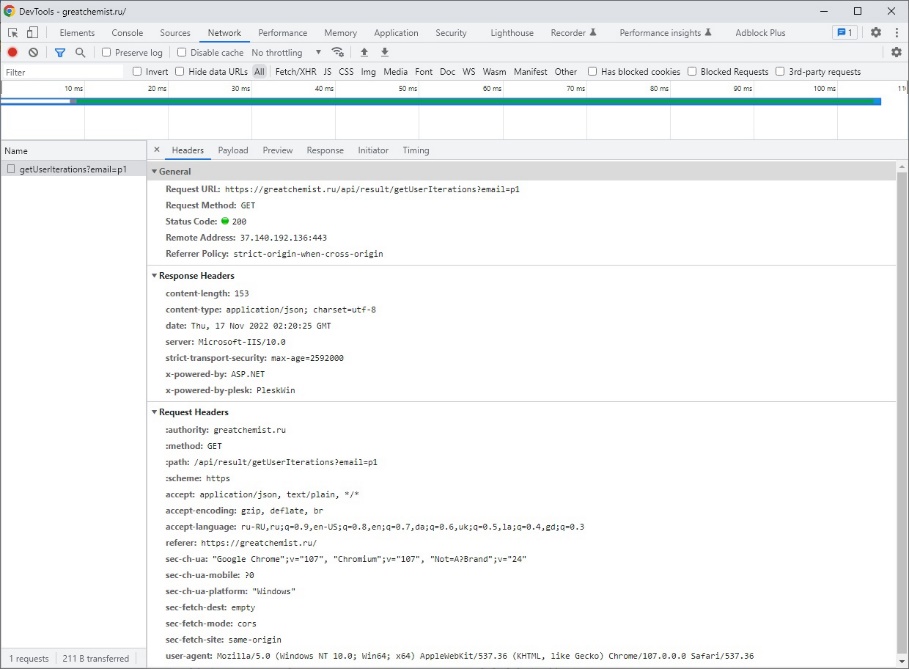
Figure 1. Get-request received from the server
Design solutions for the software implementation of a web application
The following technologies were used to implement the client side: HTML, CSS, JavaScript, Vue.js. These technologies were used to implement the server part: ASP.NET Core, Transact-SQL.
The whole mechanism of the web application is based on the style of interaction between the components of a distributed application in the REST network, for the information secure exchange over the Internet.
The server is contacted at a certain address, indicating the controller, method (Figure 1), as well as the necessary additional parameters each time, when any action on the site are been performed.
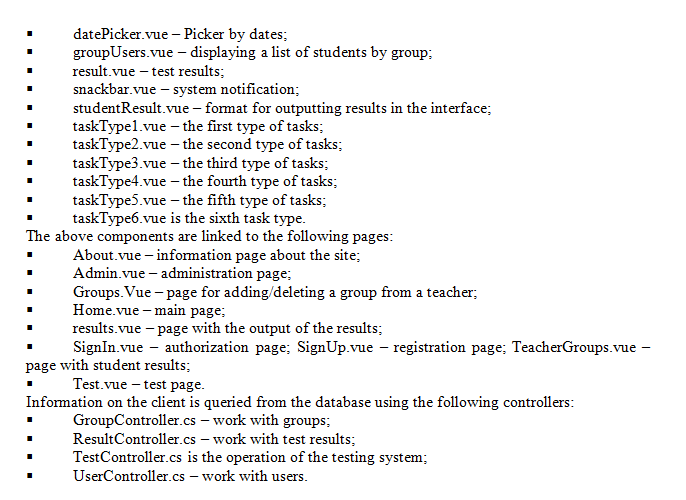
The client part of the developed application consists of the following components:
The client part of the developed application consists of the following components:
According to the testing algorithm, it is necessary to count the time spent by the student to complete each task. In addition, some tasks have a time limit for solving. Therefore, a special algorithm was implemented, that starts the timer immediately after the start of testing, to calculate the time (Figure 2). A timer is displayed on the screen in tasks where there are time limits so that the tested person can see the remaining amount of time. The time is calculated by the timer without displaying it in other types of tasks. If the student did not send his answer after the specified time, then the content of the input fields is sent to the server automatically and the transition to the next task occurs. Time is recorded in the system in milliseconds, with automatic conversion to seconds and minutes.
Results
Currently, the administration and testing mode of the test shell “Great Chemist” is fully implemented in the web system [5, 6]. The developed design and technological solutions for the implementation of a network inter-level client-server interaction in the form of packages made it possible to minimize the influence of external factors related to the client network bandwidth. The work on the selection and configuration of the hosting platform has been completed, the site has been launched in trial operation mode.
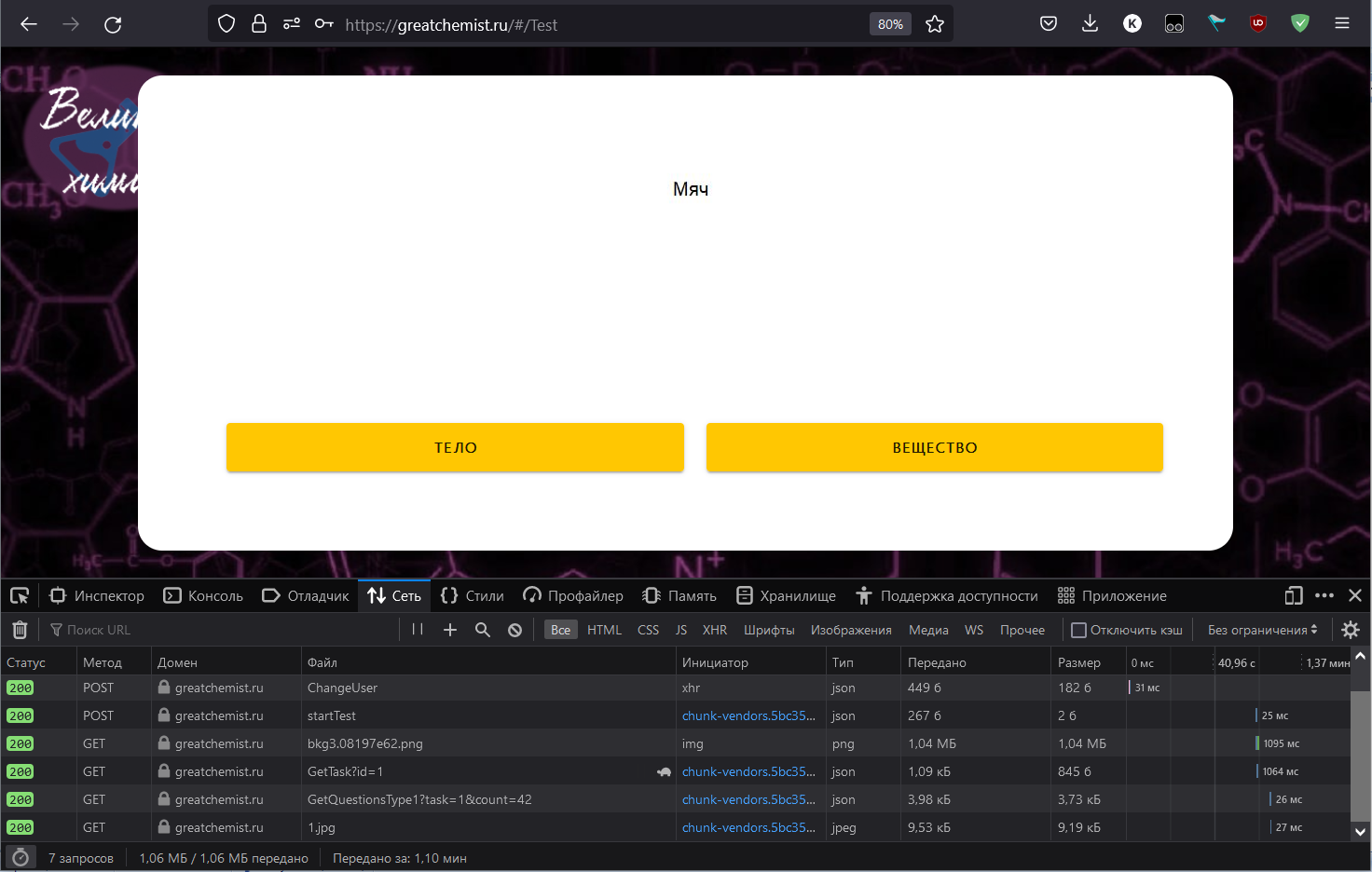
Figure 2. The process of debugging a web application in a browser
References
- Volkova, E.V. & Raskovalov, A.A. Certificate of the computer program official registration No 2006614415 “Great Chemist” dated December 28, 2006. [Volkova, E.V. & Raskovalov, A.A. Svidetel’stvom ob ofitsial’noy registratsii programmy dlya EVM No 2006614415 GreatChemist ot 28 dekabrya 2006].
- Volkova, E.V. (2020). Assessing and Development of Chemical Intelligence Through e-Learning Tools. Advances in Intelligent Systems and Computing, 2020, 1228 AISC, pp. 795–805.
- Volkova, E.V. (2019). Evaluation And Chemical Thinking Development. In P. Besedová, N. Heinrichová, & J. Ondráková (Eds.), ICEEPSY 2019: Education and Educational Psychology, vol 72. European Proceedings of Social and Behavioural Sciences (pp. 687-695). Future Academy. https://doi.org/10.15405/epsbs.2019.11.78
- Volkova E.V., Dokuchaev D.A. (2020). Comparative analysis of EEG power spectrum indices in adolescence and youth at different stages of chemistry studies. Bulletin of psychophysiology, 3, 105-114. [Volkova, E.V. & Dokuchayev D.A. (2020). Sravnitel’nyy analiz pokazateley spektra moshchnosti EEG v podrostkovom i yunosheskom vozraste na raznykh etapakh izucheniya khimii. Vestnik psikhofiziologii. 2020. № 3. S. 105-114].
- Volkova E.V., Kompaniets V.S., & Kovtunov I.A. Certificate of state registration of the computer program GREATCHEMIST_RU No. 2022681734 dated November 16, 2022. [Volkova E.V., Kompaniyets V.S., & Kovtunov I.A. Svidetel’stvo o gosudarstvennoy registratsii programmy dlya EVM GREATCHEMIST_RU № 2022681734 ot 16 noyabrya 2022].
- https://greatchemist.ru/#/
Comments (0)
The test shell “Great Chemist” is designed to carry out an actions’ set for testing subjects using various test methods. The application areas of the shell are professional and psychological assessments of the personality, pedagogical and psychological testing, examination and monitoring in the education system and chemistry thinking development.
Web version of the test shell is currently being developed. This publication provides a brief report on the development process, including an indication of the technologies stack used, a results description of the web application information architecture design processes and the main design decisions for its software implementation
The Great Chemist technology was developed by the team of authors E. V. Volkova and A. A. Raskovalov [1]. This technology is a laureate of the IVth Congress of the Russian Psychological Society competition in the nomination “Innovative psychological technologies in the new century” (September 2007), awarded with a quality certificate No. 20070005, issued on the basis of the decision of the expert council for the certification of psychological technologies Russian Psychological Society (RPS) No 125 dated September 12, 2007. The computer program “Great Chemist” has a Certificate of official registration No. 2006614415 dated December 28, 2006.
The Great Chemist technology is designed to diagnose and develop of chemical intelligence. The main area of this technology is a professional psychological assessment of a person (assessment of chemical intelligence). Based on the test results, it is possible to determine the quality of knowledge of the basic topics of chemistry in a person, the zone of actual and zone of proximal development of his/her chemical intelligence, the core of which is chemical thinking; to evaluate the effectiveness of the development potential of innovative programs in chemistry [2, 3]. Neurophysiological studies show that the Great Chemist technology improves the neuroefficiency of cognitive activity in solving various chemistry problems, which leads to a decrease in school overload [4].
However, the software of the test method has been local to date, making it difficult to distribute to other computers and making it difficult to collect general statistics. In this regard, it was problematic to conduct testing of students in a remote format and it was impossible to automate the process of collecting statistics on testing for each student. A new task was set to develop a test shell web application for the Internet. To do this, it was necessary to develop a technological platform for the website and implement the functions of authorization, testing and data collection on it according to the algorithm of the existing desktop version of the “Great Chemist” software.
The main page of the web application consists of the following functional sections: registration of a new user, login of an authorized user, reference information about the site.
The client-server technology was chosen to implement the multi-user access mode. Differentiation of access rights is implemented at the server level for the following roles of the client level: student, teacher, manager. A user with the “student” role, when logging into the system, has access to the following functional sections: a section for taking tests, a section for viewing test results, and an information page about the site.
A user with the “teacher” role, when logging into the system, has access to functional sections: a section for taking a test, a section for viewing the results of their own testing, a section for viewing test results for each student in a group, a section for viewing / adding / deleting their own groups, reference information about the site.
A user with the “manager” role, when logging into the system, has access to functional sections: the section for passing the test, the section for viewing test results,the section for administering the accounts of all registered users, and reference information about the site. When administering user accounts, the manager can delete and edit them, including assigning the role of teacher to the necessary users.
A typical approach with a login (e-mail address) and a password is adopted as a data for authorization.
As a registration meaningful information, a user indicates the full name, date of birth, information about the predominant hand, belonging to the training group or class.
The beginning of each block of tasks in the testing mode is accompanied by instructions on the actions required from the test subject. A typical dialogue with the application while answering a task in particular is to choose one of the proposed options. Then the application immediately displays the next task without pause.
Figure 1. Get-request received from the server
Design solutions for the software implementation of a web application
The following technologies were used to implement the client side: HTML, CSS, JavaScript, Vue.js. These technologies were used to implement the server part: ASP.NET Core, Transact-SQL.
The whole mechanism of the web application is based on the style of interaction between the components of a distributed application in the REST network, for the information secure exchange over the Internet.
The server is contacted at a certain address, indicating the controller, method (Figure 1), as well as the necessary additional parameters each time, when any action on the site are been performed.
The client part of the developed application consists of the following components:
The client part of the developed application consists of the following components:
According to the testing algorithm, it is necessary to count the time spent by the student to complete each task. In addition, some tasks have a time limit for solving. Therefore, a special algorithm was implemented, that starts the timer immediately after the start of testing, to calculate the time (Figure 2). A timer is displayed on the screen in tasks where there are time limits so that the tested person can see the remaining amount of time. The time is calculated by the timer without displaying it in other types of tasks. If the student did not send his answer after the specified time, then the content of the input fields is sent to the server automatically and the transition to the next task occurs. Time is recorded in the system in milliseconds, with automatic conversion to seconds and minutes.
Currently, the administration and testing mode of the test shell “Great Chemist” is fully implemented in the web system [5, 6]. The developed design and technological solutions for the implementation of a network inter-level client-server interaction in the form of packages made it possible to minimize the influence of external factors related to the client network bandwidth. The work on the selection and configuration of the hosting platform has been completed, the site has been launched in trial operation mode.
Figure 2. The process of debugging a web application in a browser
- Volkova, E.V. & Raskovalov, A.A. Certificate of the computer program official registration No 2006614415 “Great Chemist” dated December 28, 2006. [Volkova, E.V. & Raskovalov, A.A. Svidetel’stvom ob ofitsial’noy registratsii programmy dlya EVM No 2006614415 GreatChemist ot 28 dekabrya 2006].
- Volkova, E.V. (2020). Assessing and Development of Chemical Intelligence Through e-Learning Tools. Advances in Intelligent Systems and Computing, 2020, 1228 AISC, pp. 795–805.
- Volkova, E.V. (2019). Evaluation And Chemical Thinking Development. In P. Besedová, N. Heinrichová, & J. Ondráková (Eds.), ICEEPSY 2019: Education and Educational Psychology, vol 72. European Proceedings of Social and Behavioural Sciences (pp. 687-695). Future Academy. https://doi.org/10.15405/epsbs.2019.11.78
- Volkova E.V., Dokuchaev D.A. (2020). Comparative analysis of EEG power spectrum indices in adolescence and youth at different stages of chemistry studies. Bulletin of psychophysiology, 3, 105-114. [Volkova, E.V. & Dokuchayev D.A. (2020). Sravnitel’nyy analiz pokazateley spektra moshchnosti EEG v podrostkovom i yunosheskom vozraste na raznykh etapakh izucheniya khimii. Vestnik psikhofiziologii. 2020. № 3. S. 105-114].
- Volkova E.V., Kompaniets V.S., & Kovtunov I.A. Certificate of state registration of the computer program GREATCHEMIST_RU No. 2022681734 dated November 16, 2022. [Volkova E.V., Kompaniyets V.S., & Kovtunov I.A. Svidetel’stvo o gosudarstvennoy registratsii programmy dlya EVM GREATCHEMIST_RU № 2022681734 ot 16 noyabrya 2022].
- https://greatchemist.ru/#/