
Coping-Intelligence of the Nations
Abstract
Abstract
There are more than fifty indicators of the dynamics of the nation’s development (WDI). Among them, the most commonly used Gross Domestic Product (GDP) and Inflation Rates which reflect how much goods are produced, that is, “doing more”. Comprehensive indicators are being developed, such as Statistical Performance Indicators (SPI), as well as alternative indicators that reflect individual perceptions of a happy life (HPI), in other words “living better and doing better”. These indicators allow us to make a responsible strategic decision. Nevertheless, in the face of unprecedented external pressure and the turbulent development of the world, they do not allow us to answer the question of whether the nation will be able to withstand these challenges, preserve its development potential, values, culture, and territories. A nation copes with challenges if all the forces of society unite and act in concert, in other words, the nation acts as a collective entity (Collective Subject). Thus, the question arises of a new World Development Indicator as a Coping-Intelligence of the Nation (NCI): how to multiply nation’s developmental potential no matter what life throws at you. The NCI estimates country performance in four dimensions: (1) experience in overcoming global challenges; (2) traditions and values of the nation; (3) creative people capable of responding to new global challenges; (4) a strong leader who draws on the traditions and values of the nation.
Coping-Intelligence of the Nations:
How to multiply developmental potential no matter what life throws at you.
Introduction
A number of World Development Indicators (WDI) are used to assess the dynamics of a nation’s development such as GDP, LE, QLI, HPI, and others. To date, more than 50 indicators are known to measure various aspects of the develop potential of nations. An overall statistical performance score (or index ranging from 0 to 100) is obtained by combining these scores. The map below (Figure 1) shows country SPI scores (Statistical Performance Indicators) as quintiles, with dark green for the top 20% and dark orange for the poorest 20%. As the SPI team points out, the overall SPI score is positively correlated with three widely used development indicators such as GDP per capita, the Human Capital Index, and the WGI Government Effectiveness Score (https://github.com/worldbank/SPI/).

Figure 1. Statistical Performance Indicators, The World Bank (https://www.worldbank.org/en/programs/statistical-performance-indicators).
The figures 3-5 reflect the global dynamics of the average values of the most commonly used World Development Indicators over the past 20 years. Detailed information on changes in these indicators for countries can be found in the World Bank national accounts data (https://data.worldbank.org/indicator).
Gross Domestic Product (GDP) is the total monetary or market value of all finished goods and services made within a country during a specific period. GDP characterizes the economic health of a country, size of an economy and its growth rate. Despite its limitations, GDP is a key tool to guide strategic decisions. There is an ingrained belief that GDP growth is synonymous with increasing wellbeing and prosperity and it is universally beneficial. Perhaps this is why the modern economic system is driven by a ‘growth at all costs’ mentality measured by GDP. In fact, GDP growth does not mean a better life for everyone. It doesn’t take into account the things that really matter to people, like inequality, social relationships, and health.
Inflation Rate is an essential component of monetary stability (Figure 2, 5). Inflation, as measured by the consumer price index, reflects the annual percentage change in the cost of acquiring a set of goods and services for the average consumer. Compared to 2021, inflation has become higher. However, compared to 14.0 percent in 1980, the current 8.3 percent is relatively moderate. The lowest Inflation Rate is observed in such countries as Macao (1.0%), Hong Kong (1.9%), China (2.0%), Saudi Arabia (2.5%), Japan (2.5%), and Switzerland (2.8 %). The highest Inflation Rate is recorded in such countries as Turkey (72.3%), Argentina (94.8%) and Zimbabwe (104.7%)
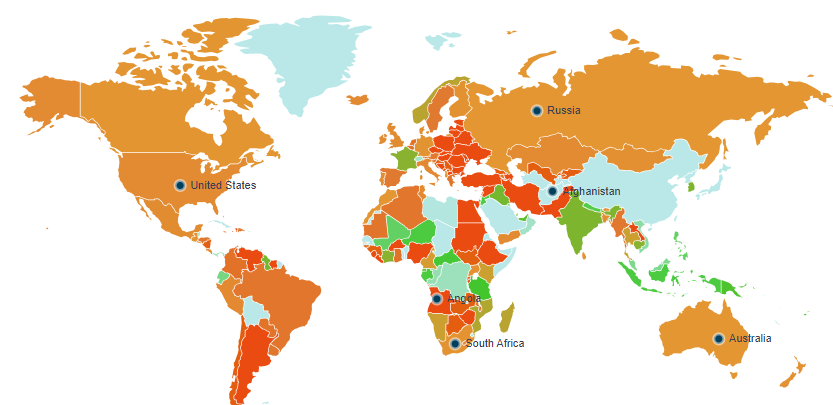
Figure 2. Inflation rates in a global comparison (https://www.worlddata.info/inflation.php).
Life expectancy at birth (LE) is another of the most commonly used macro indicators to compare the socioeconomic development of nations (Figure 4). This macro-indicator shows how many years a newborn could live if the prevailing patterns of mortality at the time of his/her birth remained unchanged throughout his/her life. Usually these are interpolated data from data over a 5-year period. Therefore, they may not reflect the events currently observed. However, mortality rates for different age groups and life expectancy at birth or survival to a certain age are important indicators of a nation’s health status (https://data.worldbank.org/indicator).
The Where to Be Born Index (formerly known as the Quality-of-Life Index, abbreviated as QLI) aims to assess
a country’s potential for a healthy, safe and prosperous life in the years ahead (Figure 6). It takes into account both the subjective satisfaction with the life of the population of the country, and the objective determinants of the quality of life. This complex indicator takes into account the material well-being of the population, life expectancy at birth, the quality of family life (number of divorces), political freedoms, unemployment, climate (average deviation of the minimum and maximum monthly temperatures from 14 degrees Celsius and the number of months in a year with precipitation less than 30 mm), ratings of personal physical safety (crime and terrorism), quality of public life, governance (rating of corruption), gender equality and other indicators (https://data.worldbank.org/indicator).

Figure 3. Gross domestic product (GDP), (years) (https://data.worldbank.org/indicator).
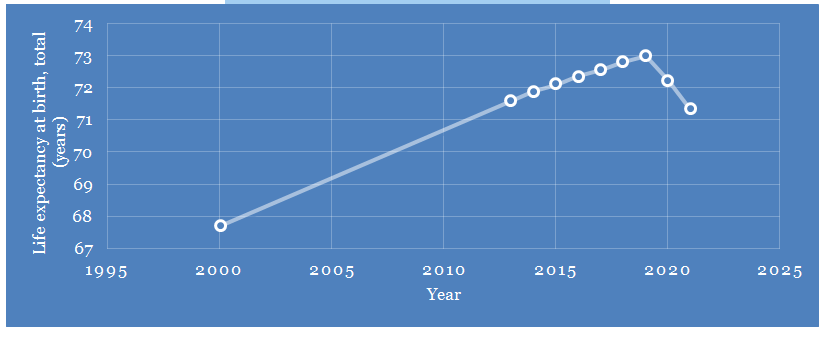
Figure 4. Life expectancy at birth, total (years) (https://data.worldbank.org/indicator).
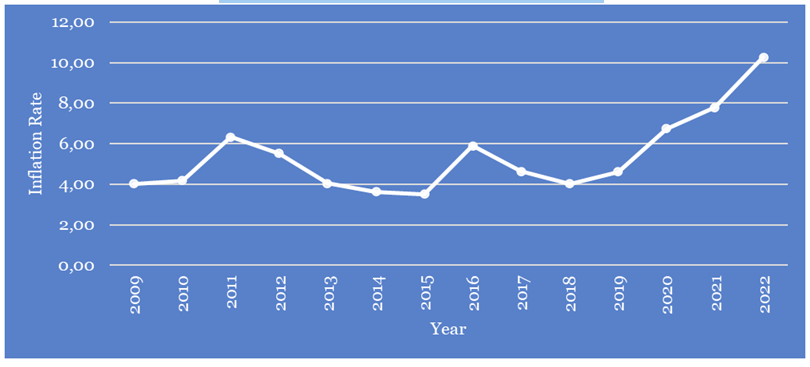
Figure 5. Inflation Rate, total (years) (https://data.worldbank.org/indicator).
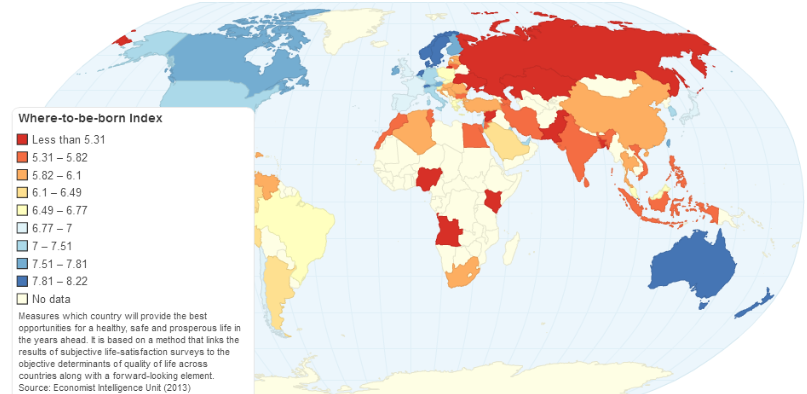
Figure 6. Where to Be Born Index (https://data.worldbank.org/indicator).
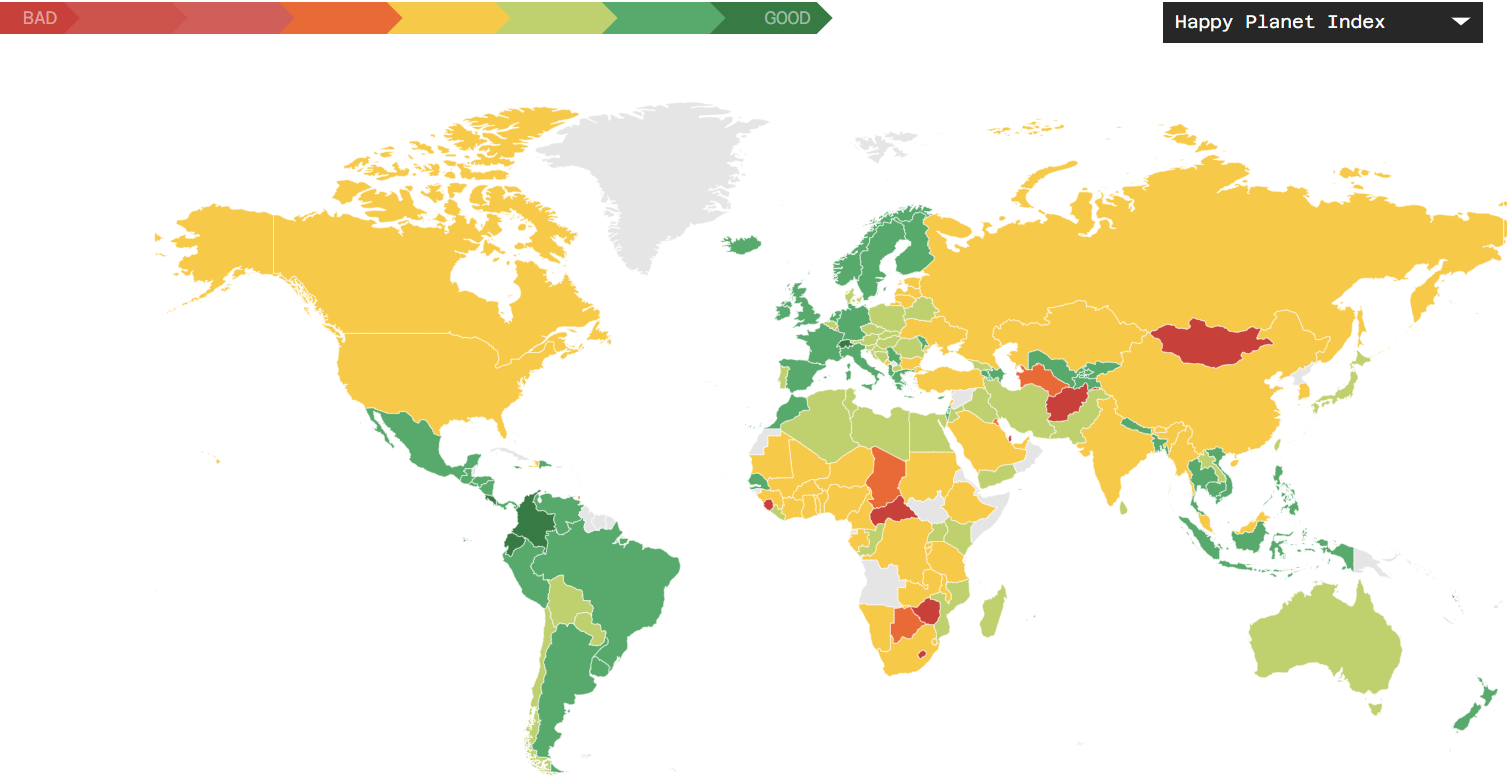
Figure 7. Happy Planet Index (October 2021 Wellbeing Economy Alliance www.happyplanetindex.org)
The Happy Planet Index (HPI) reflects individual perceptions of life expectancy, well-being, and the environment (ecological footprint) (Figure 7). The HPI “living better and doing better” is the alternative to GDP “doing more”. According to large-scale genetic studies involving twins or families, only 30-40% of the differences in the level of happiness between people in a country are explained by genetic differences, the remaining 60-70% of the differences between people are due to environmental influences (Helliwell, et al., 2022). The HPI measures how well countries achieve long, happy, and sustainable well-being for all. HPI estimates country performance in three dimensions:
- Well-being: How satisfied people are with their lives?
- Life Expectancy: How long do people usually live?
- Ecological footprint: How large is their impact on the environment?
The HPI is now developed by the public interest think tank (Hot or Cool Institute) that is driven by following key principles:
- Well-being and prosperity;
- Fairness and justice;
- Living within ecological limits.
The top 10 countries according to the Happy Planet index for 2021 are as follows: Costa Rica, Vanuatu, Colombia, Switzerland, Ecuador, Panama, Jamaica
Guatemala, Honduras, and Uruguay. (https://weall.org/the-latest-happy-planet-index-costa-rica-tops-the-list-beating-western-economies-on-sustainable-wellbeing). Among the countries that rank high in the Happy Planet Index are eight countries in Central and Southern Africa, which shows that it is possible to live a long and happy life with a low per capita income and less environmental impact. Thus, the Happy Planet Index should not be related to GDP and Inflation Rate, nor to the place of birth. It is quite likely that the HPI will correlate with Life Expectancy at birth.
Method
We randomly selected 37 countries whose data for Gross Domestic Product, Inflation Rate, Where to Be Born Index, Life Expectancy at birth, and The Happy Planet Index are presented in the World Bank national accounts data (https://data.worldbank.org/indicator). Statistical processing of the database was implemented using IBM SPSS Statistics 27. Spearman’s test was used to assess the relationship of indicators.
Results
As expected, there were no significant correlation between HPI and GDP, IR, and QLI. Only one significant correlation was found between Life Expectancy at birth and Where to Be Born Index. Moreover, our hypothesis about the relation between the Happy Planet Index and Life Expectancy at birth was not confirmed (Table 1).
It should be noted that the data presented in Figures 3-5 look very paradoxical, namely, against the background of a decrease in life expectancy and rising inflation, there is a considerable increase in GDP.
The global economic crisis caused a decrease in the growth rate of production, the level of income of the population and life expectancy. The crisis has undermined family and community life, nation and personal security. It is obvious that WDIs, which have proven themselves well in conditions of relatively stable world development, in a turbulent and unpredictable world, are unlikely to make it possible to find a strategic solution to overcome the global economic crisis.
Table 1. Correlation among GDP, IR, QLI, LE, and HPI
| Spearman correlation | HPI | GDP | IR | QLI |
| GDP | -.189 | — | ||
| IR | -.159 | -.207 | — | |
| QLI | .238 | .092 | -.117 | — |
| LE | .106 | .132 | -.201 | .785** |
p<0.001
Discussion
Mihaly Csikszentmihalyi emphasized that the future does not fit into the framework of rules and predictable outcomes; we have to develop something beyond logic if we are to achieve prosperity; we must develop intuition to anticipate future changes, empathy to understand what is not easy to express, wisdom to see the connection between seemingly unrelated phenomena, and creativity to find new ways to set goals and establish new rules to adapt to the unexpected (2020, p. 5).
We believe that such a term, covering all the aspects that M. Csikszentmihalyi pointed out, is Coping-Intelligence. We consider the Coping-Intelligence as a specific form of organizing the mental experience of overcoming difficult life situations. This mental experience is the result of the generalizing work of memory, starting from the biochemical level and ending with the supra-individual socio-historical patrimonial memory or the third world according to Karl Popper (Popper, 1978). The results of numerous studies indicate that the measure of differentiation and hierarchical ordering of experience determines IQ level and creativity, the emergence of new ideas, wisdom and the solution of a wide range of problems (for instance, Volkova, 2014; Volkova & Kuvaeva, 2022; and other). The development of a new World Development Indicator, namely, the Nation’s Coping Intelligence (NCI), requires large-scale fundamental interdisciplinary research.
The nation as a collective entity (collective subject) overcomes global challenges thanks to the concerted actions of the members of society; in the case of uncoordinated actions, each individual is overstrained and resources are depleted up to the self-destruction of the nation. The formation, development and functioning of the NCI is influenced by a combination of many factors, such as geopolitical and natural conditions, economic principles, common historical fate, way of life, state structure, types of socio-cultural dynamics, traditions, values, religion, national character, etc. However, the core factor connecting all of the above is the collective experience of overcoming global events (war, genocide, pandemic, state collapse, economic crises, etc.).
The nation’s coping with global challenges may be accompanied by both demoralization and rare heroism. As A.J. Toynbee noted, the necessary skills are required for the reorganization of life, if they are absent, then society remains at a primitive level of development (Toynbee, 1946). External pressure is an incentive for the development of civilization, and “the stronger is the challenge, the more original and creative is the answer” (Toynbee, 2018, p. 43). The formula for progressive growth, according to A.J. Toynbee, is that “a challenge that is successfully answered gives rise to a new challenge, which is again followed by a successful answer, and so on until a breakdown”; formula of progressive disintegration: “a challenge, to which an unsuccessful answer is given, gives rise to another attempt, equally unsuccessful, and so on, up to complete destruction” [ibid, p. 158]. In order to avoid a “breakdown” or complete destruction, A. Toynbee suggests looking for a new creative elite capable of “directing their hidden and so far unclaimed talents to solve an unfamiliar problem” [ibid., p. 120]. Thus, another key factor of the NCI is the presence of a creative minority, perhaps from different walks of life and with different experiences, able to respond to the challenge, see new opportunities, offer a solution for the development and prosperity of the nation. The creative minority sets patterns of behavior that the majority adopts through the mechanism of social imitation. The task of creative personalities is to turn the majority into their followers and direct it to resolve a stressful situation that goes beyond the scope of a person’s individual life. The ruling minority, unable to respond to the historical challenge, inevitably leads to the loss of national sovereignty.
Summarizing the foregoing, one can come to the conclusion that the Nation’s Coping-Intelligence is the measure of a nation’s cohesion to overcome global challenges. The key indicators of the NCI are:
(1) experience in overcoming global challenges;
(2) traditions and values of the nation;
(3) creative people from different walks of life capable of responding to new global challenges and being objects of social imitation;
(4) a strong leader who draws on the traditions and values of the nation.
Conclusions
Funding: The investigation was supported by the RF State Assignments No. 0138-2021-0007 “Multidimensional nature of human abilities and mental resources”.
CRediT author statement:
The authors have read and approved the final version and bear responsibility for all aspects of the publication.
The authors declare no conflict of interest.
Acknowledgments: The authors express deep appreciation to Kuvaeva I.O. for the support and fruitful discussions of this work.
References
Abdallah, S., Abrar, R. & Marks, N. (2021). The Happy Planet Index 2021 Data File. Retrieved April 20, 2022, from happyplanetindex.org
Csikszentmihalyi, M.R. (2020). The evolution of personality. 5th ed. M.: Alpina non-fiction. [Chiksentmikhayi M. Evolyutsiya lichnosti. 5 izd. M.: Al’pina non-fikshn, 2020. 420 s].
Helliwell, J. F., Layard, R., Sachs, J. D., De Neve, J.-E., Aknin, L. B., & Wang, S. (Eds.). (2022). World Happiness Report 2022. New York: Sustainable Development Solutions Network. Retrieved May 28, 2022, from https://worldhappiness.report/ed/2022/
Inflation rates in a global comparison. Retrieved May 28, 2022, from https://www.worlddata.info/inflation.php.
Life expectancy at birth, total (years). Retrieved April 20, 2022, from https://data.worldbank.org/indicator/SP.DYN.LE00.IN?end=2021&start=2000&view=chart
Mund, P. (2017). Hardiness and Culture: a Study with Reference to 3 Cs of Kobasa. International Research Journal of Management, IT and Social Sciences, 4, 152-159.
Popper, Karl (1978). Three Worlds by Karl Popper. The Tanner Lecture on Human Values. Talk delivered at The University of Michigan. Retrieved April 10, 2022, fromhttps://tannerlectures.utah.edu/_resources/documents/a-to-z/p/popper80.pd
Toynbee, A. J. (2018). How civilizations perish: per. from English. M.: Rodina. [Toynbi A. Dzh. Kak gibnut tsivilizatsii: per. s angl. M.: Rodina, 2018. 304 s].
The World Bank. Retrieved April 20, 2022, from https://github.com/worldbank/SPI/
Volkova, E.V. & Kuvaeva, I.O. (2022). The Measure of Hierarchy of the Concept Stress and Copings in freshmen of Different Cultures. Sibirskiy psikhologicheskiy zhurnal, 86, 48–65. DOI: 10.17223/17267080/86/3 [Volkova E.V., Kuvayeva I.O. Mera iyerarkhichnosti kontsepta stress i sovladayushcheye povedeniye u pervokursnikov raznykh kul’tur. Sibirskiy psikhologicheskiy zhurnal. 2022. № 86. S. 48-65. 2022. № 86. S. 48–65.].
Volkova, E.V. Intelligence, creativity, and efficiency of mastering of professional activities. Psychological journal, 32 (4), 83-94. [Volkova E.V. Intellekt, kreativnost’ i produktivnost’ osvoyeniya professional’noy deyatel’nosti. Psikhologicheskiy zhurnall. 2011. T. 32. № 4. S. 83-94].
Comments (0)
There are more than fifty indicators of the dynamics of the nation’s development (WDI). Among them, the most commonly used Gross Domestic Product (GDP) and Inflation Rates which reflect how much goods are produced, that is, “doing more”. Comprehensive indicators are being developed, such as Statistical Performance Indicators (SPI), as well as alternative indicators that reflect individual perceptions of a happy life (HPI), in other words “living better and doing better”. These indicators allow us to make a responsible strategic decision. Nevertheless, in the face of unprecedented external pressure and the turbulent development of the world, they do not allow us to answer the question of whether the nation will be able to withstand these challenges, preserve its development potential, values, culture, and territories. A nation copes with challenges if all the forces of society unite and act in concert, in other words, the nation acts as a collective entity (Collective Subject). Thus, the question arises of a new World Development Indicator as a Coping-Intelligence of the Nation (NCI): how to multiply nation’s developmental potential no matter what life throws at you. The NCI estimates country performance in four dimensions: (1) experience in overcoming global challenges; (2) traditions and values of the nation; (3) creative people capable of responding to new global challenges; (4) a strong leader who draws on the traditions and values of the nation.
Coping-Intelligence of the Nations:
How to multiply developmental potential no matter what life throws at you.
A number of World Development Indicators (WDI) are used to assess the dynamics of a nation’s development such as GDP, LE, QLI, HPI, and others. To date, more than 50 indicators are known to measure various aspects of the develop potential of nations. An overall statistical performance score (or index ranging from 0 to 100) is obtained by combining these scores. The map below (Figure 1) shows country SPI scores (Statistical Performance Indicators) as quintiles, with dark green for the top 20% and dark orange for the poorest 20%. As the SPI team points out, the overall SPI score is positively correlated with three widely used development indicators such as GDP per capita, the Human Capital Index, and the WGI Government Effectiveness Score (https://github.com/worldbank/SPI/).
Figure 1. Statistical Performance Indicators, The World Bank (https://www.worldbank.org/en/programs/statistical-performance-indicators).
The figures 3-5 reflect the global dynamics of the average values of the most commonly used World Development Indicators over the past 20 years. Detailed information on changes in these indicators for countries can be found in the World Bank national accounts data (https://data.worldbank.org/indicator).
Gross Domestic Product (GDP) is the total monetary or market value of all finished goods and services made within a country during a specific period. GDP characterizes the economic health of a country, size of an economy and its growth rate. Despite its limitations, GDP is a key tool to guide strategic decisions. There is an ingrained belief that GDP growth is synonymous with increasing wellbeing and prosperity and it is universally beneficial. Perhaps this is why the modern economic system is driven by a ‘growth at all costs’ mentality measured by GDP. In fact, GDP growth does not mean a better life for everyone. It doesn’t take into account the things that really matter to people, like inequality, social relationships, and health.
Inflation Rate is an essential component of monetary stability (Figure 2, 5). Inflation, as measured by the consumer price index, reflects the annual percentage change in the cost of acquiring a set of goods and services for the average consumer. Compared to 2021, inflation has become higher. However, compared to 14.0 percent in 1980, the current 8.3 percent is relatively moderate. The lowest Inflation Rate is observed in such countries as Macao (1.0%), Hong Kong (1.9%), China (2.0%), Saudi Arabia (2.5%), Japan (2.5%), and Switzerland (2.8 %). The highest Inflation Rate is recorded in such countries as Turkey (72.3%), Argentina (94.8%) and Zimbabwe (104.7%)
Figure 2. Inflation rates in a global comparison (https://www.worlddata.info/inflation.php).
Life expectancy at birth (LE) is another of the most commonly used macro indicators to compare the socioeconomic development of nations (Figure 4). This macro-indicator shows how many years a newborn could live if the prevailing patterns of mortality at the time of his/her birth remained unchanged throughout his/her life. Usually these are interpolated data from data over a 5-year period. Therefore, they may not reflect the events currently observed. However, mortality rates for different age groups and life expectancy at birth or survival to a certain age are important indicators of a nation’s health status (https://data.worldbank.org/indicator).
The Where to Be Born Index (formerly known as the Quality-of-Life Index, abbreviated as QLI) aims to assess
a country’s potential for a healthy, safe and prosperous life in the years ahead (Figure 6). It takes into account both the subjective satisfaction with the life of the population of the country, and the objective determinants of the quality of life. This complex indicator takes into account the material well-being of the population, life expectancy at birth, the quality of family life (number of divorces), political freedoms, unemployment, climate (average deviation of the minimum and maximum monthly temperatures from 14 degrees Celsius and the number of months in a year with precipitation less than 30 mm), ratings of personal physical safety (crime and terrorism), quality of public life, governance (rating of corruption), gender equality and other indicators (https://data.worldbank.org/indicator).
Figure 3. Gross domestic product (GDP), (years) (https://data.worldbank.org/indicator).
Figure 4. Life expectancy at birth, total (years) (https://data.worldbank.org/indicator).
Figure 5. Inflation Rate, total (years) (https://data.worldbank.org/indicator).
Figure 6. Where to Be Born Index (https://data.worldbank.org/indicator).
Figure 7. Happy Planet Index (October 2021 Wellbeing Economy Alliance www.happyplanetindex.org)
The Happy Planet Index (HPI) reflects individual perceptions of life expectancy, well-being, and the environment (ecological footprint) (Figure 7). The HPI “living better and doing better” is the alternative to GDP “doing more”. According to large-scale genetic studies involving twins or families, only 30-40% of the differences in the level of happiness between people in a country are explained by genetic differences, the remaining 60-70% of the differences between people are due to environmental influences (Helliwell, et al., 2022). The HPI measures how well countries achieve long, happy, and sustainable well-being for all. HPI estimates country performance in three dimensions:
- Well-being: How satisfied people are with their lives?
- Life Expectancy: How long do people usually live?
- Ecological footprint: How large is their impact on the environment?
The HPI is now developed by the public interest think tank (Hot or Cool Institute) that is driven by following key principles:
- Well-being and prosperity;
- Fairness and justice;
- Living within ecological limits.
The top 10 countries according to the Happy Planet index for 2021 are as follows: Costa Rica, Vanuatu, Colombia, Switzerland, Ecuador, Panama, Jamaica
Guatemala, Honduras, and Uruguay. (https://weall.org/the-latest-happy-planet-index-costa-rica-tops-the-list-beating-western-economies-on-sustainable-wellbeing). Among the countries that rank high in the Happy Planet Index are eight countries in Central and Southern Africa, which shows that it is possible to live a long and happy life with a low per capita income and less environmental impact. Thus, the Happy Planet Index should not be related to GDP and Inflation Rate, nor to the place of birth. It is quite likely that the HPI will correlate with Life Expectancy at birth.
We randomly selected 37 countries whose data for Gross Domestic Product, Inflation Rate, Where to Be Born Index, Life Expectancy at birth, and The Happy Planet Index are presented in the World Bank national accounts data (https://data.worldbank.org/indicator). Statistical processing of the database was implemented using IBM SPSS Statistics 27. Spearman’s test was used to assess the relationship of indicators.
As expected, there were no significant correlation between HPI and GDP, IR, and QLI. Only one significant correlation was found between Life Expectancy at birth and Where to Be Born Index. Moreover, our hypothesis about the relation between the Happy Planet Index and Life Expectancy at birth was not confirmed (Table 1).
It should be noted that the data presented in Figures 3-5 look very paradoxical, namely, against the background of a decrease in life expectancy and rising inflation, there is a considerable increase in GDP.
The global economic crisis caused a decrease in the growth rate of production, the level of income of the population and life expectancy. The crisis has undermined family and community life, nation and personal security. It is obvious that WDIs, which have proven themselves well in conditions of relatively stable world development, in a turbulent and unpredictable world, are unlikely to make it possible to find a strategic solution to overcome the global economic crisis.
Table 1. Correlation among GDP, IR, QLI, LE, and HPI
| Spearman correlation | HPI | GDP | IR | QLI |
| GDP | -.189 | — | ||
| IR | -.159 | -.207 | — | |
| QLI | .238 | .092 | -.117 | — |
| LE | .106 | .132 | -.201 | .785** |
p<0.001
Mihaly Csikszentmihalyi emphasized that the future does not fit into the framework of rules and predictable outcomes; we have to develop something beyond logic if we are to achieve prosperity; we must develop intuition to anticipate future changes, empathy to understand what is not easy to express, wisdom to see the connection between seemingly unrelated phenomena, and creativity to find new ways to set goals and establish new rules to adapt to the unexpected (2020, p. 5).
We believe that such a term, covering all the aspects that M. Csikszentmihalyi pointed out, is Coping-Intelligence. We consider the Coping-Intelligence as a specific form of organizing the mental experience of overcoming difficult life situations. This mental experience is the result of the generalizing work of memory, starting from the biochemical level and ending with the supra-individual socio-historical patrimonial memory or the third world according to Karl Popper (Popper, 1978). The results of numerous studies indicate that the measure of differentiation and hierarchical ordering of experience determines IQ level and creativity, the emergence of new ideas, wisdom and the solution of a wide range of problems (for instance, Volkova, 2014; Volkova & Kuvaeva, 2022; and other). The development of a new World Development Indicator, namely, the Nation’s Coping Intelligence (NCI), requires large-scale fundamental interdisciplinary research.
The nation as a collective entity (collective subject) overcomes global challenges thanks to the concerted actions of the members of society; in the case of uncoordinated actions, each individual is overstrained and resources are depleted up to the self-destruction of the nation. The formation, development and functioning of the NCI is influenced by a combination of many factors, such as geopolitical and natural conditions, economic principles, common historical fate, way of life, state structure, types of socio-cultural dynamics, traditions, values, religion, national character, etc. However, the core factor connecting all of the above is the collective experience of overcoming global events (war, genocide, pandemic, state collapse, economic crises, etc.).
The nation’s coping with global challenges may be accompanied by both demoralization and rare heroism. As A.J. Toynbee noted, the necessary skills are required for the reorganization of life, if they are absent, then society remains at a primitive level of development (Toynbee, 1946). External pressure is an incentive for the development of civilization, and “the stronger is the challenge, the more original and creative is the answer” (Toynbee, 2018, p. 43). The formula for progressive growth, according to A.J. Toynbee, is that “a challenge that is successfully answered gives rise to a new challenge, which is again followed by a successful answer, and so on until a breakdown”; formula of progressive disintegration: “a challenge, to which an unsuccessful answer is given, gives rise to another attempt, equally unsuccessful, and so on, up to complete destruction” [ibid, p. 158]. In order to avoid a “breakdown” or complete destruction, A. Toynbee suggests looking for a new creative elite capable of “directing their hidden and so far unclaimed talents to solve an unfamiliar problem” [ibid., p. 120]. Thus, another key factor of the NCI is the presence of a creative minority, perhaps from different walks of life and with different experiences, able to respond to the challenge, see new opportunities, offer a solution for the development and prosperity of the nation. The creative minority sets patterns of behavior that the majority adopts through the mechanism of social imitation. The task of creative personalities is to turn the majority into their followers and direct it to resolve a stressful situation that goes beyond the scope of a person’s individual life. The ruling minority, unable to respond to the historical challenge, inevitably leads to the loss of national sovereignty.
Summarizing the foregoing, one can come to the conclusion that the Nation’s Coping-Intelligence is the measure of a nation’s cohesion to overcome global challenges. The key indicators of the NCI are:
(1) experience in overcoming global challenges;
(2) traditions and values of the nation;
(3) creative people from different walks of life capable of responding to new global challenges and being objects of social imitation;
(4) a strong leader who draws on the traditions and values of the nation.
Funding: The investigation was supported by the RF State Assignments No. 0138-2021-0007 “Multidimensional nature of human abilities and mental resources”.
CRediT author statement:
The authors have read and approved the final version and bear responsibility for all aspects of the publication.
The authors declare no conflict of interest.
Acknowledgments: The authors express deep appreciation to Kuvaeva I.O. for the support and fruitful discussions of this work.
Abdallah, S., Abrar, R. & Marks, N. (2021). The Happy Planet Index 2021 Data File. Retrieved April 20, 2022, from happyplanetindex.org
Csikszentmihalyi, M.R. (2020). The evolution of personality. 5th ed. M.: Alpina non-fiction. [Chiksentmikhayi M. Evolyutsiya lichnosti. 5 izd. M.: Al’pina non-fikshn, 2020. 420 s].
Helliwell, J. F., Layard, R., Sachs, J. D., De Neve, J.-E., Aknin, L. B., & Wang, S. (Eds.). (2022). World Happiness Report 2022. New York: Sustainable Development Solutions Network. Retrieved May 28, 2022, from https://worldhappiness.report/ed/2022/
Inflation rates in a global comparison. Retrieved May 28, 2022, from https://www.worlddata.info/inflation.php.
Life expectancy at birth, total (years). Retrieved April 20, 2022, from https://data.worldbank.org/indicator/SP.DYN.LE00.IN?end=2021&start=2000&view=chart
Mund, P. (2017). Hardiness and Culture: a Study with Reference to 3 Cs of Kobasa. International Research Journal of Management, IT and Social Sciences, 4, 152-159.
Popper, Karl (1978). Three Worlds by Karl Popper. The Tanner Lecture on Human Values. Talk delivered at The University of Michigan. Retrieved April 10, 2022, fromhttps://tannerlectures.utah.edu/_resources/documents/a-to-z/p/popper80.pd
Toynbee, A. J. (2018). How civilizations perish: per. from English. M.: Rodina. [Toynbi A. Dzh. Kak gibnut tsivilizatsii: per. s angl. M.: Rodina, 2018. 304 s].
The World Bank. Retrieved April 20, 2022, from https://github.com/worldbank/SPI/
Volkova, E.V. & Kuvaeva, I.O. (2022). The Measure of Hierarchy of the Concept Stress and Copings in freshmen of Different Cultures. Sibirskiy psikhologicheskiy zhurnal, 86, 48–65. DOI: 10.17223/17267080/86/3 [Volkova E.V., Kuvayeva I.O. Mera iyerarkhichnosti kontsepta stress i sovladayushcheye povedeniye u pervokursnikov raznykh kul’tur. Sibirskiy psikhologicheskiy zhurnal. 2022. № 86. S. 48-65. 2022. № 86. S. 48–65.].
Volkova, E.V. Intelligence, creativity, and efficiency of mastering of professional activities. Psychological journal, 32 (4), 83-94. [Volkova E.V. Intellekt, kreativnost’ i produktivnost’ osvoyeniya professional’noy deyatel’nosti. Psikhologicheskiy zhurnall. 2011. T. 32. № 4. S. 83-94].