
Psychological well-being among respondents with different resilience and anxiety levels
Abstract
Abstract
Abstract. This study is devoted to the study of the phenomenon of psychological well-being in its manifestation with such characteristics as resilience and anxiety. The following methods were used: the questionnaire “The Scale of psychological well-being”, The Integrative anxiety test, and The Resilience test. 330 people participated in the study: 263 women and 67 men, the age of the respondents ranged from 18 to 65 years. The results were processed using the Mann-Whitney U test, contingency tables, regression analysis, and correlation analysis in the JASP.0.19.3.0 program. The study revealed that. As a result of the study, it was found that psychological well-being is more likely to have a positive relationship with resilience, and a negative one with anxiety, and in the age group over 46 years, the relationship between anxiety and well-being is higher than in groups over young age (p = 0.008, ES = 0.023). There were no significant differences in the severity of psychological well-being in men and women. The assumption that high values of resilience are influenced by life satisfaction was confirmed.
Introduction
The issues of happiness and well-being are considered both in the field of psychology and in other sciences. Despite the fact that a large number of studies have been devoted to the study of these phenomena and the factors that influence them, there is currently no consensus among scientists regarding the relationships and connections between such constructs as “psychological well-being,” “subjective well-being,” “life satisfaction,” and “happiness.” The composition of these constructs may vary depending on gender, age, and region, but the basic components remain similar. So, V.-R. López and colleagues in their research identified the factors that affect the “feeling” of happiness of the inhabitants of Spain. Based on the answers of 933 respondents, they proposed a model of happiness, which included a person’s marital status, trust in neighbors, and safety of the place of residence, culture, sports, ecology, unpolluted environment, as well as financial and labor situation. They also found that the priorities for happiness will differ between women and men (López et al, 2021). Similarly to colleagues in Japan and the United States (de Bruin, 2019; Oshio, 2024), the authors note that it is personal characteristics (individual-typological) that determine the part of happiness that is specific to an individual.
One of the measures of an individual’s mental health is their resilience, which allows them to cope with stressful situations and challenges in life. S. Maddi considers resilience to be a person’s beliefs that allow them to remain active and prevent the negative effects of stress, and he believes that it is a more important predictor of coping than optimism and religiosity. In the construct of resilience, he identifies three key components, which he refers to as attitudes: engagement, control, and risk acceptance (Maddi, 2002, 2013, 2016). In Russian psychology, D.A. Leontiev proposed translating this term as “resilience.” Resilience reflects the following life attitudes: engagement, confidence in the ability to control one’s life events, and willingness to take risks (Leontiev, 2006, 2007, 2020). In I. Solkova and P. Tomanek’s research, it was shown that resilience affects coping resources through a sense of self-efficacy, competence, and higher cognitive evaluation (Solkova, Tomanek, 1994); components of resilience such as engagement and control increase mental health, reduce threat assessment and the use of emotion-focused coping strategies, and promote the use of problem-solving coping strategies (Florian, 2005). It has also been found that high levels of resilience and low levels of anxiety reduce physical responses to stressors (Solcova, Sykora, 1995).
O.N. Malakhova and I.A. Ershova in their study conducted on 52 men and women aged 25 to 35, note that the indicators of resilience are significantly higher among respondents with high life satisfaction than among respondents with low satisfaction (Malakhova, 2021). According to L.V. Kulikov, people who are satisfied with their marital relationship and health are more likely to be satisfied with their lives (Kulikov, 2000).
A.V. Troshikhina and V.R. Manukyan studied psychological and subjective well-being and concluded that those components of well-being that are directed outward, towards interaction with the environment, especially positive relationships and competence, were associated with a decrease in anxiety (Troshikhina, Manukyan, 2007).
The purpose of this study was to examine the differences in psychological well-being between groups with different levels of resilience and anxiety, in order to expand our understanding of psychological well-being.
Method
2.1. Participants. 330 people participated in the study: 263 women and 67 men, the age of the respondents ranged from 18 to 65 years. In the analysis, the respondents were divided into three age groups: 18-25 years old – 161 people, 26-45 years old – 88 people, 46-65 years old – 81 people.
2.2. Procedure. The data was collected using a simple random (randomized) selection of respondents, which allowed for a diverse sample. The study involved the completion of questionnaires and a socio-demographic survey. The questionnaire focused on the respondent’s satisfaction with various aspects of their life, including health, profession, and marital status, as well as their self-perceived psychological well-being. The data was analyzed using the Mann-Whitney U-test, contingency tables, regression analysis, and correlation analysis. Mathematical processing was carried out using the JASP.0.19.3.0 program.
2.3. Methods and equipment. The following methods were used: the Scale of Psychological Well-Being (developed by K. Riff, adapted by T.D. Shevelenkova and P.P. Fesenko); the Integrative Anxiety Test (A.P. Biryuk, L.I. Wasserman, and B.V. Iovlev); and the Resilience Test (Hardinnes survey test, S. Maddi and
S. Kobasa, adapted by E.N. Osin and
E.I. Rasskazova).
Results
At the first stage of data processing, the following patterns were identified: there were many more respondents with low resilience in the low-well-being group than in the medium-well-being group. There were more respondents with medium resilience in the medium-well-being group than in the low-well-being group. High-well-being respondents were more likely to have a high level of resilience (Table 1).
Table 1. Comparison of respondents with different levels of psychological well-being and resilience
| The level of psychological well-being | The level of resilience | ||
| High | Medium | Low | |
| High | 20.000
4.121 |
13.000
18.752 |
1.000
11.127 |
| Medium | 20.000
29.697 |
162.000
135.121 |
63.000
80.182 |
| Low | 0.000
6.182 |
7.000
28.127 |
44.000
16.691 |
The study revealed strong and significant correlations between resilience and the scales of “environmental management” (r=0.78;
p< 0.001), “self-acceptance” (r=0.748; p< 0.001), “affect balance” (r=0.817; p< 0.001), and “psychological well-being” (r=0.767; p< 0.001). This result suggests that the ability to cope with stress and internal tension is related to the fact that respondents are aware of and accept different aspects of their personalities, including both positive and negative qualities, and have a general sense of satisfaction with life. However sometimes this confidence can be replaced by feelings of powerlessness and a lack of appreciation for one’s own abilities to overcome life’s challenges. Additionally, it can be argued that resilience is also influenced by the ability to control external activities, utilize available opportunities, and create new ones independently.
According to indicators of resilience, such as engagement, control, and risk-taking, significant differences between those who are satisfied and those who are dissatisfied with various aspects of their lives were found. This result may reflect the contribution of life satisfaction to resilience, which is a coping mechanism that helps individuals withstand the challenges and stressors of life.
Table 2. Comparison of respondents with different levels of job satisfaction, marital status, and health.
| Scales
|
Satisfaction | ||||||||
| professional field | marital status | health | |||||||
| Sat. | Not sat. | р | Sat. | Not sat. | р | Sat. | Not sat. | р | |
| Сommitment (М=22,3) | 22 | 18 | < .001 | 21 | 18 | < .001 | 21 | 18 | < .001 |
| Control (М=16,7) | 16 | 14 | < .001 | 16 | 13 | < .001 | 16 | 13 | < .001 |
| Challenge (М=11,8) | Not detected | Not detected | < .001 | 12 | 10 | < .001 | 12 | 10 | < .001 |
| Hardiness survey (М=50,79) | 49 | 40 | < .001 | 48 | 40 | < .001 | 48 | 40 | < .001 |
It is worth noting that there were no significant differences in the level of psychological well-being based on gender (p=0.919) or age (p=0.244).
When analyzing the data of respondents with different levels of psychological well-being based on their level of anxiety, it was found that low-well-being and medium-well-being respondents were more anxious. The group of high-well-being respondents had a higher proportion of medium-anxious respondents than expected (Table 3). It is assumed that this result may be related to additional variables that reflect some kind of analysis, attitude towards events and life situations. This conclusion is supported by the available experimental data that respondents with higher psychological well-being have a lower level of reflexivity.
The conducted correlation analysis confirmed the legitimacy of considering self-assessment of psychological well-being. This result confirms that psychological well-being includes a component of each individual’s subjective perception of their well-being and life satisfaction.
The study revealed a negative correlation between anxiety and the level of psychological well-being, measured both objectively and subjectively (Table 4).
It was also found that the factor of anxiety affects the differences in the level of psychological well-being in the three age groups (p = 0.008, ES = 0.023). Figure 1 shows that for the first group, this relationship is weaker, and for the third group, it is stronger: the transition from low values of well-being to high values at different levels of anxiety is sharper. In this study, only personal anxiety was considered.
Table 3. Comparison of respondents with different levels of psychological well-being and personal anxiety
| The level of psychological well-being
|
The level of personal anxiety | ||
| High | Medium | Low | |
| High | 8.000
20.297 |
17.000
9.891 |
9.000
3.812 |
| Medium | 144.000
146.258 |
74.000
71.273 |
27.000
27.470 |
| Low | 45.000
30.445 |
5.000
14.836 |
1.000
5.718 |
Note: Empirical value is in bold; p< 0.001
Table 4. Relationship between psychological well-being and self-esteem of psychological well-being and personal anxiety
| Pearson’s | Spearman’s | |||
| r | p | rho | p | |
| Psychological well-being (self-esteem)- Psychological well-being (methodology) | 0.499 | < .001 | 0.462 | < .001 |
| Psychological well-being (self-esteem) – personal anxiety | -0.454 | < .001 | -0.449 | < .001 |
| Psychological well-being – personal anxiety | -0.444 | < .001 | -0.463 | < .001 |
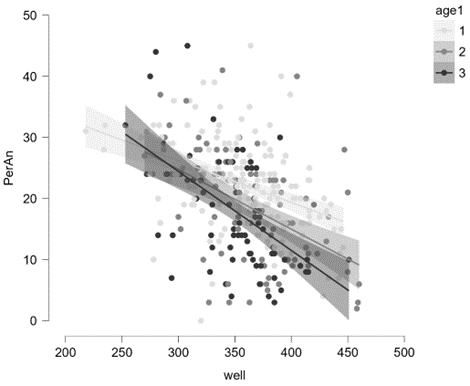
Figure 1. Relationship between anxiety and psychological well-being in three age groups.
The figure has the following labels: well – psychological well-being, PerAn – personal anxiety, age 1 – respondents aged 18-25, age 2 – respondents aged 26-45, and age 3 – respondents aged 46-65
Conclusions
The purpose of this study was to expand the understanding of the phenomenon of psychological well-being. The study revealed a connection between psychological well-being and resilience and anxiety, as well as the connection between life satisfaction, as a parameter similar to psychological well-being, and the components of resilience. These data can be used for further research.
Competing interests: The authors state that the study was conducted in the absence of any commercial or financial relationships that could be interpreted as a potential conflict of interest.
Acknowledgments: The authors thank all the participants of the study.
Ethics Statement: The collection of empirical data was organized in accordance with generally accepted ethical standards. This study is part of a study of psychological well-being and reflexivity, which was approved by the Ethics Committee of St. State University on 18.10.2024. Protocol No. 115-02-7.
CRediT author statement: Filatova S.I.: conceptualization, methodology, investigation, resources, formal analysis, investigation, visualization, writing – original draft, software; Byzova V.M.: conceptualization, methodology, formal analysis.
The authors have read and approved the final version and are responsible for all aspects of the manuscript.
References
De Bruin W. B., Parker A. M., Strough J.N. (2019) Age Differences in Reported Social Networks and Well-Being. Psychology and Aging, Vol. 35, No. 2, pp. 159–168, http://dx.doi.org/10.1037/pag0000415.supp
- Gleibs I. H., Morton T. A., Rabinovich A., Haslam S. A. and Helliwell J. F. (2013) Unpacking the hedonic paradox: a dynamic analysis of the relationships between financial capital, social capital and life satisfaction. British journal of social psychology, 52 (1). pp. 25-43. http://doi.org/10.1111/j.2044-8309.2011.02035.x
- Fesenko, P.P. (2005) Does the concept of psychological well-being have socio-cultural specifics? Psychology: Journal of the Higher School of Economic, Vol. 2. No. 4. Pp. 132–138.
- Florian, V., Mikulincer M, Taubman O. (1995) Does hardiness contribute to mental health during a stressful reallife situation? The roles of appraisal and coping. Journal of Personality and Social Psychology, 68 (4), pp. 687–695.
- Kulikov, L.V. (2000) Determinants of life satisfaction Society and politics: Modern research, search for concepts / edited by V.Y. Bolshakov. St. Petersburg: St. Petersburg State University pp. 476-510.
- Leontiev, D.A. (2007) Ascension to an existential worldview The Third All-Russian Scientific and Practical Conference on existential Psychology: Materials of communications edited by D.A. Leontiev. Moscow: Smysl, pp. 3-12.
- Leontiev, D.A. (2006) The discourse of freedom and responsibility (report with discussion) Bulletin of the Moscow University. Series 7, Philosophy, No. 5. Pp. 95-113.
- Leontiev, D. A. (2020) Happiness and Subjective Well-Being: Towards the Construction of a Conceptual Field Monitoring of Public Opinion: Economic and Social Changes.No. 1. Pp. 14-37. https://doi.org/10.14515/monitoring.2020.1.02
- Lopez V., Huete-Alcocer N., Alfaro Navarro J. L., Peña D. (2021). The relationship between happiness and quality of life: A model for Spanish society. PLOS ONE. 16. e0259528. https://doi.org/10.1371/journal.pone.0259528
- Maddy, S. (2002) Personality Theories: A Comparative Analysis. St. Petersburg: Rech
- Maddi S. (2013). Hardiness as the Existential Courage to Grow Through Searching for Meaning. The Experience of Meaning in Life: Classical Perspectives, Emerging Themes, and Controversies. 227-239. https://doi.org/10.1007/978-94-007-6527-6_18.
- Maddi S. (2016). Hardiness Enhances Effectiveness and Fulfillment. Encyclopedia of Mental Health. 10.1016/B978-0-12-397045-9.00211-1.
- Malakhova, O. N. (2021) A study of the meaningfulness of life, resilience and coping strategies among young people with different levels of life satisfaction: master’s thesis / O. N. Malakhova; Ural Federal University named after the first President of Russia B. N. Yeltsin, Ural Humanitarian Institute, Department of General and Social Psychology. Yekaterinburg 88 p. Bibliogr.: pp. 55-62 (69 titles).
- Oshio, T. (2024) Evolution of psychological distress with age and its determinants in later life: evidence from 17-wave social survey data in Japan. BMC Public Health 24, 2377. https://doi.org/10.1186/s12889-024-19912-w
- Simona-Moussa, J. (2019) The Subjective Well-Being of Those Vulnerable to Poverty in Switzerland. Journal of Happiness Studies, 2019. 21(5): p. 1561–1580. https://doi.org/10.1007/s10902-019-00143-5
- Solcоva, I., Sykora, J. Relation between psychological Hardiness and Physiological Response. Homeostasis in Health & Disease, 1995, 36 (1), pp. 25–34.
- Solcova, I., Tomanek, P. (1994) Daily stress coping strategies: An effect of Hardiness Studia Psychologica. 36 (5), 390–392
- Troshikhina, E. G., Manukyan, V. R. (2017) Anxiety and stable emotional states in the structure of psychoemotional well-being Vestnik SPbGU. Psychology and Pedagogy. 7 (3). 211-223. https://doi.org/10.21638/11701/spbu16.2017.302
Comments (0)
Abstract. This study is devoted to the study of the phenomenon of psychological well-being in its manifestation with such characteristics as resilience and anxiety. The following methods were used: the questionnaire “The Scale of psychological well-being”, The Integrative anxiety test, and The Resilience test. 330 people participated in the study: 263 women and 67 men, the age of the respondents ranged from 18 to 65 years. The results were processed using the Mann-Whitney U test, contingency tables, regression analysis, and correlation analysis in the JASP.0.19.3.0 program. The study revealed that. As a result of the study, it was found that psychological well-being is more likely to have a positive relationship with resilience, and a negative one with anxiety, and in the age group over 46 years, the relationship between anxiety and well-being is higher than in groups over young age (p = 0.008, ES = 0.023). There were no significant differences in the severity of psychological well-being in men and women. The assumption that high values of resilience are influenced by life satisfaction was confirmed.
The issues of happiness and well-being are considered both in the field of psychology and in other sciences. Despite the fact that a large number of studies have been devoted to the study of these phenomena and the factors that influence them, there is currently no consensus among scientists regarding the relationships and connections between such constructs as “psychological well-being,” “subjective well-being,” “life satisfaction,” and “happiness.” The composition of these constructs may vary depending on gender, age, and region, but the basic components remain similar. So, V.-R. López and colleagues in their research identified the factors that affect the “feeling” of happiness of the inhabitants of Spain. Based on the answers of 933 respondents, they proposed a model of happiness, which included a person’s marital status, trust in neighbors, and safety of the place of residence, culture, sports, ecology, unpolluted environment, as well as financial and labor situation. They also found that the priorities for happiness will differ between women and men (López et al, 2021). Similarly to colleagues in Japan and the United States (de Bruin, 2019; Oshio, 2024), the authors note that it is personal characteristics (individual-typological) that determine the part of happiness that is specific to an individual.
One of the measures of an individual’s mental health is their resilience, which allows them to cope with stressful situations and challenges in life. S. Maddi considers resilience to be a person’s beliefs that allow them to remain active and prevent the negative effects of stress, and he believes that it is a more important predictor of coping than optimism and religiosity. In the construct of resilience, he identifies three key components, which he refers to as attitudes: engagement, control, and risk acceptance (Maddi, 2002, 2013, 2016). In Russian psychology, D.A. Leontiev proposed translating this term as “resilience.” Resilience reflects the following life attitudes: engagement, confidence in the ability to control one’s life events, and willingness to take risks (Leontiev, 2006, 2007, 2020). In I. Solkova and P. Tomanek’s research, it was shown that resilience affects coping resources through a sense of self-efficacy, competence, and higher cognitive evaluation (Solkova, Tomanek, 1994); components of resilience such as engagement and control increase mental health, reduce threat assessment and the use of emotion-focused coping strategies, and promote the use of problem-solving coping strategies (Florian, 2005). It has also been found that high levels of resilience and low levels of anxiety reduce physical responses to stressors (Solcova, Sykora, 1995).
O.N. Malakhova and I.A. Ershova in their study conducted on 52 men and women aged 25 to 35, note that the indicators of resilience are significantly higher among respondents with high life satisfaction than among respondents with low satisfaction (Malakhova, 2021). According to L.V. Kulikov, people who are satisfied with their marital relationship and health are more likely to be satisfied with their lives (Kulikov, 2000).
A.V. Troshikhina and V.R. Manukyan studied psychological and subjective well-being and concluded that those components of well-being that are directed outward, towards interaction with the environment, especially positive relationships and competence, were associated with a decrease in anxiety (Troshikhina, Manukyan, 2007).
The purpose of this study was to examine the differences in psychological well-being between groups with different levels of resilience and anxiety, in order to expand our understanding of psychological well-being.
2.1. Participants. 330 people participated in the study: 263 women and 67 men, the age of the respondents ranged from 18 to 65 years. In the analysis, the respondents were divided into three age groups: 18-25 years old – 161 people, 26-45 years old – 88 people, 46-65 years old – 81 people.
2.2. Procedure. The data was collected using a simple random (randomized) selection of respondents, which allowed for a diverse sample. The study involved the completion of questionnaires and a socio-demographic survey. The questionnaire focused on the respondent’s satisfaction with various aspects of their life, including health, profession, and marital status, as well as their self-perceived psychological well-being. The data was analyzed using the Mann-Whitney U-test, contingency tables, regression analysis, and correlation analysis. Mathematical processing was carried out using the JASP.0.19.3.0 program.
2.3. Methods and equipment. The following methods were used: the Scale of Psychological Well-Being (developed by K. Riff, adapted by T.D. Shevelenkova and P.P. Fesenko); the Integrative Anxiety Test (A.P. Biryuk, L.I. Wasserman, and B.V. Iovlev); and the Resilience Test (Hardinnes survey test, S. Maddi and
S. Kobasa, adapted by E.N. Osin and
E.I. Rasskazova).
At the first stage of data processing, the following patterns were identified: there were many more respondents with low resilience in the low-well-being group than in the medium-well-being group. There were more respondents with medium resilience in the medium-well-being group than in the low-well-being group. High-well-being respondents were more likely to have a high level of resilience (Table 1).
Table 1. Comparison of respondents with different levels of psychological well-being and resilience
| The level of psychological well-being | The level of resilience | ||
| High | Medium | Low | |
| High | 20.000
4.121 |
13.000
18.752 |
1.000
11.127 |
| Medium | 20.000
29.697 |
162.000
135.121 |
63.000
80.182 |
| Low | 0.000
6.182 |
7.000
28.127 |
44.000
16.691 |
The study revealed strong and significant correlations between resilience and the scales of “environmental management” (r=0.78;
p< 0.001), “self-acceptance” (r=0.748; p< 0.001), “affect balance” (r=0.817; p< 0.001), and “psychological well-being” (r=0.767; p< 0.001). This result suggests that the ability to cope with stress and internal tension is related to the fact that respondents are aware of and accept different aspects of their personalities, including both positive and negative qualities, and have a general sense of satisfaction with life. However sometimes this confidence can be replaced by feelings of powerlessness and a lack of appreciation for one’s own abilities to overcome life’s challenges. Additionally, it can be argued that resilience is also influenced by the ability to control external activities, utilize available opportunities, and create new ones independently.
According to indicators of resilience, such as engagement, control, and risk-taking, significant differences between those who are satisfied and those who are dissatisfied with various aspects of their lives were found. This result may reflect the contribution of life satisfaction to resilience, which is a coping mechanism that helps individuals withstand the challenges and stressors of life.
Table 2. Comparison of respondents with different levels of job satisfaction, marital status, and health.
| Scales
|
Satisfaction | ||||||||
| professional field | marital status | health | |||||||
| Sat. | Not sat. | р | Sat. | Not sat. | р | Sat. | Not sat. | р | |
| Сommitment (М=22,3) | 22 | 18 | < .001 | 21 | 18 | < .001 | 21 | 18 | < .001 |
| Control (М=16,7) | 16 | 14 | < .001 | 16 | 13 | < .001 | 16 | 13 | < .001 |
| Challenge (М=11,8) | Not detected | Not detected | < .001 | 12 | 10 | < .001 | 12 | 10 | < .001 |
| Hardiness survey (М=50,79) | 49 | 40 | < .001 | 48 | 40 | < .001 | 48 | 40 | < .001 |
It is worth noting that there were no significant differences in the level of psychological well-being based on gender (p=0.919) or age (p=0.244).
When analyzing the data of respondents with different levels of psychological well-being based on their level of anxiety, it was found that low-well-being and medium-well-being respondents were more anxious. The group of high-well-being respondents had a higher proportion of medium-anxious respondents than expected (Table 3). It is assumed that this result may be related to additional variables that reflect some kind of analysis, attitude towards events and life situations. This conclusion is supported by the available experimental data that respondents with higher psychological well-being have a lower level of reflexivity.
The conducted correlation analysis confirmed the legitimacy of considering self-assessment of psychological well-being. This result confirms that psychological well-being includes a component of each individual’s subjective perception of their well-being and life satisfaction.
The study revealed a negative correlation between anxiety and the level of psychological well-being, measured both objectively and subjectively (Table 4).
It was also found that the factor of anxiety affects the differences in the level of psychological well-being in the three age groups (p = 0.008, ES = 0.023). Figure 1 shows that for the first group, this relationship is weaker, and for the third group, it is stronger: the transition from low values of well-being to high values at different levels of anxiety is sharper. In this study, only personal anxiety was considered.
Table 3. Comparison of respondents with different levels of psychological well-being and personal anxiety
| The level of psychological well-being
|
The level of personal anxiety | ||
| High | Medium | Low | |
| High | 8.000
20.297 |
17.000
9.891 |
9.000
3.812 |
| Medium | 144.000
146.258 |
74.000
71.273 |
27.000
27.470 |
| Low | 45.000
30.445 |
5.000
14.836 |
1.000
5.718 |
Note: Empirical value is in bold; p< 0.001
Table 4. Relationship between psychological well-being and self-esteem of psychological well-being and personal anxiety
| Pearson’s | Spearman’s | |||
| r | p | rho | p | |
| Psychological well-being (self-esteem)- Psychological well-being (methodology) | 0.499 | < .001 | 0.462 | < .001 |
| Psychological well-being (self-esteem) – personal anxiety | -0.454 | < .001 | -0.449 | < .001 |
| Psychological well-being – personal anxiety | -0.444 | < .001 | -0.463 | < .001 |
Figure 1. Relationship between anxiety and psychological well-being in three age groups.
The figure has the following labels: well – psychological well-being, PerAn – personal anxiety, age 1 – respondents aged 18-25, age 2 – respondents aged 26-45, and age 3 – respondents aged 46-65
The purpose of this study was to expand the understanding of the phenomenon of psychological well-being. The study revealed a connection between psychological well-being and resilience and anxiety, as well as the connection between life satisfaction, as a parameter similar to psychological well-being, and the components of resilience. These data can be used for further research.
Competing interests: The authors state that the study was conducted in the absence of any commercial or financial relationships that could be interpreted as a potential conflict of interest.
Acknowledgments: The authors thank all the participants of the study.
Ethics Statement: The collection of empirical data was organized in accordance with generally accepted ethical standards. This study is part of a study of psychological well-being and reflexivity, which was approved by the Ethics Committee of St. State University on 18.10.2024. Protocol No. 115-02-7.
CRediT author statement: Filatova S.I.: conceptualization, methodology, investigation, resources, formal analysis, investigation, visualization, writing – original draft, software; Byzova V.M.: conceptualization, methodology, formal analysis.
The authors have read and approved the final version and are responsible for all aspects of the manuscript.
De Bruin W. B., Parker A. M., Strough J.N. (2019) Age Differences in Reported Social Networks and Well-Being. Psychology and Aging, Vol. 35, No. 2, pp. 159–168, http://dx.doi.org/10.1037/pag0000415.supp
- Gleibs I. H., Morton T. A., Rabinovich A., Haslam S. A. and Helliwell J. F. (2013) Unpacking the hedonic paradox: a dynamic analysis of the relationships between financial capital, social capital and life satisfaction. British journal of social psychology, 52 (1). pp. 25-43. http://doi.org/10.1111/j.2044-8309.2011.02035.x
- Fesenko, P.P. (2005) Does the concept of psychological well-being have socio-cultural specifics? Psychology: Journal of the Higher School of Economic, Vol. 2. No. 4. Pp. 132–138.
- Florian, V., Mikulincer M, Taubman O. (1995) Does hardiness contribute to mental health during a stressful reallife situation? The roles of appraisal and coping. Journal of Personality and Social Psychology, 68 (4), pp. 687–695.
- Kulikov, L.V. (2000) Determinants of life satisfaction Society and politics: Modern research, search for concepts / edited by V.Y. Bolshakov. St. Petersburg: St. Petersburg State University pp. 476-510.
- Leontiev, D.A. (2007) Ascension to an existential worldview The Third All-Russian Scientific and Practical Conference on existential Psychology: Materials of communications edited by D.A. Leontiev. Moscow: Smysl, pp. 3-12.
- Leontiev, D.A. (2006) The discourse of freedom and responsibility (report with discussion) Bulletin of the Moscow University. Series 7, Philosophy, No. 5. Pp. 95-113.
- Leontiev, D. A. (2020) Happiness and Subjective Well-Being: Towards the Construction of a Conceptual Field Monitoring of Public Opinion: Economic and Social Changes.No. 1. Pp. 14-37. https://doi.org/10.14515/monitoring.2020.1.02
- Lopez V., Huete-Alcocer N., Alfaro Navarro J. L., Peña D. (2021). The relationship between happiness and quality of life: A model for Spanish society. PLOS ONE. 16. e0259528. https://doi.org/10.1371/journal.pone.0259528
- Maddy, S. (2002) Personality Theories: A Comparative Analysis. St. Petersburg: Rech
- Maddi S. (2013). Hardiness as the Existential Courage to Grow Through Searching for Meaning. The Experience of Meaning in Life: Classical Perspectives, Emerging Themes, and Controversies. 227-239. https://doi.org/10.1007/978-94-007-6527-6_18.
- Maddi S. (2016). Hardiness Enhances Effectiveness and Fulfillment. Encyclopedia of Mental Health. 10.1016/B978-0-12-397045-9.00211-1.
- Malakhova, O. N. (2021) A study of the meaningfulness of life, resilience and coping strategies among young people with different levels of life satisfaction: master’s thesis / O. N. Malakhova; Ural Federal University named after the first President of Russia B. N. Yeltsin, Ural Humanitarian Institute, Department of General and Social Psychology. Yekaterinburg 88 p. Bibliogr.: pp. 55-62 (69 titles).
- Oshio, T. (2024) Evolution of psychological distress with age and its determinants in later life: evidence from 17-wave social survey data in Japan. BMC Public Health 24, 2377. https://doi.org/10.1186/s12889-024-19912-w
- Simona-Moussa, J. (2019) The Subjective Well-Being of Those Vulnerable to Poverty in Switzerland. Journal of Happiness Studies, 2019. 21(5): p. 1561–1580. https://doi.org/10.1007/s10902-019-00143-5
- Solcоva, I., Sykora, J. Relation between psychological Hardiness and Physiological Response. Homeostasis in Health & Disease, 1995, 36 (1), pp. 25–34.
- Solcova, I., Tomanek, P. (1994) Daily stress coping strategies: An effect of Hardiness Studia Psychologica. 36 (5), 390–392
- Troshikhina, E. G., Manukyan, V. R. (2017) Anxiety and stable emotional states in the structure of psychoemotional well-being Vestnik SPbGU. Psychology and Pedagogy. 7 (3). 211-223. https://doi.org/10.21638/11701/spbu16.2017.302
Supplemental_material