
Psychosynergy as a Possible New Paradigm of Psychological Science
Abstract
Abstract
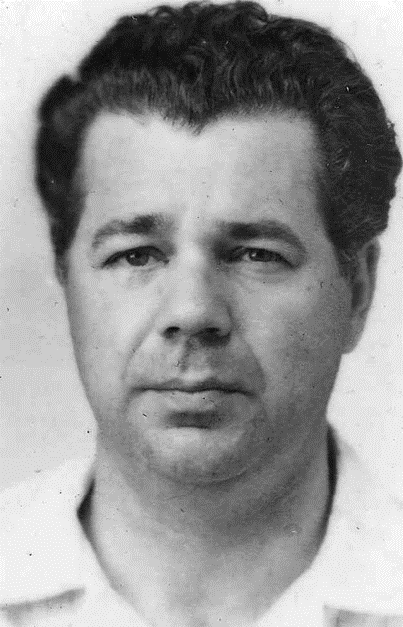
Vladimir Yuryevich Krylov is a well-known mathematician, psychologist, candidate of physical and mathematical sciences and doctor of psychological sciences, methodologist and organizer of science, founder of Russian mathematical psychology. Vladimir Yurievich Krylov was born on February 15, 1933 in a family of Russian intellectuals.
In 1951 he entered the Department of Mathematics of the Faculty of Mechanics and Mathematics of Moscow State University. Upon graduation, he began his scientific career at the school of M.L. Tsetlin, the founder of the theory of collective behavior of automata. In the field of automata theory. V.Yu. Krylov proposed a model of an automaton with asymptotically optimal behavior in a stationary random environment, which went down in history as the “Krylov automaton” and developed several variants of automaton games.
From 1967 to 1971 Vladimir Yurievich served as Deputy Director for Research at the Institute of Higher Nervous Activity of the USSR Academy of Sciences. In 1971 he became the head of the laboratory of engineering psychology at IPAN USSR. In 1983, the first laboratory of mathematical psychology in the country was organized at the IPAN USSR, and Vladimir Yuryevich became its head.
While working at the Institute of Psychology, the scientific interests of Vladimir Yurievich were, first of all, connected with the theoretical problems of mathematical psychology.
The first cycle of scientific works by V.Yu. Krylov is devoted to purely mathematical problems: in them, for the first time, a continuum integral was constructed over alternating distributions in function spaces. At that time, Vladimir Yuryevich worked in the Department of Applied Mathematics of the Mathematical Institute of the USSR Academy of Sciences as a junior researcher.
The second series of works is devoted to the construction of automatic models of behavior, in particular, automatic models of thinking. Vladimir Yurievich was the organizer and one of the leaders of the Soviet-American symposium on this topic.
The third cycle of works is connected with the development of a new modification of the method of non-metric multidimensional scaling, which for the first time made it possible to apply this method in case of violation of the triangle axiom. V.Yu. Krylov was the first to propose a method of non-metric multidimensional scaling, for which it is sufficient only that the differences between the elements of the system be symmetrical.
The fourth cycle of works by V.Yu. Krylov is devoted to the development of a synergistic paradigm in psychology. They describe the adequacy of a number of fundamental models of synergetics to psychological systems, formulate the problem of developing specific models of self-organization of mental processes and phenomena that have no analogues in other, simpler systems. In particular, nonlinear psychological systems have been studied, the mechanisms of self-organization of which are qualitatively different from the mechanisms of self-organization of simpler nonlinear systems. Here the greatest intuition of Vladimir Yurievich manifested itself. In the 1980s, he foresaw the surge in non-linear modeling work that we are seeing today.
In recent years, V.Yu. Krylov’s research has been devoted to the problem of the non-disjunctivity of psychological systems and the development of adequate methods for their analysis. Within the framework of the theory of reflexive behavior of V.A. Lefevre, V.Yu. Krylov proposed models different from the Lefevre’s model, which reveal in the binary choice problem the range of values of the probabilities of choosing the positive pole, which are different from the golden section.
In conclusion, we would like to note that Vladimir Yurievich left behind a large number of students in whom he aroused an interest in mathematical psychology, in mathematical modeling. In the Laboratory of Cognitive Processes and Mathematical Psychology of the IP RAS, the work started by V.Yu. Krylov continues.
Discussion
Psychology and synergetics. General properties of nonlinear systems
Developing a systematic approach in psychology, B.F. Lomov repeatedly noted such properties of mental phenomena system as multidimensionality, non-linearity, hierarchical structure [6, 7, 8].
The multidimensionality of psychic phenomena can now be quite fully studied by the methods of modern multidimensional analysis, including, in particular, the methods of multidimensional statistics, cluster analysis and analysis of latent structures, multidimensional scaling and other methods.
The non-linearity of psychic phenomena (and the hierarchical structure of the system of psychic phenomena closely related to it) is a much deeper property of the psychic, which is clearly insufficiently studied at present. And meanwhile, if multidimensional systems differ from one-dimensional or, say, two-dimensional ones in a quantitative indicator (dimension), then nonlinear systems qualitatively differ from linear ones.
Peculiarities of nonlinear systems, their structure and functioning are studied by a relatively young science – synergetics. The term synergetics (literally – the theory of joint action) was introduced by G. Haken. He explains this term as follows: “I called the new discipline synergetics. It explores the combined action of many subsystems, resulting in a structure and corresponding functioning at the macroscopic level”[4]. The emergence of an integral system of properties that none of its subsystems possesses, we will call the self-organization of the system. Thus, synergetics is the science of self-organization. The very phenomenon of self-organization is a characteristic feature of the development of nonlinear systems.
The qualitative difference between linear and non-linear systems has already been noted above. Let us describe some characteristic properties of nonlinear systems that qualitatively distinguish them from linear ones. But first, let us recall the characteristic properties of linear systems.
First, for linear systems, the reaction force of the system is proportional to the force of the external influence on it. Thus, if any influence leads to some reaction of the system, then the influence several times stronger will lead to an increase in the reaction by the same factor.
Secondly, the reaction to the simultaneous application of several influences to the system is equal to the sum of the system’s reactions to each of these influences. These two properties are characteristic of linear systems. In essence, the presence of these two properties is the definition of the linearity of the system. Often both of these properties are combined. Then such a general property of linear systems is described as follows: for linear systems, a linear combination (superposition) of actions corresponds to a linear combination of reactions. A linear combination of any quantities is the sum of the products of these quantities by any numbers (coefficients of a linear combination).
The evolution of linear dynamical systems is characterized by the fact that the state in which the linear system is currently located completely determines its future. Nonlinear systems differ radically from linear ones in their properties. By now synergetics has accumulated a large number of models of non-linear physical, chemical, biological systems. The study of these models makes it possible to enumerate a number of characteristic properties of nonlinear systems. We note right away that the world of nonlinear systems is so much richer than the world of linear systems that any enumeration of the properties of nonlinear systems will never be complete, exhaustive. However, some characteristic properties of nonlinear systems that distinguish them from linear ones can already be described.
One of the main properties of nonlinear systems is the irreversibility and multivariance of possible ways of development of nonlinear systems. A typical situation for nonlinear systems is as follows. The system has a certain number of ways of development inherent in it, possible for it. The system can develop only along one of these ways. No arbitrarily strong influences on the system can force it to develop along any other ways that are not characteristic of it. On the other hand, in the course of the development of the system, there are such moments (situations of instability) in which an arbitrarily weak effect on the system can radically change the path of its development, changing one path of development possible for the system to another, also possible for it. Near such a moment of system development (the so-called bifurcation point), completely different ways of further development can correspond to similar states of the system. In this sense, the future development of a nonlinear system near such points is determined not by the prehistory, but by the way of development the system will take in the near future. That is, in other words, the further evolution (development) of the system is determined by where the path leads it, on which it gets, i.e. the evolution of a system is determined by its future, not by its past.
Various possible variants of the future for a nonlinear system are called attractors in synergetics (attractive sets of development trajectories of a given system). The presence of attractors makes the development of the system predictable. If we know that the system is on a development way that is attracted to a given attractor, then we can predict its future. Naturally, this type of system development is fundamentally irreversible. On the other hand, this type of development of nonlinear systems allows the following possibility of development control, which has no analogue in the case of linear systems control: namely, from what has been said above about the evolution of nonlinear systems, it follows that the control of a nonlinear system should be understood as its transfer from one possible to her development way to another. To do this, it is necessary to influence the system at the moment when it is in a state of instability (near the bifurcation point), and to organize the action which is topologically very accurate, namely, one that will transfer the system to the desired way possible for it. At the same time, such an impact can be extremely weak, but, being very accurate, it will lead to radical changes in the entire evolution of the system, since after this impact, the development of the system will go along a different way, leading to a qualitatively different future state of the system, determined by another attractor.
Basic models of self-organization and psychology
As already noted, the properties of nonlinear systems were studied mainly on the example of nonlinear physical, chemical, biological systems. Speaking of psychological non-linear systems, we can assume that some of them may have more or less exact analogues among simpler physical, chemical or biological systems. On the other hand, the existence of such features of psychological non-linear systems is possible, which are not and fundamentally cannot be in systems of a simpler nature.
From this remark follows a methodical method of studying non-linear psychological systems.
First, some basic model of synergetics is chosen, which describes the evolution of a physical, chemical or biological system. Based on the study of the model, qualitative features of the evolution of this system are revealed. Next is the psychological system, the evolution of which has similar features. Then we can assume that the original basic model also describes this psychological system, it is enough to interpret the variables included in the model in terms of this psychological system.
Let us illustrate the possibilities of this approach with examples.
Let us consider the main models of population dynamics that describe, in particular, ecological evolution (Nikolis and Prigogine, 1979). [9].
Consider first the simplest case of one kind in the system.
Consider first the simplest case of one kind in the system.
Let be x= x(t) – the number of individuals of this species at time t. The number x = x(t) increases due to reproduction and decreases due to the death of individuals, so that the rate of change in the number of individuals x = x(t) will be equal to: x = kAx – dx
Here k and k are positive coefficients characterizing the intensity of reproduction and death, respectively. The value A characterizes the presence of food, which is a condition for the process of reproduction. In an ecological niche, the amount of food A is limited and it can be assumed that A + x = N is a constant value. This will be the case when food returns to the system in an amount equal to the number of dead individuals. In this case, we get the so-called Fergulst equation: x = kx(N – x) – dx
This equation describes a logistic curve showing that in this case a finite (limited) number of individuals of the species under consideration is established in the ecological niche over time. If we assume that the amount of food is unlimited, then we get an exponential increase in the number of individuals to infinity. If there is not enough food, then the population tends to zero over time, the population dies out.
Consider now the more complex problem of the existence of two species in the same ecological niche with limited sources of livelihood. Let the number of the first species at the moment of time t be equal to x1 = x1(t), and the number of the second – x2 = x2(t) . Let us write for x1 and x2 the system of Fergulst equations:


Note that in these equations in parentheses, the sum (x1 +x2) is subtracted from N, which indicates the fact that both species have the same food source and both occupy the same ecological niche. It can be shown that under the condition
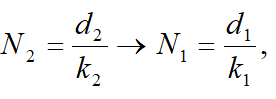
the second type x2 completely displaces the type x1, while x1(e) tends to zero, and x2(t) – to a finite value:

even if at the initial moment x it was close to zero (the mutant had just appeared). Note that if N1 = N2, then the above condition of displacement by the second type of the first takes the form:
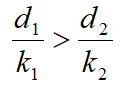
This condition meaningfully means that the ratio of the rate of death “d” to the rate of birth “k” in the second species is less, which gives it an advantage over the first species.
As has been said, in a number of cases there are psychological systems whose evolution has the same character as systems of a simpler nature. In this case, the mathematical models of the dynamics of such systems will coincide. In this case, the model of the ecosystem, which describes the displacement of one species by another, coincides with the model of learning a complex skill, during which there is a successive change of strategies to more and more effective ones [5].
The problem of learning is one of the central ones in psychological science. The study and modeling of the learning process was started in 1885 by G. Ebbinghaus, who first described the learning curve. It was the solution of the problem of the theoretical derivation of the learning curve that was the first success of mathematical psychology (Atkinson, Bauer, Crothers, 1960). Later, when studying the process of teaching complex skills to operators, a more complex dependence of the effectiveness of training on time was noted, associated with a change in learning strategies to more and more effective ones [10].
An example of a learning curve for a complex skill of compensatory tracking is given in the book by V.F. Wenda (1980). It shows that for each sequentially mastered strategy (tracking method), it is possible to trace such phases as the beginning of mastering a new strategy, a rapid increase in the tracking efficiency indicator, reaching a plateau, and finally moving to the next strategy.
Thus, in this case there is such a complete analogy of the evolution of the two systems under consideration (ecological and psychological) that they are described by the same mathematical model – the system of Fergulst equations.
As a second example, consider the well-known model of an ecological system consisting of a predator and prey. If we assume that the prey (for example, crucian carp) has a practically unlimited food source (plankton), and the predator (for example, pike) feeds only on its prey, which can die as a result of a predator attack, then such a system is described by the well-known system Lottka–Volterra equations:
x = kx – sxy,
y = sxy – dy.
Here x = x (t) is the number of prey at time t, and y = y(t) – the number of predators. It is known from theory that the system of Lottka–Volterra equations can have as solutions periodic undamped oscillations in the number x(t) and y(t).
It is important to note that the nonlinear effects in the predator-prey system are ensured by the presence in each equation of a term proportional to the product xy. This term meaningfully describes the result of the “interaction” of the predator and prey. This fact suggests that the dynamics of interacting social (or any other) groups can be described by similar equations in social psychology.
Consider, for example, a model of population migration under the influence of psychological factors.
Let in any region there is a tendency to migration from this region. Let us denote by y(t) the number of persons who have decided to leave the given region by the moment of time t. Suppose that these persons are campaigning among the rest of the population, persuading them to leave the region. Let be x(t) – the number of people who are agitated by y. Assuming that both x and y make up a small part of the population of the region, it is easy to obtain balance equations for x and y, which will coincide with the system of Lottka-Volterra equations.
In these equations the terms sxy, the terms correspond to the act of interaction of an individual from y with an individual from x, leading to the fact that the proportion s of individuals from x, as a result of such interaction goes into the category y, i.e. decides to migrate. The term dy in the second equation corresponds to the migration of the proportion d of individuals from y. Finally, the term kx reflects the involvement of new residents of the region in the process of interaction with individuals from y.
Thus, the dynamics of migration under the influence of psychological factors is described by the system of Lottka-Volterra equations, which is one of the main mathematical models of synergetics, which means that the behavior of the solutions of this system should describe migration effects (in particular, the presence of the so-called will of migration).
The examples given show that nonlinear effects in psychological systems that have analogies in other disciplines are exactly described by the corresponding models taken from physics, chemistry, biology, etc.
Of course, the most important task is to identify such specific non-linear psychological systems that do not have (and cannot have) analogues among systems of a simpler nature. The study of such systems, perhaps, should be the most important part of non-linear psychology. For now, we only note that an example of such systems are systems that have developed language tools.
Such systems first build a plan of behavior in their own language, and then they execute it. Such systems may have developed reflection mechanisms [2].
Towards a new paradigm of psychological science
Since most psychological systems are non-linear self-organizing, it is advisable to consider a special methodology for studying psychological systems as specifically non-linear.
Let us note the main features of non-linear psychology, a new approach to the study of psychic phenomena, which sets as its main task the study of the specific non-linear properties of psychic phenomena.
From the very beginning, any psychological systems must be considered as developing. This, in particular, means that when studying the state of the system at any moment, it is necessary to fix not only that part of the prehistory of the system’s development, which at the moment affects its future, but also how the system is represented in the present state of the system. its future (value orientations, ideals, aspirations, interests, goals, etc.). This must be kept in mind, since it was noted above that one of the features of nonlinear systems is the fact that the future can determine the behavior of the system in the present. Unlike non-linear systems, in linear systems the future state is completely determined by the prehistory of the system and its present state. Such a linear paradigm is fully consistent with the well-known formula of behaviorism, that the stimulus completely determines the response of the system (of course, taking into account the present state of the system).
Further, studying the development of a psychological system, it is necessary to fix the moments of time at which it reveals instability. At such moments, a radical change in the way of development of the system can and does occur. At these moments, even the most insignificant external influences on the system can determine its further evolution. So, for example, the main postulate of astrological science, that the position of the luminaries at the time of a person’s birth to a large extent determines many of his individual qualities, finds indirect confirmation in the non-linear paradigm.
Of course, the moment of a person’s birth is the moment of the highest degree of instability of all systems. Therefore, at this moment, even weak influences (in particular, of astrological origin) can strongly influence the development of a person in the future.
Of course, everything that has been said about changing the paths of development at points of instability assumes the multivariance of the paths of development of the system. In this regard, the most important task of the non-linear approach in the study of the development of psychological systems is to identify the various ways of development possible for the system in given external conditions. The method of such study should be radically different from the “stimulus-response” method, namely, the system must be placed in certain external conditions that are natural for it and its spontaneous behavior under these conditions should be observed and recorded. To study the possibility of controlling the states of the system, it is necessary to learn how to create states of instability (for example, a typical state of instability of a psychological system is stress), and then try to transfer the system from one possible path of development to another with small but precise influences. An example of such influences seems to be acupuncture.
One should not think that everything that is said here about the principles of studying nonlinear systems is absolutely new for psychological science. So, for example, in the theory of living space by K. Levin, a number of provisions were formulated that echo the methodology of studying nonlinear systems, developed by modern synergetics. So, K. Levin wrote that “the psychological past, present and future are parts of the psychological field in the present. The time perspective is the inclusion of the future and the past, the real and the ideal plan of life in the plan of the present moment” (after: [11]).
Studying the specific behavior of people, which he called field, K. Levin wrote that “in adults, a situation can occur when “field behavior” arises, when objects that are insignificant, do not play any role, acquire an incentive character. But for this there must be a situation of affective tension” (after [11]). Obviously, the situation of affective tension is one of the possible types of psychological instability.
References
- Akhromeeva T.S., Kurdyumov S.G., Malinetsky G.G., Samarsky A.A. (1992) Non-stationary structures and diffusion chaos. Moscow: Nauka (in Russian).
Ahromeeva T.S, Kurdyumov SP., Malineckij G.G., Samarskij A.A. Nestacionarnye struktury i diffuzionnyj haos M.: Nauka, 1992
- Applied ergonomics. Special Issue: Reflexive Processes. M., 1994 (in Russian).
Prikladnaya ergonomika. Special’nyj vypusk: refleksivnye processy. M., 1979.
- Atkinson R., Bauer G., Crothers E. (1960) Introduction to the mathematical theory of learning. M., (in Russian).
Atkinson R., Bauer G., Kroters E. Vvedenie v matematicheskuyu teoriyu obucheniya. M., 1960.
- Haken G. (1980) Synergetics. M.: Mir, 1980 (in Russian).
Haken G. Sinergetika. M.: Mir, 1980.
- Krylov V.Yu., Kurdyumov SP., Malinetsky G.G. (1990) Psychology and Synergetics. Preprint No. 41 of the Institute of Applied Mathematics. M.V. Keldysh (in Russian).
Krylov V.YU., Kurdyumov S.P., Malineckij G.G. Psihologiya i sinegretika. Preprint № 41 instituta prikladnoj matematiki im. M.V.Keldysha. M., 1990.
- Lomov B.F. (1975) About the system approach in psychology Questions of psychology.. No. 2. pp 31–45 (in Russian).
Lomov B.F. O sistemnom podhode v psihologii//Vopr. psihologii. 1975. № 2, S. 31-45
- Lomov B.F. (1979) Consistency as a principle of mathematical modeling and psychology // Problems of Cybernetics. M., Issue. 50, pp. 3–18 (in Russian).
Lomov B.F. Sistemnost’ kak princip matematicheskogo modelirovaniya v psihologii.//Vopr. kibernetiki. M., 1979. Vyp. 50. S. 3-18.
- Lomov B.F. (1984) Methodological and theoretical problems of psychology. Moscow: Nauka (in Russian).
Lomov B.F. Metodologicheskie i teoreticheskie problemy psihologii. M.: Nauka, 1984.
- Nicolis G., Prigogine I. (1979) Self-organization and non-equilibrium systems. M.: Mir, 1979 (in Russian)
Nikolis G., Prigozhin I. Samoorganizaciya v neravnovesnyh sistemah. M.: Mir, 1979.
- Venda V.F. (1980) Prospects for the development of the psychological theory of training operators. Psychological journal. V. 1. No. 4. S. 48–63 (in Russian)
Venda V.F. Perspektivy razvitiya psihologicheskoj teorii obucheniya operatorov//Psihol. zhurnal. 1980, T.1, № 4, S. 48-63.
- Zeigarnik B.V. (1981) The theory of personality K. Levin. M.: Publishing House of Moscow State University (in Russian).
Zejgarnik B.V. Teoriya lichnosti K.Levina. M.: Izd-vo MGU. 1981.
Translated by E. V. Golovina
Comments (0)
Vladimir Yuryevich Krylov is a well-known mathematician, psychologist, candidate of physical and mathematical sciences and doctor of psychological sciences, methodologist and organizer of science, founder of Russian mathematical psychology. Vladimir Yurievich Krylov was born on February 15, 1933 in a family of Russian intellectuals.
In 1951 he entered the Department of Mathematics of the Faculty of Mechanics and Mathematics of Moscow State University. Upon graduation, he began his scientific career at the school of M.L. Tsetlin, the founder of the theory of collective behavior of automata. In the field of automata theory. V.Yu. Krylov proposed a model of an automaton with asymptotically optimal behavior in a stationary random environment, which went down in history as the “Krylov automaton” and developed several variants of automaton games.
From 1967 to 1971 Vladimir Yurievich served as Deputy Director for Research at the Institute of Higher Nervous Activity of the USSR Academy of Sciences. In 1971 he became the head of the laboratory of engineering psychology at IPAN USSR. In 1983, the first laboratory of mathematical psychology in the country was organized at the IPAN USSR, and Vladimir Yuryevich became its head.
While working at the Institute of Psychology, the scientific interests of Vladimir Yurievich were, first of all, connected with the theoretical problems of mathematical psychology.
The first cycle of scientific works by V.Yu. Krylov is devoted to purely mathematical problems: in them, for the first time, a continuum integral was constructed over alternating distributions in function spaces. At that time, Vladimir Yuryevich worked in the Department of Applied Mathematics of the Mathematical Institute of the USSR Academy of Sciences as a junior researcher.
The second series of works is devoted to the construction of automatic models of behavior, in particular, automatic models of thinking. Vladimir Yurievich was the organizer and one of the leaders of the Soviet-American symposium on this topic.
The third cycle of works is connected with the development of a new modification of the method of non-metric multidimensional scaling, which for the first time made it possible to apply this method in case of violation of the triangle axiom. V.Yu. Krylov was the first to propose a method of non-metric multidimensional scaling, for which it is sufficient only that the differences between the elements of the system be symmetrical.
The fourth cycle of works by V.Yu. Krylov is devoted to the development of a synergistic paradigm in psychology. They describe the adequacy of a number of fundamental models of synergetics to psychological systems, formulate the problem of developing specific models of self-organization of mental processes and phenomena that have no analogues in other, simpler systems. In particular, nonlinear psychological systems have been studied, the mechanisms of self-organization of which are qualitatively different from the mechanisms of self-organization of simpler nonlinear systems. Here the greatest intuition of Vladimir Yurievich manifested itself. In the 1980s, he foresaw the surge in non-linear modeling work that we are seeing today.
In recent years, V.Yu. Krylov’s research has been devoted to the problem of the non-disjunctivity of psychological systems and the development of adequate methods for their analysis. Within the framework of the theory of reflexive behavior of V.A. Lefevre, V.Yu. Krylov proposed models different from the Lefevre’s model, which reveal in the binary choice problem the range of values of the probabilities of choosing the positive pole, which are different from the golden section.
In conclusion, we would like to note that Vladimir Yurievich left behind a large number of students in whom he aroused an interest in mathematical psychology, in mathematical modeling. In the Laboratory of Cognitive Processes and Mathematical Psychology of the IP RAS, the work started by V.Yu. Krylov continues.
Psychology and synergetics. General properties of nonlinear systems
Developing a systematic approach in psychology, B.F. Lomov repeatedly noted such properties of mental phenomena system as multidimensionality, non-linearity, hierarchical structure [6, 7, 8].
The multidimensionality of psychic phenomena can now be quite fully studied by the methods of modern multidimensional analysis, including, in particular, the methods of multidimensional statistics, cluster analysis and analysis of latent structures, multidimensional scaling and other methods.
The non-linearity of psychic phenomena (and the hierarchical structure of the system of psychic phenomena closely related to it) is a much deeper property of the psychic, which is clearly insufficiently studied at present. And meanwhile, if multidimensional systems differ from one-dimensional or, say, two-dimensional ones in a quantitative indicator (dimension), then nonlinear systems qualitatively differ from linear ones.
Peculiarities of nonlinear systems, their structure and functioning are studied by a relatively young science – synergetics. The term synergetics (literally – the theory of joint action) was introduced by G. Haken. He explains this term as follows: “I called the new discipline synergetics. It explores the combined action of many subsystems, resulting in a structure and corresponding functioning at the macroscopic level”[4]. The emergence of an integral system of properties that none of its subsystems possesses, we will call the self-organization of the system. Thus, synergetics is the science of self-organization. The very phenomenon of self-organization is a characteristic feature of the development of nonlinear systems.
The qualitative difference between linear and non-linear systems has already been noted above. Let us describe some characteristic properties of nonlinear systems that qualitatively distinguish them from linear ones. But first, let us recall the characteristic properties of linear systems.
First, for linear systems, the reaction force of the system is proportional to the force of the external influence on it. Thus, if any influence leads to some reaction of the system, then the influence several times stronger will lead to an increase in the reaction by the same factor.
Secondly, the reaction to the simultaneous application of several influences to the system is equal to the sum of the system’s reactions to each of these influences. These two properties are characteristic of linear systems. In essence, the presence of these two properties is the definition of the linearity of the system. Often both of these properties are combined. Then such a general property of linear systems is described as follows: for linear systems, a linear combination (superposition) of actions corresponds to a linear combination of reactions. A linear combination of any quantities is the sum of the products of these quantities by any numbers (coefficients of a linear combination).
The evolution of linear dynamical systems is characterized by the fact that the state in which the linear system is currently located completely determines its future. Nonlinear systems differ radically from linear ones in their properties. By now synergetics has accumulated a large number of models of non-linear physical, chemical, biological systems. The study of these models makes it possible to enumerate a number of characteristic properties of nonlinear systems. We note right away that the world of nonlinear systems is so much richer than the world of linear systems that any enumeration of the properties of nonlinear systems will never be complete, exhaustive. However, some characteristic properties of nonlinear systems that distinguish them from linear ones can already be described.
One of the main properties of nonlinear systems is the irreversibility and multivariance of possible ways of development of nonlinear systems. A typical situation for nonlinear systems is as follows. The system has a certain number of ways of development inherent in it, possible for it. The system can develop only along one of these ways. No arbitrarily strong influences on the system can force it to develop along any other ways that are not characteristic of it. On the other hand, in the course of the development of the system, there are such moments (situations of instability) in which an arbitrarily weak effect on the system can radically change the path of its development, changing one path of development possible for the system to another, also possible for it. Near such a moment of system development (the so-called bifurcation point), completely different ways of further development can correspond to similar states of the system. In this sense, the future development of a nonlinear system near such points is determined not by the prehistory, but by the way of development the system will take in the near future. That is, in other words, the further evolution (development) of the system is determined by where the path leads it, on which it gets, i.e. the evolution of a system is determined by its future, not by its past.
Various possible variants of the future for a nonlinear system are called attractors in synergetics (attractive sets of development trajectories of a given system). The presence of attractors makes the development of the system predictable. If we know that the system is on a development way that is attracted to a given attractor, then we can predict its future. Naturally, this type of system development is fundamentally irreversible. On the other hand, this type of development of nonlinear systems allows the following possibility of development control, which has no analogue in the case of linear systems control: namely, from what has been said above about the evolution of nonlinear systems, it follows that the control of a nonlinear system should be understood as its transfer from one possible to her development way to another. To do this, it is necessary to influence the system at the moment when it is in a state of instability (near the bifurcation point), and to organize the action which is topologically very accurate, namely, one that will transfer the system to the desired way possible for it. At the same time, such an impact can be extremely weak, but, being very accurate, it will lead to radical changes in the entire evolution of the system, since after this impact, the development of the system will go along a different way, leading to a qualitatively different future state of the system, determined by another attractor.
Basic models of self-organization and psychology
As already noted, the properties of nonlinear systems were studied mainly on the example of nonlinear physical, chemical, biological systems. Speaking of psychological non-linear systems, we can assume that some of them may have more or less exact analogues among simpler physical, chemical or biological systems. On the other hand, the existence of such features of psychological non-linear systems is possible, which are not and fundamentally cannot be in systems of a simpler nature.
From this remark follows a methodical method of studying non-linear psychological systems.
First, some basic model of synergetics is chosen, which describes the evolution of a physical, chemical or biological system. Based on the study of the model, qualitative features of the evolution of this system are revealed. Next is the psychological system, the evolution of which has similar features. Then we can assume that the original basic model also describes this psychological system, it is enough to interpret the variables included in the model in terms of this psychological system.
Let us illustrate the possibilities of this approach with examples.
Let us consider the main models of population dynamics that describe, in particular, ecological evolution (Nikolis and Prigogine, 1979). [9].
Consider first the simplest case of one kind in the system.
Consider first the simplest case of one kind in the system.
Let be x= x(t) – the number of individuals of this species at time t. The number x = x(t) increases due to reproduction and decreases due to the death of individuals, so that the rate of change in the number of individuals x = x(t) will be equal to: x = kAx – dx
Here k and k are positive coefficients characterizing the intensity of reproduction and death, respectively. The value A characterizes the presence of food, which is a condition for the process of reproduction. In an ecological niche, the amount of food A is limited and it can be assumed that A + x = N is a constant value. This will be the case when food returns to the system in an amount equal to the number of dead individuals. In this case, we get the so-called Fergulst equation: x = kx(N – x) – dx
This equation describes a logistic curve showing that in this case a finite (limited) number of individuals of the species under consideration is established in the ecological niche over time. If we assume that the amount of food is unlimited, then we get an exponential increase in the number of individuals to infinity. If there is not enough food, then the population tends to zero over time, the population dies out.
Consider now the more complex problem of the existence of two species in the same ecological niche with limited sources of livelihood. Let the number of the first species at the moment of time t be equal to x1 = x1(t), and the number of the second – x2 = x2(t) . Let us write for x1 and x2 the system of Fergulst equations:
Note that in these equations in parentheses, the sum (x1 +x2) is subtracted from N, which indicates the fact that both species have the same food source and both occupy the same ecological niche. It can be shown that under the condition
the second type x2 completely displaces the type x1, while x1(e) tends to zero, and x2(t) – to a finite value:
even if at the initial moment x it was close to zero (the mutant had just appeared). Note that if N1 = N2, then the above condition of displacement by the second type of the first takes the form:
This condition meaningfully means that the ratio of the rate of death “d” to the rate of birth “k” in the second species is less, which gives it an advantage over the first species.
As has been said, in a number of cases there are psychological systems whose evolution has the same character as systems of a simpler nature. In this case, the mathematical models of the dynamics of such systems will coincide. In this case, the model of the ecosystem, which describes the displacement of one species by another, coincides with the model of learning a complex skill, during which there is a successive change of strategies to more and more effective ones [5].
The problem of learning is one of the central ones in psychological science. The study and modeling of the learning process was started in 1885 by G. Ebbinghaus, who first described the learning curve. It was the solution of the problem of the theoretical derivation of the learning curve that was the first success of mathematical psychology (Atkinson, Bauer, Crothers, 1960). Later, when studying the process of teaching complex skills to operators, a more complex dependence of the effectiveness of training on time was noted, associated with a change in learning strategies to more and more effective ones [10].
An example of a learning curve for a complex skill of compensatory tracking is given in the book by V.F. Wenda (1980). It shows that for each sequentially mastered strategy (tracking method), it is possible to trace such phases as the beginning of mastering a new strategy, a rapid increase in the tracking efficiency indicator, reaching a plateau, and finally moving to the next strategy.
Thus, in this case there is such a complete analogy of the evolution of the two systems under consideration (ecological and psychological) that they are described by the same mathematical model – the system of Fergulst equations.
As a second example, consider the well-known model of an ecological system consisting of a predator and prey. If we assume that the prey (for example, crucian carp) has a practically unlimited food source (plankton), and the predator (for example, pike) feeds only on its prey, which can die as a result of a predator attack, then such a system is described by the well-known system Lottka–Volterra equations:
x = kx – sxy,
y = sxy – dy.
Here x = x (t) is the number of prey at time t, and y = y(t) – the number of predators. It is known from theory that the system of Lottka–Volterra equations can have as solutions periodic undamped oscillations in the number x(t) and y(t).
It is important to note that the nonlinear effects in the predator-prey system are ensured by the presence in each equation of a term proportional to the product xy. This term meaningfully describes the result of the “interaction” of the predator and prey. This fact suggests that the dynamics of interacting social (or any other) groups can be described by similar equations in social psychology.
Consider, for example, a model of population migration under the influence of psychological factors.
Let in any region there is a tendency to migration from this region. Let us denote by y(t) the number of persons who have decided to leave the given region by the moment of time t. Suppose that these persons are campaigning among the rest of the population, persuading them to leave the region. Let be x(t) – the number of people who are agitated by y. Assuming that both x and y make up a small part of the population of the region, it is easy to obtain balance equations for x and y, which will coincide with the system of Lottka-Volterra equations.
In these equations the terms sxy, the terms correspond to the act of interaction of an individual from y with an individual from x, leading to the fact that the proportion s of individuals from x, as a result of such interaction goes into the category y, i.e. decides to migrate. The term dy in the second equation corresponds to the migration of the proportion d of individuals from y. Finally, the term kx reflects the involvement of new residents of the region in the process of interaction with individuals from y.
Thus, the dynamics of migration under the influence of psychological factors is described by the system of Lottka-Volterra equations, which is one of the main mathematical models of synergetics, which means that the behavior of the solutions of this system should describe migration effects (in particular, the presence of the so-called will of migration).
The examples given show that nonlinear effects in psychological systems that have analogies in other disciplines are exactly described by the corresponding models taken from physics, chemistry, biology, etc.
Of course, the most important task is to identify such specific non-linear psychological systems that do not have (and cannot have) analogues among systems of a simpler nature. The study of such systems, perhaps, should be the most important part of non-linear psychology. For now, we only note that an example of such systems are systems that have developed language tools.
Such systems first build a plan of behavior in their own language, and then they execute it. Such systems may have developed reflection mechanisms [2].
Towards a new paradigm of psychological science
Since most psychological systems are non-linear self-organizing, it is advisable to consider a special methodology for studying psychological systems as specifically non-linear.
Let us note the main features of non-linear psychology, a new approach to the study of psychic phenomena, which sets as its main task the study of the specific non-linear properties of psychic phenomena.
From the very beginning, any psychological systems must be considered as developing. This, in particular, means that when studying the state of the system at any moment, it is necessary to fix not only that part of the prehistory of the system’s development, which at the moment affects its future, but also how the system is represented in the present state of the system. its future (value orientations, ideals, aspirations, interests, goals, etc.). This must be kept in mind, since it was noted above that one of the features of nonlinear systems is the fact that the future can determine the behavior of the system in the present. Unlike non-linear systems, in linear systems the future state is completely determined by the prehistory of the system and its present state. Such a linear paradigm is fully consistent with the well-known formula of behaviorism, that the stimulus completely determines the response of the system (of course, taking into account the present state of the system).
Further, studying the development of a psychological system, it is necessary to fix the moments of time at which it reveals instability. At such moments, a radical change in the way of development of the system can and does occur. At these moments, even the most insignificant external influences on the system can determine its further evolution. So, for example, the main postulate of astrological science, that the position of the luminaries at the time of a person’s birth to a large extent determines many of his individual qualities, finds indirect confirmation in the non-linear paradigm.
Of course, the moment of a person’s birth is the moment of the highest degree of instability of all systems. Therefore, at this moment, even weak influences (in particular, of astrological origin) can strongly influence the development of a person in the future.
Of course, everything that has been said about changing the paths of development at points of instability assumes the multivariance of the paths of development of the system. In this regard, the most important task of the non-linear approach in the study of the development of psychological systems is to identify the various ways of development possible for the system in given external conditions. The method of such study should be radically different from the “stimulus-response” method, namely, the system must be placed in certain external conditions that are natural for it and its spontaneous behavior under these conditions should be observed and recorded. To study the possibility of controlling the states of the system, it is necessary to learn how to create states of instability (for example, a typical state of instability of a psychological system is stress), and then try to transfer the system from one possible path of development to another with small but precise influences. An example of such influences seems to be acupuncture.
One should not think that everything that is said here about the principles of studying nonlinear systems is absolutely new for psychological science. So, for example, in the theory of living space by K. Levin, a number of provisions were formulated that echo the methodology of studying nonlinear systems, developed by modern synergetics. So, K. Levin wrote that “the psychological past, present and future are parts of the psychological field in the present. The time perspective is the inclusion of the future and the past, the real and the ideal plan of life in the plan of the present moment” (after: [11]).
Studying the specific behavior of people, which he called field, K. Levin wrote that “in adults, a situation can occur when “field behavior” arises, when objects that are insignificant, do not play any role, acquire an incentive character. But for this there must be a situation of affective tension” (after [11]). Obviously, the situation of affective tension is one of the possible types of psychological instability.
- Akhromeeva T.S., Kurdyumov S.G., Malinetsky G.G., Samarsky A.A. (1992) Non-stationary structures and diffusion chaos. Moscow: Nauka (in Russian).
Ahromeeva T.S, Kurdyumov SP., Malineckij G.G., Samarskij A.A. Nestacionarnye struktury i diffuzionnyj haos M.: Nauka, 1992
- Applied ergonomics. Special Issue: Reflexive Processes. M., 1994 (in Russian).
Prikladnaya ergonomika. Special’nyj vypusk: refleksivnye processy. M., 1979.
- Atkinson R., Bauer G., Crothers E. (1960) Introduction to the mathematical theory of learning. M., (in Russian).
Atkinson R., Bauer G., Kroters E. Vvedenie v matematicheskuyu teoriyu obucheniya. M., 1960.
- Haken G. (1980) Synergetics. M.: Mir, 1980 (in Russian).
Haken G. Sinergetika. M.: Mir, 1980.
- Krylov V.Yu., Kurdyumov SP., Malinetsky G.G. (1990) Psychology and Synergetics. Preprint No. 41 of the Institute of Applied Mathematics. M.V. Keldysh (in Russian).
Krylov V.YU., Kurdyumov S.P., Malineckij G.G. Psihologiya i sinegretika. Preprint № 41 instituta prikladnoj matematiki im. M.V.Keldysha. M., 1990.
- Lomov B.F. (1975) About the system approach in psychology Questions of psychology.. No. 2. pp 31–45 (in Russian).
Lomov B.F. O sistemnom podhode v psihologii//Vopr. psihologii. 1975. № 2, S. 31-45
- Lomov B.F. (1979) Consistency as a principle of mathematical modeling and psychology // Problems of Cybernetics. M., Issue. 50, pp. 3–18 (in Russian).
Lomov B.F. Sistemnost’ kak princip matematicheskogo modelirovaniya v psihologii.//Vopr. kibernetiki. M., 1979. Vyp. 50. S. 3-18.
- Lomov B.F. (1984) Methodological and theoretical problems of psychology. Moscow: Nauka (in Russian).
Lomov B.F. Metodologicheskie i teoreticheskie problemy psihologii. M.: Nauka, 1984.
- Nicolis G., Prigogine I. (1979) Self-organization and non-equilibrium systems. M.: Mir, 1979 (in Russian)
Nikolis G., Prigozhin I. Samoorganizaciya v neravnovesnyh sistemah. M.: Mir, 1979.
- Venda V.F. (1980) Prospects for the development of the psychological theory of training operators. Psychological journal. V. 1. No. 4. S. 48–63 (in Russian)
Venda V.F. Perspektivy razvitiya psihologicheskoj teorii obucheniya operatorov//Psihol. zhurnal. 1980, T.1, № 4, S. 48-63.
- Zeigarnik B.V. (1981) The theory of personality K. Levin. M.: Publishing House of Moscow State University (in Russian).
Zejgarnik B.V. Teoriya lichnosti K.Levina. M.: Izd-vo MGU. 1981.
Translated by E. V. Golovina