
Types of Temperament and the Value and Meaning Orientations Associated with them
Abstract
Abstract
Abstract: The purpose of this study was to empirically identify temperament types based on the “Questionnaire of Formal-Dynamic Properties of Individuality” of V.M. Rusalov and to compare the value and meaning orientations of personality in these types. The study sample consisted of high school students, students and cadets of secondary, and higher educational institutions in Perm. A total of 511 participants aged 15 to 24 years (M = 18.90; SD = 1.98), of which 231 were women and 280 were men. Formal-dynamic properties of individuality, value and meaning orientations of personality were measured. The main methods of data analysis were hierarchical cluster analysis and analysis of variance. Three- and six-cluster solutions were considered. Priority was given to the option with 3 clusters-types better differentiating the participants by temperament properties and indicators of the value-semantic sphere. It should be noted that the means of the clusters did not exceed the statistical norm, and the obtained results varied within the range of 40–60 T-scores. The first cluster included respondents with a reduced level of sociability and intelligence; the second cluster consisted of highly emotional and low-active participants; and the third cluster included highly active and low-emotional ones. Despite the fact that the division into clusters-types was made on the basis of the formal-dynamic properties of individuality, the clusters also differed significantly by manifestations of value and meaning orientations. The first cluster was characterized by low scores of value orientations, the second — by low scores of meaning orientations, and the third cluster had high scores for both. The identified clusters-types corresponded well with the known personality types: Resilient, Overcontrolled, and Undercontrolled.
Типы темперамента и связанные с ними ценностно-смысловые ориентации
Калугин А.Ю.*
*Пермский государственный гуманитарно-педагогический университет, Пермь, Российская Федерация, ORCID iD: 0000-0002-3633-2926
Аннотация: Целью данного исследования было эмпирическое выявление типов темперамента на основе «Опросника формально-динамических свойств индивидуальности» В.М. Русалова и сравнить ценностные и смысловые ориентации личности этих типов. Выборку исследования составили старшеклассники, студенты и курсанты средних и высших учебных заведений Перми. Всего приняли участие 511 участников в возрасте от 15 до 24 лет (M = 18.90; SD = 1.98), из них 231 девушка и 280 юношей. Измерялись формально-динамические свойства индивидуальности, ценностные и смысловые ориентации личности. Основными методами анализа данных были иерархический кластерный анализ и дисперсионный анализ. Рассматривались трех- и шестикластерные решения. Приоритет отдавался варианту с 3-мя кластерами-типами, лучше дифференцирующими участников по темпераментным свойствам и показателям ценностно-смысловой сферы. Следует отметить, что средние значения кластеров не превышали статистическую норму, а полученные результаты варьировали в диапазоне 40–60 Т-баллов. В первый кластер вошли респонденты со сниженным уровнем коммуникабельности и интеллекта; второй кластер состоял из высокоэмоциональных и малоактивных участников; в третий кластер вошли высокоактивные и низкоэмоциональные. Несмотря на то, что распределение респондентов на кластеры-типы производилось на основе формально-динамических свойств индивидуальности, кластеры существенно различались по проявлениям ценностных и смысловых ориентаций. Первый кластер характеризовался низкими баллами ценностных ориентаций, второй — низкими баллами смысловых ориентаций, а третий кластер имел высокие баллы по как по ценностным, так и смысловым ориентациям. Выявленные кластеры-типы хорошо соответствовали известным типам личности: устойчивый, сверхконтролируемый и недостаточно контролируемый.
Ключевые слова: индивидуальность, темперамент, ценностные ориентации, смысловые ориентации.
Introduction
The theories of individuality popular in the 1960s and 1980s have been replaced by theories of personality traits. In recent decades, the Big Five personality model has gained particular prominence in personality psychology. This model includes five basic personality traits: extraversion, agreeableness, conscientiousness, neuroticism, and openness to experience. They are thought to explain well the variance in personality traits. At the same time, psychogenetic studies indicate that there is substantial genetic conditioning of these traits: between 30 and 70 percent of trait variance is explained by heritability (Vernon et al., 2008; Horsburgh et al., 2009; Loehlin et al., 1998). To explain genetic influences, trait theory methodologists construct complex models that implicitly include temperament as a deeper level of personality (McAdams & Pals, 2006; McCrae & Costa, 2008).
In Western psychology, personality is often understood as what is called “individuality” in Russian psychology: “Personality is more or less stable and enduring organization of the person’s characters, temperament, intelligence, and the mind which determine his/her unique adjustment to the environment” (Eysenck, 1999, p. 13). This was also pointed out by V.P. Zinchenko, making a comment on the article “Personality” in the “Big Psychological Dictionary”: “The almost generally accepted translation of the word “lichnost” as personality (and vice versa) is not quite adequate. Personality is, rather, individuality<… >’Lichnost’” is selfhood, selfness, or self, which is close to the Russian word ‘samost’. There is no more precise equivalent of the word ‘lichnost’ in English” (Meshcheryakov & Zinchenko, 2002, p. 237).
Interest in temperament as a separate level of individuality declined significantly after the scientific community accepted the idea that it is impossible to measure temperament in adulthood, when it largely merges with acquired qualities. In Russian psychology the situation was different: opportunities for measuring temperament in adults were discovered. First, in the laboratories of V.S. Merlin and B.M. Teplov – V.D. Nebylitsyn, attempts were made to study temperament using instrumental methods. Secondly, V.M. Rusalov expressed an important idea that temperament is a generalization of formal-dynamic properties of human behavior (Rusalov, 2012, p. 27), so it can and should be studied using self-assessment questionnaires. In addition, V.M. Rusalov (2012) linked temperament with P.K. Anokhin’s concept of functional systems, thus building a theoretical model of temperament. Third, psychogenetic studies of temperament and other properties of individuality were widely developed in the laboratory of I.V. Ravich-Shcherbo (Ravich-Shcherbo (ed.), 1988). All this made it possible to maintain interest in temperament as a separate level of individuality and, in general, to continue studying individuality as an integration of multilevel properties.
At a cursory glance, it seems that the idea of individuality opposes the idea of typology. On the one hand, “a person is an individuality by virtue of having special, individual, unique properties” (Rubinstein, 2003, p. 272), on the other hand, “we always distinguish the typical, common for a certain group of people” (Merlin, 1986, p. 29). V.S. Merlin (1986) pointed out the possibility of studying types within one level (neurodynamic, psychodynamic, personality, etc.), but was doubtful about studying types based on the properties of different levels, since the levels function according to different laws. According to V.S. Merlin, the integration of multilevel properties is possible due to the individual style of activity. V.M. Rusalov managed to discover types that include multilevel properties of individuality (Rusalov, 1979). By the way, V.S. Merlin’s students and followers from the Pyatigorsk psychological school also identified the types of integral individuality: creative, innovative, contemplative, and reactive (Belous & Boyazitova, 2014, p. 213).
A study conducted at the Laboratory of Psychology of Abilities and Mental Resources named after V.N. Druzhinin of the Institute of Psychology of the Russian Academy of Sciences and supported by the Russian Science Foundation showed that personality types can be derived on the basis of multilevel properties of individuality: “Ordinary Man”, “Spiritual Man”, “Man of Mood”, and “Man of Action” (Volkova & Kalugin, 2021). In another study from the same series, three clusters of respondents correlated with individuality types were obtained: “Psychoids”, “Social Adaptoids”, and “Neuroids” (Volkova, Kalugin & Rusalov, 2022). Although these types were obtained in different ways, they are quite similar in content.
In Western psychology, types are derived from a combination of traits. J. H. Block and J. Block (1980) identified four types: brittle undercontrollers, brittle overcontrollers, resilient undercontrollers, and resilient overcontrollers. These types were then reproduced many times in other studies, but three gender-indifferent personality types were recognized: Resilient, Overcontrolled, and Undercontrolled (Asendorpf & Van Aken, 1999; de Fruyt, Mervielde & van Leeuwen, 2002; Robins et al., 1996; Donnellan & Robins, 2010). Resilient has high extraversion and conscientiousness and low neuroticism, Overcontrolled, on the contrary, is introverted and emotionally unstable. Undercontrolled has low scores of agreeableness and conscientiousness (Donnellan & Robins, 2010). These three types correlate well with “Social Adaptoids”, “Neuroids”, and “Psychoids” (Volkova, Kalugin & Rusalov, 2022), although they were obtained using a different methodology.
A well-known study by M. Gerlach and colleagues on a sample of more than 1.5 million people revealed four stable types: “Average”, “Self-centered”, “Reserved”, and “Role model” (Gerlach et al., 2018). The “Role model” type reflects socially desirable traits, has low scores for neuroticism and high scores for all other traits. “Reserved” is characterized by low openness to experience and high emotional stability. “Self-centered” has a pronounced extraversion and low scores on openness to experience, agreeableness, and conscientiousness. “Average” has pronounced neuroticism and extraversion, with lower scores on openness to experience (Gerlach et al., 2018, p. 740).
Overall, scholars generally indicate the existence of three (Donnellan & Robins, 2010; Robins et al., 1996; Yu et al., 2020) or four personality types (Gerlach et al., 2018; Lea et al., 2022; Li et al., 2020).
The advantages of the typological approach compared to the personality dimensions approach are that it is based on the structure of traits rather than mean-level tendencies, which might fluctuate across time (Sava & Popa, 2011, p. 360).
V.M. Rusalov (2012) proposed considering nine types of temperament. In addition to the classical four (sanguine, choleric, phlegmatic, and melancholic), he introduced four mixed types: mixed high-active, mixed high-emotional, mixed low-active, and mixed low-emotional, as well as one “uncertain” type. Based on his “Questionnaire of Formal-Dynamic Properties of Individuality”, it was possible to define general and differential types. Differential types manifested themselves in separate spheres of behavior: motor, social, and intellectual. It should be noted that V.M. Rusalov proposed to divide types on the basis of the ratio of activity and emotionality indicators (high, average, and low scores). Such approaches are known; for example, M. Vollrath and S. Torgersen (2000) obtained eight types by combining high and low scores on the extraversion, neuroticism, and conscientiousness scales. However, this approach is largely theoretical, since real types may create a more complex picture of the interaction between activity and emotionality (or extraversion, neuroticism, and conscientiousness).
According to V.M. Rusalov, formal-dynamic properties can manifest themselves at higher levels of individuality (the level of intelligence, motivation, character, etc.), characterizing their dynamic component. Higher levels of individuality implicitly include lower levels. In this regard, the types obtained on the basis of the “Questionnaire of Formal-Dynamic Properties of Individuality” can be understood broadly, as individuality types, and correlated with personality types.
The present study (Kalugin, 2019) examined the relationship between temperament properties and generalized indicators of value and meaning orientations. This formulation of the problem may seem strange, since temperament is largely biologically determined, while values and meanings are socially determined and not initially given. It is difficult to disagree with this thesis. However, if we consider temperament and the value-meaningful sphere of personality as structural components of individuality, there is no contradiction. Value and meaning orientations of personality are the result of the human activity, who has a temperament and other formed or emerging levels of individuality, actively interacts with the world and selectively relates to it. The man does not passively accept everything that the world offers him, but makes a choice, oriented, among other things, on his individual characteristics.
The present study continues this work and aims to deepen the understanding of the integration of different levels of individuality by examining the relationship between temperament and the value and meaning orientations of personality.
The purpose of the study is to empirically identify temperament types based on the “Questionnaire of Formal-Dynamic Properties of Individuality” by V.M. Rusalov and to compare their value and meaning orientations of personality.
Hypotheses of the study:
(H1) Based on the primary scales of the “Questionnaire of Formal-Dynamic Properties of Individuality”, clusters-types of temperament can be empirically identified, differing significantly in the expression of formal-dynamic properties;
(H2) The value and meaning orientations will differ significantly in different types of temperament, reflecting the selectivity of types to the assimilation of certain values.
Method
2.1. Participants
The study sample consisted of high school students, students and cadets of secondary and higher educational institutions in Perm. A total of 511 participants aged 15 to 24 years (M = 18.90; SD = 1.98), of which 231 were women and 280 were men.
2.2. Measures
Temperament properties were studied using the “Questionnaire of Formal-Dynamic Properties of Individuality” (OFDPI) by V.M. Rusalov (2012). Value orientations of personality were studied using the test “Axiological Orientation of Personality” by A.V. Kaptsov (2011); meaning orientations — by the “Test of Meaning Life Orientations” by D.A. Leontiev (2006), and the “Sense of Coherence Scale” by A. Antonovsky in the adaptation of M.N. Dymschitz (cited from: Osin, 2007).
2.3. Data Analysis
The data were pre-standardized and converted to T-scores (M = 50, SD = 10).
Based on the primary scales of the “Questionnaire of Formal-Dynamic Properties of Individuality”, hierarchical clustering (squared Euclidean distances, Ward’s method) was performed. The optimal number of clusters was determined by Gap statistics: 500 bootstrap samples were constructed, and the maximum number of clusters was specified as 9, according to the assumptions of V.M. Rusalov (2012). The number of clusters with the maximum gap between them is considered optimal (Tibshirani, Walther & Hastie, 2001).
The resulting clusters-types were compared with each other in terms of the indicators of temperament, value and meaning orientations using analysis of variance and Tukey’s test.
The R programming language environment and the following packages were used for data analysis: cluster (v. 2.1.0), factoextra (v. 1.0.7), ggplot2 (v. 3.3.5), and patchwork (v. 1.1.1).
Supplementary materials for the article, including tables and figures, can be found on the journal’s website.
Results
3.1. Identification of clusters-types of temperament and their comparison
Testing the first hypothesis (H1) was related to determining the optimal number of clusters-types based on the OFDPI primary scales and comparing them with each other.
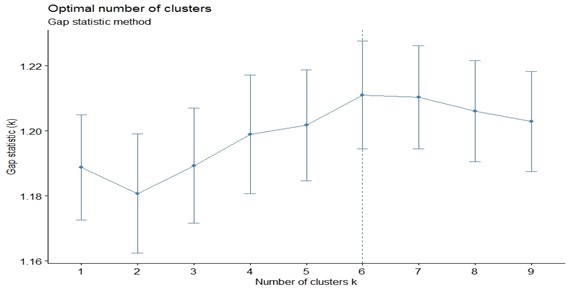
Figure 1. Determining the optimal number of clusters based on the gap statistic.
According to the gap statistics, the optimal number of clusters was equal to 6 (Figure 1).
Then, hierarchical cluster analysis (squared Euclidean distances, Ward’s method) was used. Figure 2 shows a dendrogram of the analysis results with six clusters identified.
Figure 2 shows that in addition to the well-separated 6-cluster solution, the 3-cluster solution should also be considered. Both options are described and compared below.
The clusters identified differ in the number of respondents included in them. The option with 6 clusters includes the following number of participants: N6(1) = 92; N6(2) = 39; N6(3) = 107; N6(4) = 110; N6(5) = 130; N6(6) = 33. The option with 3 clusters – N3(1) = 199; N3(2) = 169; N3(3) = 143. The first cluster combines the 4th and 6th clusters of the 6-cluster solution, the second cluster combines the 2nd and 5th clusters of the 6-cluster solution, and the third cluster combines the 1st and 3rd clusters of the 6-cluster solution.
The characteristics of the clusters are presented in more detail in the supplementary materials of Tables S1 and S2; plots of the means for the options with 6 and 3 clusters are shown in Figures S1 and S2. According to the one-factor analysis of variance performed for each variable considered, all types were significantly different.
3.2. Comparison of temperament types according to value and meaning orientations
Testing of the second hypothesis (H2) involved comparing value and meaning orientations in different temperament clusters. For this purpose, a one-factor analysis of variance was used, applied to each value and meaning variable. Not all value-semantic sphere indicators found significant differences, in particular: the Value of Spiritual Satisfaction (6 clusters: F(5, 505) = 2.22, p = 0.051; 3 clusters: F(2, 508) = 1.87, p = 0.156) and the Value of Tradition (6 clusters: F(5, 505) = 1.88, p = 0.096; 3 clusters: F(2, 508) = 2.34, p = 0.097), for the option with 3 clusters, the types did not differ significantly on the Sphere of Family (F(2, 508) = 2.24, p = 0.107). Figure 3 shows the graph of means for the option with 6 clusters; Figure 4 shows the graph of means for the option with 3 clusters; Tables S1 and S2 of the supplementary materials present the results of comparing the means of the clusters according to the indicators of value and meaning orientations for both solutions under consideration.

Figure 2. Hierarchical cluster analysis dendrogram

Figure 3. The graph of means of value and meaning orientations for the 6-cluster solution
Note.
Axiological Orientation: Clct – Value of Collectivity, Spr_Sts – Value of Spiritual Satisfaction, Crtv – Value of Creativity, Life – Value of Life, Achv – Value of Achievement, Trd – Value of Tradition, Mtr_Wb – Value of Material Well–being, Indv – Value of Individuality, Prf – Sphere of Profession, Edc – Sphere of Education, Fml – Sphere of Family, Scl_Lf – Sphere of Social Life, Lsr – Sphere of Leisure;
Meaning in Life: Prp – Purpose in Life, Prc – Life Process, Prf – Life Performance, Slf_LC – Locus of Control “Self”, Life_LC – Locus of Control “Life”, Mng_Life – Meaningfulness of Life; Sns_Chr – Sense of Coherence.
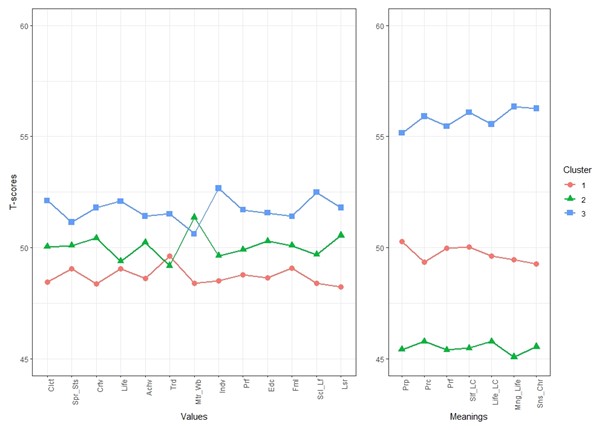
Figure 4. The graph of means of value and meaning orientations for the 3-cluster solution (see note to Figure 3)
Discussion
The first hypothesis of the study, that based on the primary scales of the OFDPI, clusters-types of temperament can be empirically identified, which will significantly differ in the expression of formal-dynamic properties, has found its empirical confirmation. On the basis of the gap statistic, six clusters with the greatest differences among them were identified. A visual analysis of the dendrogram of hierarchical cluster analysis performed in favor of also considering the solution with three clusters.
Let’s first consider the solution with 6 clusters. Based on the expression of formal-dynamic properties of individuality, the first cluster-type (N = 92) can be characterized as “low-active and low-intellectual”, the second cluster-type (N = 39) — as “highly emotional and low-active”, the third cluster-type (N = 107) — as “unsociable and unemotional”, the fourth cluster-type (N = 110) — as “sociable and low-emotional”, the fifth cluster-type (N = 130) — as “sociable and highly emotional”, and the sixth cluster-type (N = 33) — as “highly active and low-emotional”. Note that all the considered spheres of human activity differentiated the clusters. An unbalanced cluster volume (from 33 to 130) seems to be a problematic point; in this case, it turns out that nature (if we take into account the hereditary nature of temperament) gives preference to some behavioral strategies.
The solution with 3 clusters is more balanced in volume: 143–199. Note that none of the indicators is outside the statistical norm (± 1 SD) and remains within the range of 40–60 T-scores. The first cluster-type (N = 199) includes respondents who are “unsociable and unintellectual”, the second cluster-type (N = 169) includes respondents who are “highly emotional and low-active”, and the third cluster-type (N = 143) includes respondents who are “highly active and low-emotional”.
According to the second hypothesis of the study (H2), value and meaning orientations will differ significantly among different types of temperament, reflecting the selectivity of types to the assimilation of certain values. This hypothesis has also found its empirical confirmation, but with some reservations.
In the 6-cluster solution option, value orientations had significant differences between the 1st and the other clusters; the Value of Individuality also differed significantly between the 2nd and the 6th clusters; otherwise, the clusters had non-significant differences in indicators of value orientations. The first cluster-type is characterized by the lowest scores on values; the scores of value orientations in other types vary around average values.
Meaning orientations show a more complex picture. Mostly clusters differ by meaning indicators, but there are clusters that are very similar by them. For example, the 1st and 3rd, 1st and 5th, 3rd and 4th, and 4th and 6th clusters. This is probably due to the fact that we are dealing with a continuum of expression of meaning orientations, as can be seen in Figure 3.
The option with 3 clusters gives a clearer picture: the 1st and 3rd clusters are quite well separated and have significant differences in most manifestations of value orientations and their spheres. The 1st and 2nd clusters differ significantly only in the expression of the Value of Material Well-Being, and the 2nd and 3rd clusters differ significantly in the Values of Life, Individuality and the Sphere of Social Life. Meaning orientations in the 3-cluster solution are well separated and significantly different.
Thus, although the division into types was based on the formal-dynamic properties of individuality (temperament), the value and meaning orientations of these types also differed significantly. The best separation in this case was demonstrated by the 3-cluster solution option. It is possible to interpret the results obtained as a confirmation of the assumption about the man’s selective attitude toward the choice of value and meaning orientations, taking into account the characteristics of one’s own individuality.
The 3-cluster solution also correlates well with the three stable personality types: Resilient (highly extroverted, low-emotional, conscientious) — type 3 in our study (highly active, low-emotional, with high scores on value and meaning orientations); Overcontrolled (introverted, neurotic) — type 2 in our study (highly emotional, low-active, with low scores of meaning orientations); Undercontrolled (low scores of agreeableness and conscientiousness) — type 1 in our study (unsociable, unintellectual, with low scores of value orientations). This similarity may be due to the fact that, as noted above, formal-dynamic properties in the concept of V.M. Rusalov are also reflected at other levels of individuality, so the identified types can be attributed not only to temperament but to individuality as a whole.
Conclusions
The purpose of the study was achieved, and the hypotheses found empirical confirmation. On the basis of the formal-dynamic properties of individuality measured with the OFDPI by V.M. Rusalov, temperament types can be derived, which can be broadly understood as personality types.
Temperament types differ in value and meaning orientations, which may be evidence in favor of the assumption that people selectively relate to the world, actively choosing those values and building such meanings that are most congruent with their individuality.
Two options were considered: 6 and 3 clusters. The 3-cluster solution was more balanced in terms of cluster volume, and the clusters were better separated; therefore, it was given priority. This solution correlated well with three stable personality types found across countries and cultures (Donnellan & Robins, 2010): Resilient, Overcontrolled, and Undercontrolled.
5. Limitations of the study
Among the limitations of the study are the following: the assessment of temperament and the value-meaningful sphere was of a self-evaluative nature, so the difference between temperament types in terms of value and meaning orientations could be due to a common cause — a holistic evaluation of the self. In this regard, it seems promising to study the properties of temperament using instrumental methods, independent of the respondent’s evaluation of him/herself. At the same time, this approach does not cancel the results we obtained but complements them because, according to V.M. Rusalov, temperament should be studied using questionnaires (Rusalov, 2012).
The results should not be generalized to an age range beyond that of the study sample. Also, the study involved mainly Russian speakers, so it cannot be claimed that the identified features are inherent to the entire population of the Earth.
Funding: The study was carried out with financial support from the Russian Foundation for Basic Research and the Perm Territory within the framework of scientific project No. 18-413-590007.
CRediT author statement:
The author has read and approved the final version and bears responsibility for all aspects of the publication.
The author declares no conflict of interest.
References
- Asendorpf, J. B., & van Aken, M. A. G. (1999). Resilient, overcontrolled, and undercontrolled personality prototypes in childhood: Replicability, predictive power, and the trait-type issue. Journal of Personality and Social Psychology, 77, 815–832. https://doi.org/10.1037/0022-3514.77.4.815
- Belous, V. V., & Boyazitova, I. V. (2014). Integral individuality and its systemic options. Bulletin of the North Caucasus Federal University, 4(43), 212–216. [Belous V. V., Boyazitova I. V. (2014). Integral’naya individual’nost’ i yeye sistemnyye varianty. Vestnik Severo-Kavkazskogo federal’nogo universiteta, 4(43), 212–216].
- Block, J. H., & Block, J. (1980). The role of ego-control and ego-resiliency in the origination of behavior. In W. A. Collings (Ed.), The Minnesota symposia on child psychology (vol. 13, pp. 39–101). Hillsdale, NJ: Erlbaum.
- De Fruyt, F., Mervielde, I., & Van Leeuwen, K. (2002). The consistency of personality type classification across samples and five-factor measures. European Journal of Personality, 16(S1), S57–S72. https://doi.org/10.1002/per.444
- Donnellan, M. B., & Robins, R. W. (2010). Resilient, overcontrolled, and undercontrolled personality types: Issues and controversies. Social and Personality Psychology Compass, 4(11), 1070–1083. https://doi.org/10.1111/j.1751-9004.2010.00313.x
- Eysenck, H. Jü. (1999). Personality structure. Saint Petersburg: Yuventa; Moscow: KSP+. [Ayzenk G. Yu. (1999). Struktura lichnosti. Sankt-Peterburg: Yuventa; Moskva: KSP+].
- Gerlach, M., Farb, B., Revelle, W., & Amaral, L. N. (2018). A robust data-driven approach identifies four personality types across four large data sets. Nature Human Behaviour, 2, 735–742. https://doi.org/10.1038/s41562-018-0419-z
- Horsburgh, V. A., Schermer, J. A., Veselka, L., & Vernon, P. A. (2009). A behavioural genetic study of mental toughness and personality. Personality and Individual Differences, 46(2), 100–105. https://doi.org/10.1016/j.paid.2008.09.009
- Kalugin, A. Yu. (2019). Formal-dynamic foundations of the value-semantic sphere of personality. Perm: PSHPU Publ. [Kalugin A. YU. (2019). Formal’no-dinamicheskiye osnovaniya tsennostno-smyslovoy sfery lichnosti. Perm’: PGGPU].
- Kaptsov, A. V. (2011). Psychological axiometry of personality and group. Samara: SamLuxPrint. [Kaptsov A.V. (2011). Psikhologicheskaya aksiometriya lichnosti i gruppy. Samara: SamLyuksPrint].
- Lea, B. R., Mirchandani, D., Sumner, M., & Yu, K. (2022). Personality types in learning Enterprise resource planning (ERP) systems. Journal of Computer Information Systems, 62(2), 359–371. https://doi.org/10.1080/08874417.2020.1830005
- Leontyev, D. A. (2006). Test of life-meaning orientations (LMO). Moscow: Meaning. [Leont’yev D. A. (2006). Test smyslozhiznennykh oriyentatsiy (SZHO). Moskva: Smysl].
- Li, Y., He, L., Zhuang, K., Wu, X., Sun, J., Wei, D., & Qiu, J. (2020). Linking personality types to depressive symptoms: A prospective typology based on neuroticism, extraversion and conscientiousness. Neuropsychologia, 136, 107289. https://doi.org/10.1016/j.neuropsychologia.2019.107289
- Loehlin, J. C., McCrae, R. R., Costa Jr, P. T., & John, O. P. (1998). Heritabilities of common and measure-specific components of the Big Five personality factors. Journal of research in personality, 32(4), 431–453. https://doi.org/10.1006/jrpe.1998.2225
- McAdams, D. P., & Pals, J. L. (2006). A new Big Five: Fundamental principles for an integrative science of personality. American Psychologist, 61(3), 204–217. https://doi.org/10.1037/0003-066X.61.3.204
- McCrae, R. R., & Costa Jr, P. T. (2008). The five-factor theory of personality. In O. P. John, R. W. Robins & L. A. Pervin (Eds.), Handbook of personality: Theory and research (pp. 159–181). New York, NY: Guilford Press.
- Merlin, V. S. (1986). Essay on an integral study of individuality. Moscow: Pedagogy. [Merlin V. S. (1986). Ocherk integral’nogo issledovaniya individual’nosti. Moskva: Pedagogika].
- Meshcheryakov, B. & Zinchenko, V. (Eds.) (2002). Big Psychological Dictionary. Saint Petersburg: prime-EUROSIGN; Moscow: OLMA-Press. [Meshcheryakov, B., Zinchenko, V. (red.). (2003). Bol’shoy psikhologicheskiy slovar’. Sankt-Peterburg: praym-YEVROZNAK; Moskva: OLMA-Press].
- Osin, E. N. (2007). The sense of coherence as an indicator of psychological health and its diagnostics. Psychological diagnostics, 3, 22–40. [Osin E. N. (2007). Chuvstvo svyaznosti kak pokazatel’ psikhologicheskogo zdorov’ya i yego diagnostika. Psikhologicheskaya diagnostika, 3, 22–40].
- Ravich-Scherbo, I. V. (Ed.) (1988). The role of environment and heredity in the formation of human individuality. Moscow: Pedagogy. [Ravich-Shcherbo I. V. (red.) (1988). Rol’ sredy i nasledstvennosti v formirovanii individual’nosti cheloveka. Moskva: Pedagogika].
- Robins, R. W., John, O. P., Caspi, A., Moffitt, T. E., & Stouthamer-Loeber, M. (1996). Resilient, overcontrolled, and undercontrolled boys: Three replicable personality types. Journal of Personality and Social Psychology, 70(1), 157–171. https://doi.org/10.1037/0022-3514.70.1.157
- Rubinshtein, S. L. (2003). Being and consciousness. Man and the world. Saint Petersburg: Peter. [Rubinshteyn S. L. (2003). Bytiye i soznaniye. Chelovek i mir. Sankt-Peterburg: Piter].
- Rusalov, V. M. (1979). Biological bases of individual psychological differences. Moscow: Science. [Rusalov V. M. (1979). Biologicheskiye osnovy individual’no-psikhologicheskikh razlichiy. Moskva: Nauka].
- Rusalov, V. M. (2012). Temperament in the structure of human individuality: Differential-psychophysiological and psychological studies. Moscow: Institute of Psychology RAS. [Rusalov V. M. (2012). Temperament v strukture individual’nosti cheloveka: Differentsial’no-psikhofiziologicheskiye i psikhologicheskiye issledovaniya. Moskva: Institut psikhologii RAN].
- Sava, F. A., & Popa, R. I. (2011). Personality types based on the Big Five model: A cluster analysis over the Romanian population. Cognition, Brain, Behavior: An Interdisciplinary Journal, 15(3), 359–384.
- Tibshirani, R., Walther, G., & Hastie, T. (2001). Estimating the number of data clusters via the Gap statistic. Journal of the Royal Statistical Society B, 63, 411–423.
- Vernon, P. A., Villani, V. C., Vickers, L. C., & Harris J. A. (2008). A behavioral genetic investigation of the Dark Triad and the Big 5. Personality and Individual Differences, 44(2), 445–452. https://doi.org/10.1016/j.paid.2007.09.007
- Volkova, E. V., Kalugin, A. Yu., & Rusalov, V. M. (2022). Personality Traits, Attitudes to Life and Patterns of Behavior. Natural Systems of Mind, 2(1), 31–46. https://doi.org/10.38098/nsom_2022_02_01_03
- Volkova, E., & Kalugin, A. (2021). Personality types of modern Russians: myth or reality? Natural Systems of Mind, 1(1), 94–101. https://doi.org/10.38098/nsom_2021_01_03_08
- Vollrath, M., & Torgersen, S. (2000). Personality types and coping. Personality and Individual Differences, 29(2), 367-378. https://doi.org/10.1016/S0191-8869(99)00199-3
- Yu, Y., Yang, L., Sun, Y., Jin, C., & Zhang, Y. (2020). Intervention on Externalizing Problems of Undercontrolled Personality Types in Primary School Students. Frontiers in Psychology, 11, https://doi.org/10.3389/fpsyg.2020.01233
Supplemental material
Comments (0)
Abstract: The purpose of this study was to empirically identify temperament types based on the “Questionnaire of Formal-Dynamic Properties of Individuality” of V.M. Rusalov and to compare the value and meaning orientations of personality in these types. The study sample consisted of high school students, students and cadets of secondary, and higher educational institutions in Perm. A total of 511 participants aged 15 to 24 years (M = 18.90; SD = 1.98), of which 231 were women and 280 were men. Formal-dynamic properties of individuality, value and meaning orientations of personality were measured. The main methods of data analysis were hierarchical cluster analysis and analysis of variance. Three- and six-cluster solutions were considered. Priority was given to the option with 3 clusters-types better differentiating the participants by temperament properties and indicators of the value-semantic sphere. It should be noted that the means of the clusters did not exceed the statistical norm, and the obtained results varied within the range of 40–60 T-scores. The first cluster included respondents with a reduced level of sociability and intelligence; the second cluster consisted of highly emotional and low-active participants; and the third cluster included highly active and low-emotional ones. Despite the fact that the division into clusters-types was made on the basis of the formal-dynamic properties of individuality, the clusters also differed significantly by manifestations of value and meaning orientations. The first cluster was characterized by low scores of value orientations, the second — by low scores of meaning orientations, and the third cluster had high scores for both. The identified clusters-types corresponded well with the known personality types: Resilient, Overcontrolled, and Undercontrolled.
Типы темперамента и связанные с ними ценностно-смысловые ориентации
Калугин А.Ю.*
*Пермский государственный гуманитарно-педагогический университет, Пермь, Российская Федерация, ORCID iD: 0000-0002-3633-2926
Аннотация: Целью данного исследования было эмпирическое выявление типов темперамента на основе «Опросника формально-динамических свойств индивидуальности» В.М. Русалова и сравнить ценностные и смысловые ориентации личности этих типов. Выборку исследования составили старшеклассники, студенты и курсанты средних и высших учебных заведений Перми. Всего приняли участие 511 участников в возрасте от 15 до 24 лет (M = 18.90; SD = 1.98), из них 231 девушка и 280 юношей. Измерялись формально-динамические свойства индивидуальности, ценностные и смысловые ориентации личности. Основными методами анализа данных были иерархический кластерный анализ и дисперсионный анализ. Рассматривались трех- и шестикластерные решения. Приоритет отдавался варианту с 3-мя кластерами-типами, лучше дифференцирующими участников по темпераментным свойствам и показателям ценностно-смысловой сферы. Следует отметить, что средние значения кластеров не превышали статистическую норму, а полученные результаты варьировали в диапазоне 40–60 Т-баллов. В первый кластер вошли респонденты со сниженным уровнем коммуникабельности и интеллекта; второй кластер состоял из высокоэмоциональных и малоактивных участников; в третий кластер вошли высокоактивные и низкоэмоциональные. Несмотря на то, что распределение респондентов на кластеры-типы производилось на основе формально-динамических свойств индивидуальности, кластеры существенно различались по проявлениям ценностных и смысловых ориентаций. Первый кластер характеризовался низкими баллами ценностных ориентаций, второй — низкими баллами смысловых ориентаций, а третий кластер имел высокие баллы по как по ценностным, так и смысловым ориентациям. Выявленные кластеры-типы хорошо соответствовали известным типам личности: устойчивый, сверхконтролируемый и недостаточно контролируемый.
Ключевые слова: индивидуальность, темперамент, ценностные ориентации, смысловые ориентации.
The theories of individuality popular in the 1960s and 1980s have been replaced by theories of personality traits. In recent decades, the Big Five personality model has gained particular prominence in personality psychology. This model includes five basic personality traits: extraversion, agreeableness, conscientiousness, neuroticism, and openness to experience. They are thought to explain well the variance in personality traits. At the same time, psychogenetic studies indicate that there is substantial genetic conditioning of these traits: between 30 and 70 percent of trait variance is explained by heritability (Vernon et al., 2008; Horsburgh et al., 2009; Loehlin et al., 1998). To explain genetic influences, trait theory methodologists construct complex models that implicitly include temperament as a deeper level of personality (McAdams & Pals, 2006; McCrae & Costa, 2008).
In Western psychology, personality is often understood as what is called “individuality” in Russian psychology: “Personality is more or less stable and enduring organization of the person’s characters, temperament, intelligence, and the mind which determine his/her unique adjustment to the environment” (Eysenck, 1999, p. 13). This was also pointed out by V.P. Zinchenko, making a comment on the article “Personality” in the “Big Psychological Dictionary”: “The almost generally accepted translation of the word “lichnost” as personality (and vice versa) is not quite adequate. Personality is, rather, individuality<… >’Lichnost’” is selfhood, selfness, or self, which is close to the Russian word ‘samost’. There is no more precise equivalent of the word ‘lichnost’ in English” (Meshcheryakov & Zinchenko, 2002, p. 237).
Interest in temperament as a separate level of individuality declined significantly after the scientific community accepted the idea that it is impossible to measure temperament in adulthood, when it largely merges with acquired qualities. In Russian psychology the situation was different: opportunities for measuring temperament in adults were discovered. First, in the laboratories of V.S. Merlin and B.M. Teplov – V.D. Nebylitsyn, attempts were made to study temperament using instrumental methods. Secondly, V.M. Rusalov expressed an important idea that temperament is a generalization of formal-dynamic properties of human behavior (Rusalov, 2012, p. 27), so it can and should be studied using self-assessment questionnaires. In addition, V.M. Rusalov (2012) linked temperament with P.K. Anokhin’s concept of functional systems, thus building a theoretical model of temperament. Third, psychogenetic studies of temperament and other properties of individuality were widely developed in the laboratory of I.V. Ravich-Shcherbo (Ravich-Shcherbo (ed.), 1988). All this made it possible to maintain interest in temperament as a separate level of individuality and, in general, to continue studying individuality as an integration of multilevel properties.
At a cursory glance, it seems that the idea of individuality opposes the idea of typology. On the one hand, “a person is an individuality by virtue of having special, individual, unique properties” (Rubinstein, 2003, p. 272), on the other hand, “we always distinguish the typical, common for a certain group of people” (Merlin, 1986, p. 29). V.S. Merlin (1986) pointed out the possibility of studying types within one level (neurodynamic, psychodynamic, personality, etc.), but was doubtful about studying types based on the properties of different levels, since the levels function according to different laws. According to V.S. Merlin, the integration of multilevel properties is possible due to the individual style of activity. V.M. Rusalov managed to discover types that include multilevel properties of individuality (Rusalov, 1979). By the way, V.S. Merlin’s students and followers from the Pyatigorsk psychological school also identified the types of integral individuality: creative, innovative, contemplative, and reactive (Belous & Boyazitova, 2014, p. 213).
A study conducted at the Laboratory of Psychology of Abilities and Mental Resources named after V.N. Druzhinin of the Institute of Psychology of the Russian Academy of Sciences and supported by the Russian Science Foundation showed that personality types can be derived on the basis of multilevel properties of individuality: “Ordinary Man”, “Spiritual Man”, “Man of Mood”, and “Man of Action” (Volkova & Kalugin, 2021). In another study from the same series, three clusters of respondents correlated with individuality types were obtained: “Psychoids”, “Social Adaptoids”, and “Neuroids” (Volkova, Kalugin & Rusalov, 2022). Although these types were obtained in different ways, they are quite similar in content.
In Western psychology, types are derived from a combination of traits. J. H. Block and J. Block (1980) identified four types: brittle undercontrollers, brittle overcontrollers, resilient undercontrollers, and resilient overcontrollers. These types were then reproduced many times in other studies, but three gender-indifferent personality types were recognized: Resilient, Overcontrolled, and Undercontrolled (Asendorpf & Van Aken, 1999; de Fruyt, Mervielde & van Leeuwen, 2002; Robins et al., 1996; Donnellan & Robins, 2010). Resilient has high extraversion and conscientiousness and low neuroticism, Overcontrolled, on the contrary, is introverted and emotionally unstable. Undercontrolled has low scores of agreeableness and conscientiousness (Donnellan & Robins, 2010). These three types correlate well with “Social Adaptoids”, “Neuroids”, and “Psychoids” (Volkova, Kalugin & Rusalov, 2022), although they were obtained using a different methodology.
A well-known study by M. Gerlach and colleagues on a sample of more than 1.5 million people revealed four stable types: “Average”, “Self-centered”, “Reserved”, and “Role model” (Gerlach et al., 2018). The “Role model” type reflects socially desirable traits, has low scores for neuroticism and high scores for all other traits. “Reserved” is characterized by low openness to experience and high emotional stability. “Self-centered” has a pronounced extraversion and low scores on openness to experience, agreeableness, and conscientiousness. “Average” has pronounced neuroticism and extraversion, with lower scores on openness to experience (Gerlach et al., 2018, p. 740).
Overall, scholars generally indicate the existence of three (Donnellan & Robins, 2010; Robins et al., 1996; Yu et al., 2020) or four personality types (Gerlach et al., 2018; Lea et al., 2022; Li et al., 2020).
The advantages of the typological approach compared to the personality dimensions approach are that it is based on the structure of traits rather than mean-level tendencies, which might fluctuate across time (Sava & Popa, 2011, p. 360).
V.M. Rusalov (2012) proposed considering nine types of temperament. In addition to the classical four (sanguine, choleric, phlegmatic, and melancholic), he introduced four mixed types: mixed high-active, mixed high-emotional, mixed low-active, and mixed low-emotional, as well as one “uncertain” type. Based on his “Questionnaire of Formal-Dynamic Properties of Individuality”, it was possible to define general and differential types. Differential types manifested themselves in separate spheres of behavior: motor, social, and intellectual. It should be noted that V.M. Rusalov proposed to divide types on the basis of the ratio of activity and emotionality indicators (high, average, and low scores). Such approaches are known; for example, M. Vollrath and S. Torgersen (2000) obtained eight types by combining high and low scores on the extraversion, neuroticism, and conscientiousness scales. However, this approach is largely theoretical, since real types may create a more complex picture of the interaction between activity and emotionality (or extraversion, neuroticism, and conscientiousness).
According to V.M. Rusalov, formal-dynamic properties can manifest themselves at higher levels of individuality (the level of intelligence, motivation, character, etc.), characterizing their dynamic component. Higher levels of individuality implicitly include lower levels. In this regard, the types obtained on the basis of the “Questionnaire of Formal-Dynamic Properties of Individuality” can be understood broadly, as individuality types, and correlated with personality types.
The present study (Kalugin, 2019) examined the relationship between temperament properties and generalized indicators of value and meaning orientations. This formulation of the problem may seem strange, since temperament is largely biologically determined, while values and meanings are socially determined and not initially given. It is difficult to disagree with this thesis. However, if we consider temperament and the value-meaningful sphere of personality as structural components of individuality, there is no contradiction. Value and meaning orientations of personality are the result of the human activity, who has a temperament and other formed or emerging levels of individuality, actively interacts with the world and selectively relates to it. The man does not passively accept everything that the world offers him, but makes a choice, oriented, among other things, on his individual characteristics.
The present study continues this work and aims to deepen the understanding of the integration of different levels of individuality by examining the relationship between temperament and the value and meaning orientations of personality.
The purpose of the study is to empirically identify temperament types based on the “Questionnaire of Formal-Dynamic Properties of Individuality” by V.M. Rusalov and to compare their value and meaning orientations of personality.
Hypotheses of the study:
(H1) Based on the primary scales of the “Questionnaire of Formal-Dynamic Properties of Individuality”, clusters-types of temperament can be empirically identified, differing significantly in the expression of formal-dynamic properties;
(H2) The value and meaning orientations will differ significantly in different types of temperament, reflecting the selectivity of types to the assimilation of certain values.
2.1. Participants
The study sample consisted of high school students, students and cadets of secondary and higher educational institutions in Perm. A total of 511 participants aged 15 to 24 years (M = 18.90; SD = 1.98), of which 231 were women and 280 were men.
2.2. Measures
Temperament properties were studied using the “Questionnaire of Formal-Dynamic Properties of Individuality” (OFDPI) by V.M. Rusalov (2012). Value orientations of personality were studied using the test “Axiological Orientation of Personality” by A.V. Kaptsov (2011); meaning orientations — by the “Test of Meaning Life Orientations” by D.A. Leontiev (2006), and the “Sense of Coherence Scale” by A. Antonovsky in the adaptation of M.N. Dymschitz (cited from: Osin, 2007).
2.3. Data Analysis
The data were pre-standardized and converted to T-scores (M = 50, SD = 10).
Based on the primary scales of the “Questionnaire of Formal-Dynamic Properties of Individuality”, hierarchical clustering (squared Euclidean distances, Ward’s method) was performed. The optimal number of clusters was determined by Gap statistics: 500 bootstrap samples were constructed, and the maximum number of clusters was specified as 9, according to the assumptions of V.M. Rusalov (2012). The number of clusters with the maximum gap between them is considered optimal (Tibshirani, Walther & Hastie, 2001).
The resulting clusters-types were compared with each other in terms of the indicators of temperament, value and meaning orientations using analysis of variance and Tukey’s test.
The R programming language environment and the following packages were used for data analysis: cluster (v. 2.1.0), factoextra (v. 1.0.7), ggplot2 (v. 3.3.5), and patchwork (v. 1.1.1).
Supplementary materials for the article, including tables and figures, can be found on the journal’s website.
3.1. Identification of clusters-types of temperament and their comparison
Testing the first hypothesis (H1) was related to determining the optimal number of clusters-types based on the OFDPI primary scales and comparing them with each other.
Figure 1. Determining the optimal number of clusters based on the gap statistic.
According to the gap statistics, the optimal number of clusters was equal to 6 (Figure 1).
Then, hierarchical cluster analysis (squared Euclidean distances, Ward’s method) was used. Figure 2 shows a dendrogram of the analysis results with six clusters identified.
Figure 2 shows that in addition to the well-separated 6-cluster solution, the 3-cluster solution should also be considered. Both options are described and compared below.
The clusters identified differ in the number of respondents included in them. The option with 6 clusters includes the following number of participants: N6(1) = 92; N6(2) = 39; N6(3) = 107; N6(4) = 110; N6(5) = 130; N6(6) = 33. The option with 3 clusters – N3(1) = 199; N3(2) = 169; N3(3) = 143. The first cluster combines the 4th and 6th clusters of the 6-cluster solution, the second cluster combines the 2nd and 5th clusters of the 6-cluster solution, and the third cluster combines the 1st and 3rd clusters of the 6-cluster solution.
The characteristics of the clusters are presented in more detail in the supplementary materials of Tables S1 and S2; plots of the means for the options with 6 and 3 clusters are shown in Figures S1 and S2. According to the one-factor analysis of variance performed for each variable considered, all types were significantly different.
3.2. Comparison of temperament types according to value and meaning orientations
Testing of the second hypothesis (H2) involved comparing value and meaning orientations in different temperament clusters. For this purpose, a one-factor analysis of variance was used, applied to each value and meaning variable. Not all value-semantic sphere indicators found significant differences, in particular: the Value of Spiritual Satisfaction (6 clusters: F(5, 505) = 2.22, p = 0.051; 3 clusters: F(2, 508) = 1.87, p = 0.156) and the Value of Tradition (6 clusters: F(5, 505) = 1.88, p = 0.096; 3 clusters: F(2, 508) = 2.34, p = 0.097), for the option with 3 clusters, the types did not differ significantly on the Sphere of Family (F(2, 508) = 2.24, p = 0.107). Figure 3 shows the graph of means for the option with 6 clusters; Figure 4 shows the graph of means for the option with 3 clusters; Tables S1 and S2 of the supplementary materials present the results of comparing the means of the clusters according to the indicators of value and meaning orientations for both solutions under consideration.
Figure 2. Hierarchical cluster analysis dendrogram
Figure 3. The graph of means of value and meaning orientations for the 6-cluster solution
Note.
Axiological Orientation: Clct – Value of Collectivity, Spr_Sts – Value of Spiritual Satisfaction, Crtv – Value of Creativity, Life – Value of Life, Achv – Value of Achievement, Trd – Value of Tradition, Mtr_Wb – Value of Material Well–being, Indv – Value of Individuality, Prf – Sphere of Profession, Edc – Sphere of Education, Fml – Sphere of Family, Scl_Lf – Sphere of Social Life, Lsr – Sphere of Leisure;
Meaning in Life: Prp – Purpose in Life, Prc – Life Process, Prf – Life Performance, Slf_LC – Locus of Control “Self”, Life_LC – Locus of Control “Life”, Mng_Life – Meaningfulness of Life; Sns_Chr – Sense of Coherence.
Figure 4. The graph of means of value and meaning orientations for the 3-cluster solution (see note to Figure 3)
The first hypothesis of the study, that based on the primary scales of the OFDPI, clusters-types of temperament can be empirically identified, which will significantly differ in the expression of formal-dynamic properties, has found its empirical confirmation. On the basis of the gap statistic, six clusters with the greatest differences among them were identified. A visual analysis of the dendrogram of hierarchical cluster analysis performed in favor of also considering the solution with three clusters.
Let’s first consider the solution with 6 clusters. Based on the expression of formal-dynamic properties of individuality, the first cluster-type (N = 92) can be characterized as “low-active and low-intellectual”, the second cluster-type (N = 39) — as “highly emotional and low-active”, the third cluster-type (N = 107) — as “unsociable and unemotional”, the fourth cluster-type (N = 110) — as “sociable and low-emotional”, the fifth cluster-type (N = 130) — as “sociable and highly emotional”, and the sixth cluster-type (N = 33) — as “highly active and low-emotional”. Note that all the considered spheres of human activity differentiated the clusters. An unbalanced cluster volume (from 33 to 130) seems to be a problematic point; in this case, it turns out that nature (if we take into account the hereditary nature of temperament) gives preference to some behavioral strategies.
The solution with 3 clusters is more balanced in volume: 143–199. Note that none of the indicators is outside the statistical norm (± 1 SD) and remains within the range of 40–60 T-scores. The first cluster-type (N = 199) includes respondents who are “unsociable and unintellectual”, the second cluster-type (N = 169) includes respondents who are “highly emotional and low-active”, and the third cluster-type (N = 143) includes respondents who are “highly active and low-emotional”.
According to the second hypothesis of the study (H2), value and meaning orientations will differ significantly among different types of temperament, reflecting the selectivity of types to the assimilation of certain values. This hypothesis has also found its empirical confirmation, but with some reservations.
In the 6-cluster solution option, value orientations had significant differences between the 1st and the other clusters; the Value of Individuality also differed significantly between the 2nd and the 6th clusters; otherwise, the clusters had non-significant differences in indicators of value orientations. The first cluster-type is characterized by the lowest scores on values; the scores of value orientations in other types vary around average values.
Meaning orientations show a more complex picture. Mostly clusters differ by meaning indicators, but there are clusters that are very similar by them. For example, the 1st and 3rd, 1st and 5th, 3rd and 4th, and 4th and 6th clusters. This is probably due to the fact that we are dealing with a continuum of expression of meaning orientations, as can be seen in Figure 3.
The option with 3 clusters gives a clearer picture: the 1st and 3rd clusters are quite well separated and have significant differences in most manifestations of value orientations and their spheres. The 1st and 2nd clusters differ significantly only in the expression of the Value of Material Well-Being, and the 2nd and 3rd clusters differ significantly in the Values of Life, Individuality and the Sphere of Social Life. Meaning orientations in the 3-cluster solution are well separated and significantly different.
Thus, although the division into types was based on the formal-dynamic properties of individuality (temperament), the value and meaning orientations of these types also differed significantly. The best separation in this case was demonstrated by the 3-cluster solution option. It is possible to interpret the results obtained as a confirmation of the assumption about the man’s selective attitude toward the choice of value and meaning orientations, taking into account the characteristics of one’s own individuality.
The 3-cluster solution also correlates well with the three stable personality types: Resilient (highly extroverted, low-emotional, conscientious) — type 3 in our study (highly active, low-emotional, with high scores on value and meaning orientations); Overcontrolled (introverted, neurotic) — type 2 in our study (highly emotional, low-active, with low scores of meaning orientations); Undercontrolled (low scores of agreeableness and conscientiousness) — type 1 in our study (unsociable, unintellectual, with low scores of value orientations). This similarity may be due to the fact that, as noted above, formal-dynamic properties in the concept of V.M. Rusalov are also reflected at other levels of individuality, so the identified types can be attributed not only to temperament but to individuality as a whole.
The purpose of the study was achieved, and the hypotheses found empirical confirmation. On the basis of the formal-dynamic properties of individuality measured with the OFDPI by V.M. Rusalov, temperament types can be derived, which can be broadly understood as personality types.
Temperament types differ in value and meaning orientations, which may be evidence in favor of the assumption that people selectively relate to the world, actively choosing those values and building such meanings that are most congruent with their individuality.
Two options were considered: 6 and 3 clusters. The 3-cluster solution was more balanced in terms of cluster volume, and the clusters were better separated; therefore, it was given priority. This solution correlated well with three stable personality types found across countries and cultures (Donnellan & Robins, 2010): Resilient, Overcontrolled, and Undercontrolled.
5. Limitations of the study
Among the limitations of the study are the following: the assessment of temperament and the value-meaningful sphere was of a self-evaluative nature, so the difference between temperament types in terms of value and meaning orientations could be due to a common cause — a holistic evaluation of the self. In this regard, it seems promising to study the properties of temperament using instrumental methods, independent of the respondent’s evaluation of him/herself. At the same time, this approach does not cancel the results we obtained but complements them because, according to V.M. Rusalov, temperament should be studied using questionnaires (Rusalov, 2012).
The results should not be generalized to an age range beyond that of the study sample. Also, the study involved mainly Russian speakers, so it cannot be claimed that the identified features are inherent to the entire population of the Earth.
Funding: The study was carried out with financial support from the Russian Foundation for Basic Research and the Perm Territory within the framework of scientific project No. 18-413-590007.
CRediT author statement:
The author has read and approved the final version and bears responsibility for all aspects of the publication.
The author declares no conflict of interest.
- Asendorpf, J. B., & van Aken, M. A. G. (1999). Resilient, overcontrolled, and undercontrolled personality prototypes in childhood: Replicability, predictive power, and the trait-type issue. Journal of Personality and Social Psychology, 77, 815–832. https://doi.org/10.1037/0022-3514.77.4.815
- Belous, V. V., & Boyazitova, I. V. (2014). Integral individuality and its systemic options. Bulletin of the North Caucasus Federal University, 4(43), 212–216. [Belous V. V., Boyazitova I. V. (2014). Integral’naya individual’nost’ i yeye sistemnyye varianty. Vestnik Severo-Kavkazskogo federal’nogo universiteta, 4(43), 212–216].
- Block, J. H., & Block, J. (1980). The role of ego-control and ego-resiliency in the origination of behavior. In W. A. Collings (Ed.), The Minnesota symposia on child psychology (vol. 13, pp. 39–101). Hillsdale, NJ: Erlbaum.
- De Fruyt, F., Mervielde, I., & Van Leeuwen, K. (2002). The consistency of personality type classification across samples and five-factor measures. European Journal of Personality, 16(S1), S57–S72. https://doi.org/10.1002/per.444
- Donnellan, M. B., & Robins, R. W. (2010). Resilient, overcontrolled, and undercontrolled personality types: Issues and controversies. Social and Personality Psychology Compass, 4(11), 1070–1083. https://doi.org/10.1111/j.1751-9004.2010.00313.x
- Eysenck, H. Jü. (1999). Personality structure. Saint Petersburg: Yuventa; Moscow: KSP+. [Ayzenk G. Yu. (1999). Struktura lichnosti. Sankt-Peterburg: Yuventa; Moskva: KSP+].
- Gerlach, M., Farb, B., Revelle, W., & Amaral, L. N. (2018). A robust data-driven approach identifies four personality types across four large data sets. Nature Human Behaviour, 2, 735–742. https://doi.org/10.1038/s41562-018-0419-z
- Horsburgh, V. A., Schermer, J. A., Veselka, L., & Vernon, P. A. (2009). A behavioural genetic study of mental toughness and personality. Personality and Individual Differences, 46(2), 100–105. https://doi.org/10.1016/j.paid.2008.09.009
- Kalugin, A. Yu. (2019). Formal-dynamic foundations of the value-semantic sphere of personality. Perm: PSHPU Publ. [Kalugin A. YU. (2019). Formal’no-dinamicheskiye osnovaniya tsennostno-smyslovoy sfery lichnosti. Perm’: PGGPU].
- Kaptsov, A. V. (2011). Psychological axiometry of personality and group. Samara: SamLuxPrint. [Kaptsov A.V. (2011). Psikhologicheskaya aksiometriya lichnosti i gruppy. Samara: SamLyuksPrint].
- Lea, B. R., Mirchandani, D., Sumner, M., & Yu, K. (2022). Personality types in learning Enterprise resource planning (ERP) systems. Journal of Computer Information Systems, 62(2), 359–371. https://doi.org/10.1080/08874417.2020.1830005
- Leontyev, D. A. (2006). Test of life-meaning orientations (LMO). Moscow: Meaning. [Leont’yev D. A. (2006). Test smyslozhiznennykh oriyentatsiy (SZHO). Moskva: Smysl].
- Li, Y., He, L., Zhuang, K., Wu, X., Sun, J., Wei, D., & Qiu, J. (2020). Linking personality types to depressive symptoms: A prospective typology based on neuroticism, extraversion and conscientiousness. Neuropsychologia, 136, 107289. https://doi.org/10.1016/j.neuropsychologia.2019.107289
- Loehlin, J. C., McCrae, R. R., Costa Jr, P. T., & John, O. P. (1998). Heritabilities of common and measure-specific components of the Big Five personality factors. Journal of research in personality, 32(4), 431–453. https://doi.org/10.1006/jrpe.1998.2225
- McAdams, D. P., & Pals, J. L. (2006). A new Big Five: Fundamental principles for an integrative science of personality. American Psychologist, 61(3), 204–217. https://doi.org/10.1037/0003-066X.61.3.204
- McCrae, R. R., & Costa Jr, P. T. (2008). The five-factor theory of personality. In O. P. John, R. W. Robins & L. A. Pervin (Eds.), Handbook of personality: Theory and research (pp. 159–181). New York, NY: Guilford Press.
- Merlin, V. S. (1986). Essay on an integral study of individuality. Moscow: Pedagogy. [Merlin V. S. (1986). Ocherk integral’nogo issledovaniya individual’nosti. Moskva: Pedagogika].
- Meshcheryakov, B. & Zinchenko, V. (Eds.) (2002). Big Psychological Dictionary. Saint Petersburg: prime-EUROSIGN; Moscow: OLMA-Press. [Meshcheryakov, B., Zinchenko, V. (red.). (2003). Bol’shoy psikhologicheskiy slovar’. Sankt-Peterburg: praym-YEVROZNAK; Moskva: OLMA-Press].
- Osin, E. N. (2007). The sense of coherence as an indicator of psychological health and its diagnostics. Psychological diagnostics, 3, 22–40. [Osin E. N. (2007). Chuvstvo svyaznosti kak pokazatel’ psikhologicheskogo zdorov’ya i yego diagnostika. Psikhologicheskaya diagnostika, 3, 22–40].
- Ravich-Scherbo, I. V. (Ed.) (1988). The role of environment and heredity in the formation of human individuality. Moscow: Pedagogy. [Ravich-Shcherbo I. V. (red.) (1988). Rol’ sredy i nasledstvennosti v formirovanii individual’nosti cheloveka. Moskva: Pedagogika].
- Robins, R. W., John, O. P., Caspi, A., Moffitt, T. E., & Stouthamer-Loeber, M. (1996). Resilient, overcontrolled, and undercontrolled boys: Three replicable personality types. Journal of Personality and Social Psychology, 70(1), 157–171. https://doi.org/10.1037/0022-3514.70.1.157
- Rubinshtein, S. L. (2003). Being and consciousness. Man and the world. Saint Petersburg: Peter. [Rubinshteyn S. L. (2003). Bytiye i soznaniye. Chelovek i mir. Sankt-Peterburg: Piter].
- Rusalov, V. M. (1979). Biological bases of individual psychological differences. Moscow: Science. [Rusalov V. M. (1979). Biologicheskiye osnovy individual’no-psikhologicheskikh razlichiy. Moskva: Nauka].
- Rusalov, V. M. (2012). Temperament in the structure of human individuality: Differential-psychophysiological and psychological studies. Moscow: Institute of Psychology RAS. [Rusalov V. M. (2012). Temperament v strukture individual’nosti cheloveka: Differentsial’no-psikhofiziologicheskiye i psikhologicheskiye issledovaniya. Moskva: Institut psikhologii RAN].
- Sava, F. A., & Popa, R. I. (2011). Personality types based on the Big Five model: A cluster analysis over the Romanian population. Cognition, Brain, Behavior: An Interdisciplinary Journal, 15(3), 359–384.
- Tibshirani, R., Walther, G., & Hastie, T. (2001). Estimating the number of data clusters via the Gap statistic. Journal of the Royal Statistical Society B, 63, 411–423.
- Vernon, P. A., Villani, V. C., Vickers, L. C., & Harris J. A. (2008). A behavioral genetic investigation of the Dark Triad and the Big 5. Personality and Individual Differences, 44(2), 445–452. https://doi.org/10.1016/j.paid.2007.09.007
- Volkova, E. V., Kalugin, A. Yu., & Rusalov, V. M. (2022). Personality Traits, Attitudes to Life and Patterns of Behavior. Natural Systems of Mind, 2(1), 31–46. https://doi.org/10.38098/nsom_2022_02_01_03
- Volkova, E., & Kalugin, A. (2021). Personality types of modern Russians: myth or reality? Natural Systems of Mind, 1(1), 94–101. https://doi.org/10.38098/nsom_2021_01_03_08
- Vollrath, M., & Torgersen, S. (2000). Personality types and coping. Personality and Individual Differences, 29(2), 367-378. https://doi.org/10.1016/S0191-8869(99)00199-3
- Yu, Y., Yang, L., Sun, Y., Jin, C., & Zhang, Y. (2020). Intervention on Externalizing Problems of Undercontrolled Personality Types in Primary School Students. Frontiers in Psychology, 11, https://doi.org/10.3389/fpsyg.2020.01233
References